
Meta Pixel
This article is a 2-minute read that could save you hours of time! 👀
Ask any disability support provider what they’d do with an extra five hours a week, and the answer is rarely “more admin.”
Between rosters, compliance, audits and standards, training can quietly become one of the biggest drains on your time. Done well, it becomes one of the biggest time savers.

1. Cut the training admin and reporting

Chasing completions, updating spreadsheets and pulling together evidence before an audit adds up fast, especially with casual staff, shift workers and multiple sites.

A good LMS takes most of that off your plate. Enrolments, reminders, progress tracking and certificates happen in one place with only a couple of clicks. Reports like a training matrix are always ready when you need them, not after a weekend of data entry.

Amy from Home Assist SA put it simply: the platform “saves us a lot of time in an industry that’s heavily focused on compliance.”

2. Make onboarding faster, and first impressions better

New starters want to feel capable and confident quickly, and you want them safely supporting participants without weeks of back-and-forth.

When a new team member gets a clear, professional learning pathway from day one, delivered on their phone if they like, you spend less time coordinating and re-explaining.

They also see an organisation that has its act together. That first impression sets the tone for the whole employment relationship.

3. Keep the people you’ve trained and attract the people you want

Recruiting and onboarding replacements is one of the most time-consuming things a provider does. Staff are more likely to stay when they feel invested in.

Relevant, practical professional development shows people there’s a future with you. It also builds the skills and confidence that lead to better support and fewer incidents to manage.

Worth a closer look?

You don’t need to overhaul your training to find out. A short conversation can show you where your hours are going and whether a better approach would give them back. If you’d like to explore it, NGO Training Centre’s team is happy to walk you through the platform and courses with no pressure.

You can book a short chat at a time that suits your (too) busy schedule using the button below, or please reach out at 1300 990 995.

–

Author: Matthew Crawford, PGCert(Bus)

Matt has over a decade of experience in B2B sales and business development and with a passion for human services, is deeply committed to driving meaningful solutions within the disability and aged care sectors. His commitment to improving service quality and his deep understanding of client needs make him a trusted partner in advancing the capabilities of organisations that support ageing individuals and people with disability across Australia.

Get in touch

    More than 3 million Australians who quietly care for a family member or friend are being recognised this week as National Carers Week gets underway across the country.

    Running under the 2026 theme “Care for a Carer: Making Carers Visible”, the week aims to highlight the invaluable contribution of unpaid carers and encourage Australians to recognise and support the carers in their families, workplaces and communities.

    As a carer for my husband, an Army veteran, this theme hits close to home for me. Juggling daily care with a job, raising children and a life of my own often means something has to give. Usually, it’s the life of my own.

    I count myself among the fortunate. With my children now grown and supportive employers who let me work from home, I have been able to stay in full-time work, something many carers cannot manage.

    Not all are so lucky. Caring for a loved one can be overwhelming, challenging and feel unrewarding. Carer payments barely cover expenses, and depending on the person’s needs, they may also be unable to work.

    Every carer’s experience is unique, and I hope this week builds community awareness of carers’ diversity and the roles they play. The good news is that help is available.

    Carer Gateway offers information and advice on supports available to carers across Australia, along with online resources to promote carer wellbeing. More information and online support services are available at carergateway.gov.au.

    If you work for a Disability service provider, you will come into contact with carers regularly. Take a moment to check in with them and point them towards resources and support, because without them, who will be there for the care recipient when your shift ends?

    –

    Author: Amanda Robinson (She/Her) BA, MMHealthPrac.
    Dja Dja Wurrung and Taungurung Country

    Amanda, Head of Learning and Development and an experienced specialist in NDIS and Aged Care, promotes capability and sustainability within the disability and health sectors. With over 15 years of experience, a Master’s in Mental Health Leadership and Management, and an MBA underway, she offers extensive expertise and personal insight as someone with lived experience of disability. A military veteran and dedicated carer of a veteran, Amanda advocates for Human Rights, striving to reduce stigma and eliminate barriers for those with disability and mental health challenges. She is enthusiastic about fostering strong stakeholder relationships through her advocacy, communication, strategic thinking, and analytical abilities.

    Contact our friendly and supportive team

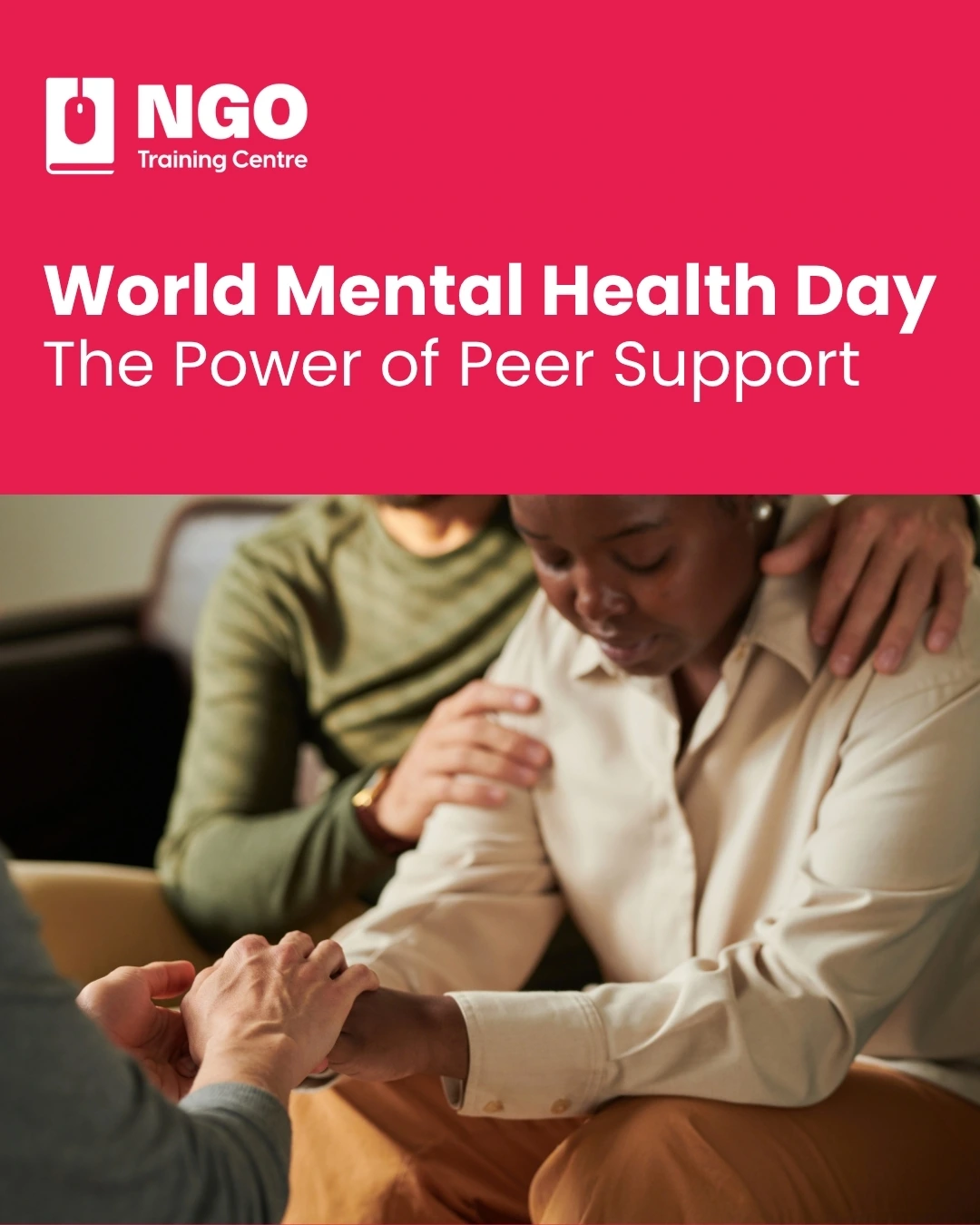
      On 10 October 2026, World Mental Health Day highlights the theme ‘Lived Experiences Heard: Real Voices, Real Change’. The day aims to educate the public, reduce stigma, and advocate for better mental health care worldwide.

      This year, the focus is on amplifying the voices of people with lived experience of mental health challenges, so they can help shape the policies, services and community attitudes that affect them.

      The power of lived experience is hard to overstate. If you haven’t seen it in action, it can be difficult to picture, so I’d like to share some of my own experience.

      In 2012, I was lucky enough to work in a multidisciplinary recovery team that included three remarkable mental health peer workers. We made no decisions without their input, and for good reason.

      They had been there, were sometimes still there, and knew that recovery is a lifelong journey.

      Peer support was only just gaining momentum, and peer workers faced plenty of barriers of their own. Today, peer workers are increasingly part of every area of health care, which is great news for people living with psychosocial and physical challenges.

      Their work on both acute and longer-term psychiatric wards was extraordinary, and its impact lasted. I watched them instil hope, build autonomy and support recovery on a whole new level. That mutual support helped to break down the stigma and shame that so often stop people from seeking help and staying engaged in treatment.

      They also brought a lived-experience lens to the clinical team, giving staff a fresh perspective on the everyday lives of the people they supported.

      Education was a core part of the peer role, but not in the traditional sense. Peer workers often shared their own journeys, creating space to talk about positive coping strategies and to normalise everyday challenges. Hearing from someone who is going through, or has come through, a similar experience can be a powerful way to help people engage with other forms of treatment.

      Peer workers show us what is possible when people feel heard and understood.

      Every support worker can build on that by understanding mental health challenges and responding with confidence and compassion.

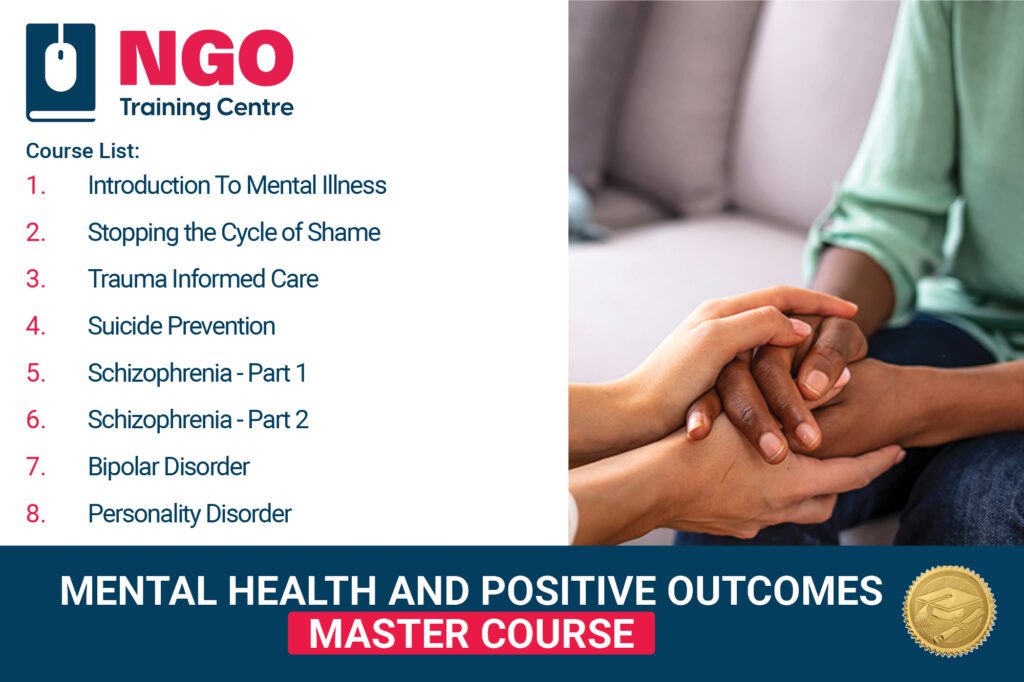
      At the NGO Training Centre, our Mental Health and Positive Outcomes pathway offers evidence-based online courses for disability and aged care workers, written by qualified subject matter experts. Courses include:

      • Introduction to Mental Illness
      • Stopping the Cycle of Shame
      • Trauma Informed Care
      • Suicide Prevention
      • Schizophrenia (Parts 1 and 2)
      • Bipolar Disorder
      • Personality Disorder

      Courses can be completed individually or as part of the full pathway, and are aligned with the NDIS Practice Standards and the strengthened Aged Care Quality Standards.

      Explore the full Mental Health and Positive Outcomes pathway

      Or view individual Mental Health courses

      This World Mental Health Day, let’s listen to lived experience, challenge stigma wherever we see it, and keep building workplaces and services where mental health is understood, valued and supported.

      –

      Author: Amanda Robinson (She/Her) BA, MMHealthPrac.
      Dja Dja Wurrung and Taungurung Country

      Amanda, Head of Learning and Development and an experienced specialist in NDIS and Aged Care, promotes capability and sustainability within the disability and health sectors. With over 15 years of experience, a Master’s in Mental Health Leadership and Management, and an MBA underway, she offers extensive expertise and personal insight as someone with lived experience of disability. A military veteran and dedicated carer of a veteran, Amanda advocates for Human Rights, striving to reduce stigma and eliminate barriers for those with disability and mental health challenges. She is enthusiastic about fostering strong stakeholder relationships through her advocacy, communication, strategic thinking, and analytical abilities.

      Contact our friendly and supportive team

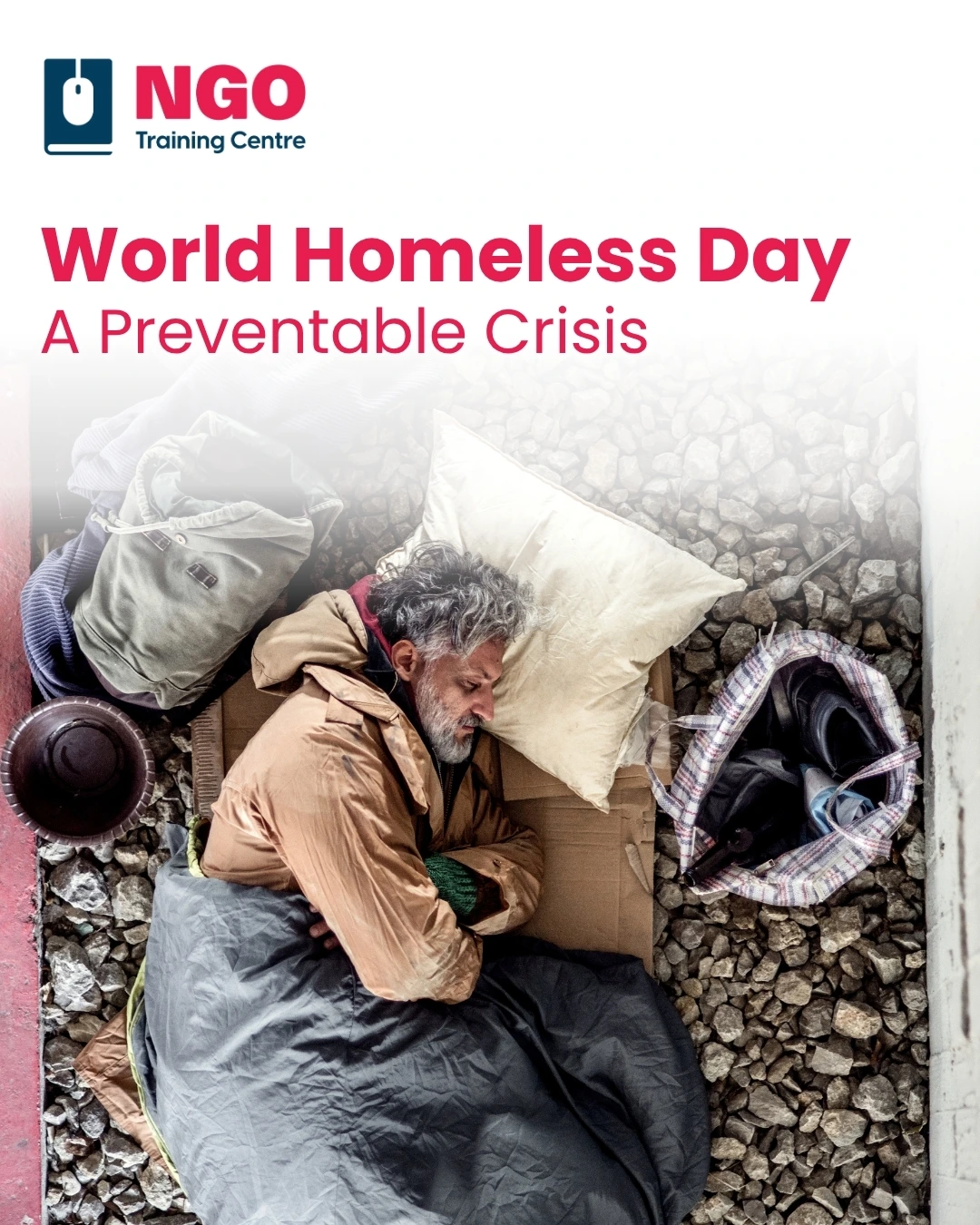
        On October 10, 2026, people around the world will celebrate World Homeless Day, while working to prevent and end homelessness and alleviate the suffering of those experiencing it.

        Homelessness can happen to anyone. But for people with disability, the risks stack up faster. Difficulty finding work, discrimination and low income all make it more likely that someone will lose their home, and much harder to find a way back.

        On top of that, people with disability often have specific accommodation and support needs. Finding the right place isn’t easy: Specialist Disability Accommodation (SDA) is hard to come by, and wait lists are often long.

        So how big is the problem?

        The numbers are pretty confronting:

        • About 1 in 11 people using specialist homelessness services has a disability.
        • Around a third (34%) of them live with severe or profound core activity limitations.
        • More than 60% also experience mental health issues, and around 45% have experienced family or domestic violence.
        • Nearly half (48%) were already homeless by the time they first asked for help.

        And it’s not just about finding somewhere to live. Some people are being pushed into homes they can’t easily leave, move around in, or even use the bathroom in.

        So, what finally pushes people to reach out for help? The top reasons are:

        0%

        general housing crisis

        0%

        housing that’s inadequate or unsafe

        0%

        family or domestic violence

        Sadly, many people with disability don’t report family or domestic violence. Instead, they stay with the person harming them because they’re afraid of becoming homeless or being left without support.

        When people do ask for help, what they need most is often what they’re least likely to get. Long-term, stable housing is the most requested form of assistance, yet only a small number of people with disability have secured it by the time they leave a service.

        People with disability also tend to need more support, for longer. On average, they use 12.4 services and need 81 days of support, more than people without disability.

        Where people end up matters too.

        Moving to an area with no accessible transport, few NDIS providers or limited healthcare can leave people isolated and at greater risk. Even crisis options can fall short: many women’s refuges are physically inaccessible, and some are reluctant to let NDIS workers in to provide support.

        Getting emergency help isn’t simple either. In Victoria, people needing crisis or emergency accommodation have to call a central number. Advocates say they’ve waited on hold for more than an hour, just to get a voucher for up to seven nights’ accommodation.

        In regional and rural areas, it can be even harder. Advocates often have to ring local social housing providers to track down a motel room, and those rooms are often run down.

        Advocates have also raised concerns about how little regulation there is around some living arrangements, such as Specialist Residential Services and non-registered group homes for people with Supported Independent Living (SIL) funding.

        The good news?

        People are taking action. The Queensland Disability Advocacy Network has set up a Housing Working Group to coordinate efforts nationally. The group has made a submission to the federal government’s National Housing and Homelessness Plan, calling for disability to be made a priority.

        Because at the end of the day, people with disability deserve what everyone deserves: a safe, stable home and the support they need to thrive.

        So today let’s raise awareness about the ongoing issues and barriers faced by people with disability, celebrate the good work, benchmark progress and advocate for improved policies and funding that can help prevent and end homelessness.

        Together, we can make things right.

        This is a preventable crisis.

        Source: Anne Webster MP, YouTube

        –

        Author: Amanda Robinson (She/Her) BA, MMHealthPrac.
        Dja Dja Wurrung and Taungurung Country

        Amanda, Head of Learning and Development and an experienced specialist in NDIS and Aged Care, promotes capability and sustainability within the disability and health sectors. With over 15 years of experience, a Master’s in Mental Health Leadership and Management, and an MBA underway, she offers extensive expertise and personal insight as someone with lived experience of disability. A military veteran and dedicated carer of a veteran, Amanda advocates for Human Rights, striving to reduce stigma and eliminate barriers for those with disability and mental health challenges. She is enthusiastic about fostering strong stakeholder relationships through her advocacy, communication, strategic thinking, and analytical abilities.

        Contact our friendly and supportive team

          Just because AI can write a training course doesn’t mean it should.

          AI is everywhere now.

          It can write an email, make a fun picture of you and your partner in ‘80s get-up, give you a great recipe for how to make gravy (don’t forget a dollop of tomato sauce for sweetness and that extra tang), and confidently explain something it has completely misunderstood.

          That last note is the problem. A huge problem.

          For disability support and aged care providers, training isn’t just about having staff read sector jargon on a screen. It is about preparing real people to make informed decisions that can affect the safety, dignity, rights and wellbeing of other people; which we all agree is a crucial role in society, and one that we can’t get wrong.

          So, while AI might be fantastic at some basic life admin tasks, “AI wrote it” is simply not even close to a quality assurance process in our sectors.

          And that matters in Australia, where – as everyone is well aware – providers operate in highly regulated environments, and workers need training that reflects current legislation, standards, evidence and actual practice.

          The question isn’t whether AI can create training. It obviously can. The question is whether you should trust it to create training without genuine subject matter expertise and human quality assurance.

          And according to experienced NDIS and aged care auditor Marguerite Hoiby, that is precisely where providers need to be careful about relying on AI-generated training.

          “Generic or AI-generated training can create a false sense of assurance, so be very careful with AI. It often misses legislative nuance, it lacks sector-specific risk controls, and it really can’t stand up to audit scrutiny.” – Marguerite Hoiby, NDIS & Aged Care Auditor

          So the answer is clear: trusting AI-generated training content is not a wise decision.

          AI doesn’t know what it doesn’t know

          One of the biggest problems with AI is that it can be incredibly confident while being completely wrong.

          That’s not necessarily obvious to the person reading the training, either. A beautifully written explanation with a professional-looking quiz at the end can create the impression that an expert has checked it.

          But sometimes the “expert” was a misinformed or uninformed chatbot. Or nobody at all.

          AI can draw on huge amounts of information, but it doesn’t replace the judgement and nuance of someone who understands the Australian care environment, the regulatory requirements that come with it, and what actually happens on the frontline.

          That’s an important distinction.

          AI can assist experts. But it should not, ever, replace them.

          Compliance isn’t a copy-and-paste exercise

          Australian disability and aged care providers operate in environments where training must connect to real standards and responsibilities.

          The NDIS Quality and Safeguards Commission takes a cautious approach to AI, stating that it maintains appropriate human oversight and that people review AI outputs. It says its approach is designed to ensure AI use remains safe, ethical, transparent and fit for purpose. Read more about it here.

          When it comes to training resources within the same sector, the same principle makes a lot of sense.

          In aged care, the strengthened Aged Care Quality Standards require providers to have a training system that ensures workers have the skills and competencies required for their roles. Training must respond to feedback, incidents, identified risks, and performance reviews, and workers must receive competency-based training on core matters. More on that here.

          That’s a long way from:

          “Hey ChatGPT / Claude / Grok / Gemini, write me a course on dementia care.”

          Another highly experienced auditor and training assessor, Stephanie Watts, notes this about AI’s limitations:

          “AI content risks being outdated and completely disconnected from regulatory expectations. Staff don’t keep up with evidence-based practices…risking a possible non-compliance.” – Stephanie Watts, Aged Care Auditor and Assessor

          People aren’t generic

          Perhaps the biggest issue is that disability and aged care are fundamentally human industries.

          The strengthened Aged Care Quality Standards emphasise person-centred care that accounts for an individual’s needs, goals, preferences, identity, culture, and life experiences.

          Good training needs to help workers understand how those principles translate into what they actually do.

          It needs scenarios.

          It needs context.

          It needs practical examples.

          It needs to challenge assumptions.

          And it needs people with genuine subject-matter expertise asking the uncomfortable question:

          “Would this actually help a worker make a better decision when it matters?”

          AI can help create those materials.

          But someone who understands the work needs to be checking them.

          The problem isn’t AI. It’s using AI instead of expertise.

          Let’s be clear, though: AI isn’t the villain here.

          Used properly, it is an incredibly useful tool.

          It can help trainers brainstorm ideas, simplify complex information, develop draft scenarios, create question banks and speed up administration.

          The problem comes when organisations and/or training resource creators decide that because AI can produce 10,000 words about disability support, they don’t need the person who actually understands disability support.

          That’s when efficiency starts becoming a false economy.

          As Marguerite puts it:

          “The warning signs (of AI training content) are pretty obvious: no subject matter experts, no Standards mapping, and no evidence of version control or competency. This then leaves providers exposed and non-compliant. So be very careful.”

          And that’s really the point.

          AI-generated training might look professional. It might sound professional. It might even be completely correct (by some miracle).

          But unless someone with the right expertise has checked it, how do you know?

          In disability and aged care, “probably right” isn’t a particularly reassuring training standard. In fact, that’s simply not acceptable.

          When the people being trained are responsible for the safety, dignity, rights and wellbeing of vulnerable people, human expertise shouldn’t be an optional extra.

          AI can be in the room.

          Just make sure there are genuine human experts in there too.

          How NGO Training Centre courses are different: training made by people, not prompts

          At the NGO Training Centre, we believe technology should only ever support great training, not replace the expertise behind it.

          That’s why our courses aren’t simply generated by AI and published for workers to complete.

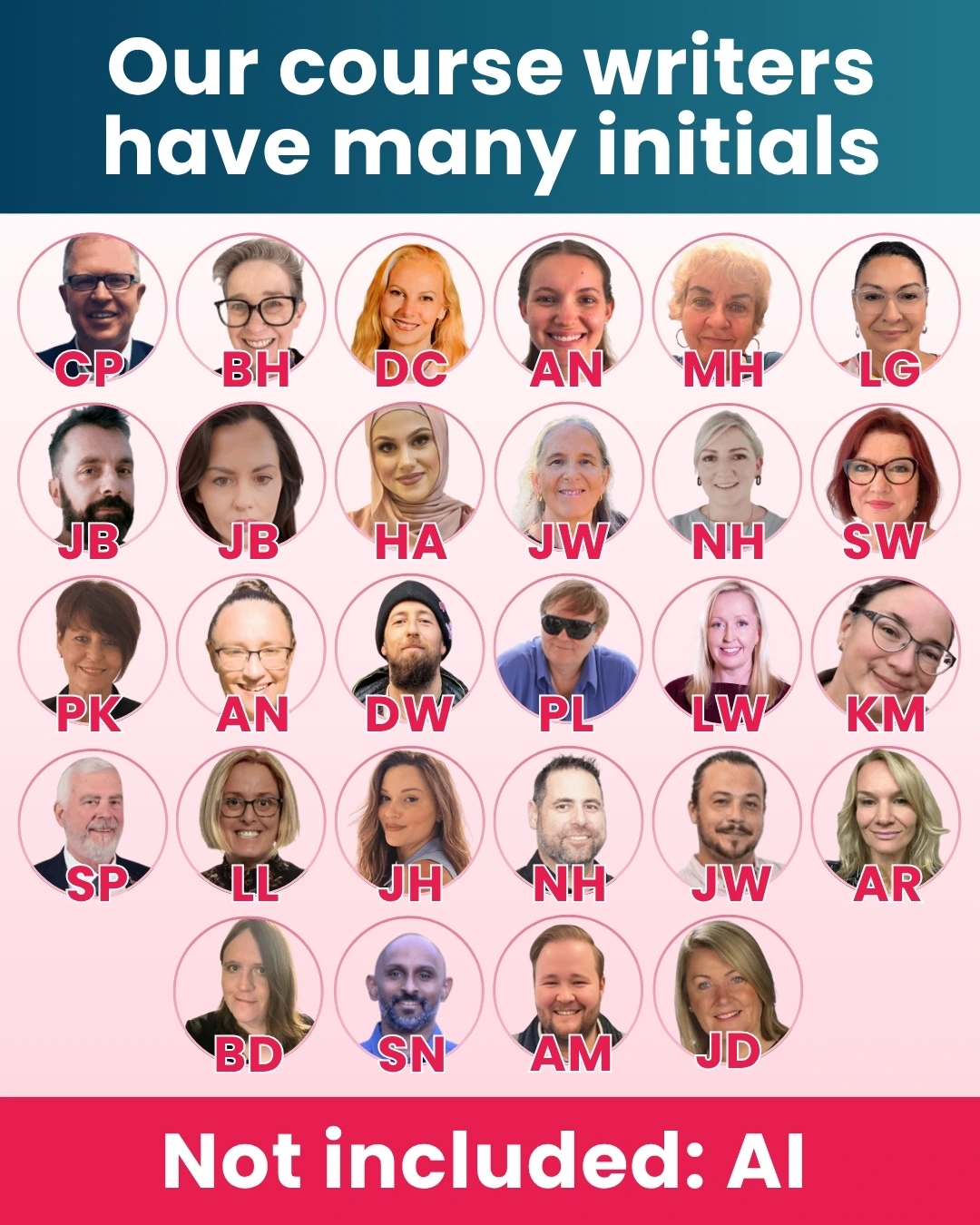
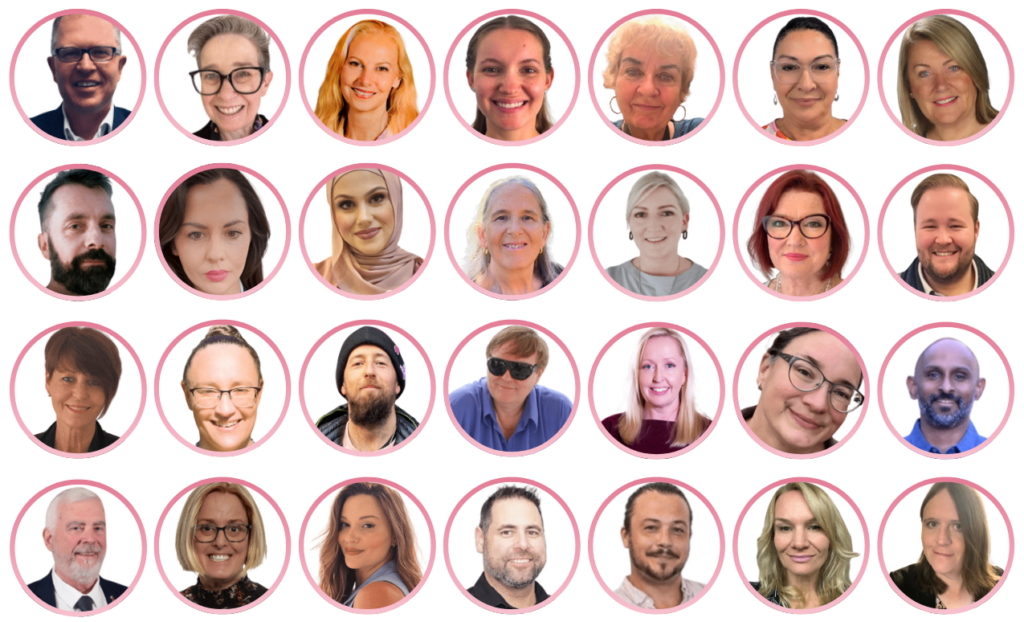
          Our training is developed and reviewed by a team of more than 25 experienced subject matter experts, auditors, trainers and industry professionals, with content designed specifically for the Australian disability support and aged care sectors.

          Our team of real people creates engaging online training that includes real-world scenarios, practical activities, and expert knowledge workers can actually use in their day-to-day roles.

          When training supports real people, it should be created by real people who understand what that means.

          So, at the NGO Training Centre, human expertise always comes first.

          As Stephanie notes:

          “The courses written by subject matter experts make a big difference when these experts can provide practical examples that learners can follow and understand in the real world…NGO has a specific recipe that makes their training effective.”

          Our expert team of course writers:
          NGO Training Centre Subject Matter Experts NDIS Disability and Aged Care Training Courses Australia
          Contact our friendly and supportive team

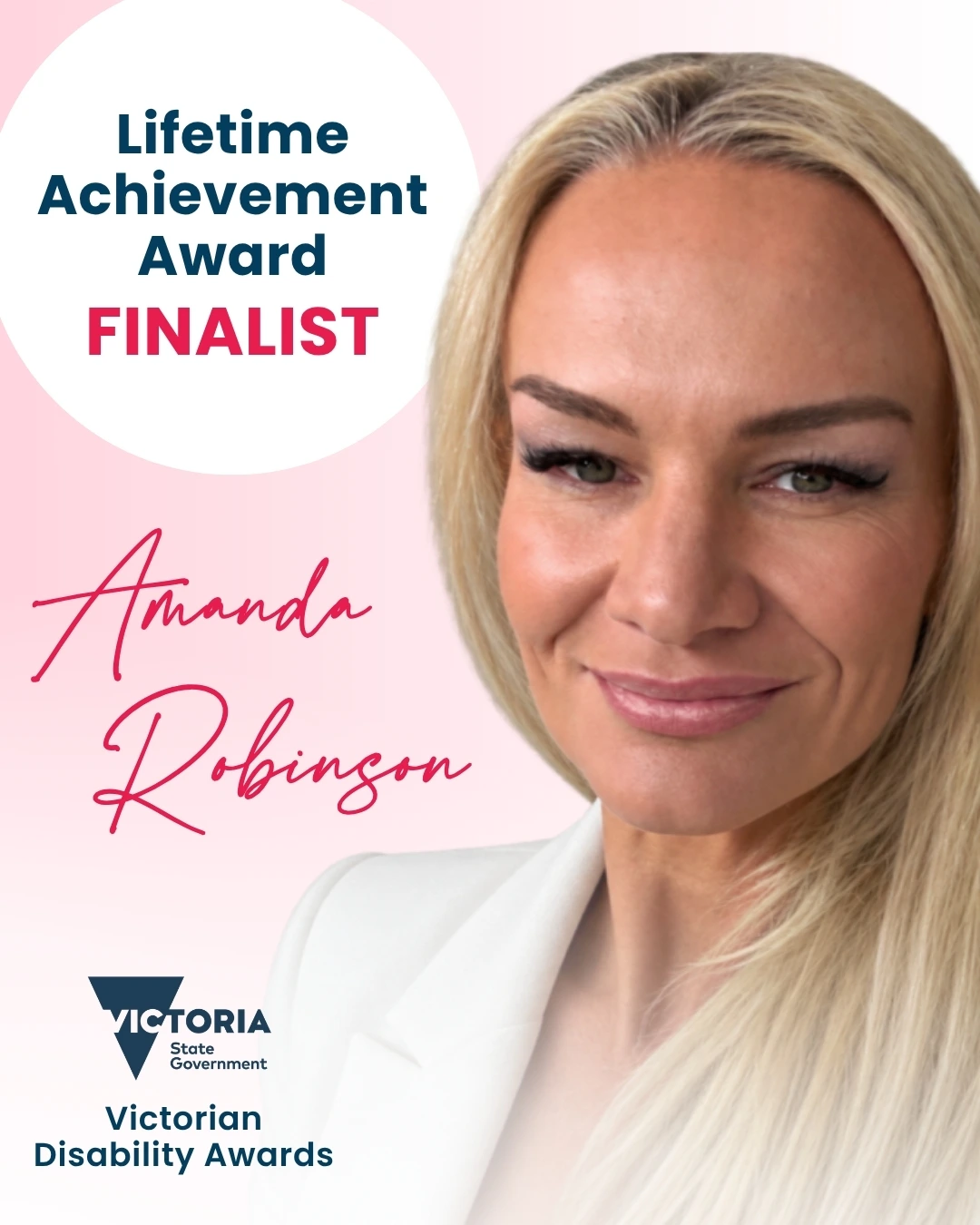
            We simply couldn’t be prouder of our own Amanda Robinson! ❤️

            Amanda has been named one of just two finalists for the Victorian Disability Awards 2026 Lifetime Achievement Award!

            It’s a huge and thoroughly-deserved recognition of a career dedicated to advocating for people with disability, driving positive change and making a lasting impact across the sector.

            We see Amanda’s passion and genuine care every day at the NGO Training Centre, but her impact reaches far beyond our organisation. Throughout her career, she has touched countless lives through her work in disability rights, advocacy, leadership, education, training and workforce development.

            Congratulations, Amanda! We absolutely adore you and all that you do.

            Being recognised at this level is an incredible achievement and so well deserved. We’ll be cheering you on all the way to the awards later this month!

            And we also wish to congratulate all the other finalists and nominees for the Victorian Disability Awards on your profound impact within the community!

            Contact our friendly and supportive team

              This year’s Mental Health Month theme, A Little Connection Goes a Long Way, reminds us that small, everyday moments of connection can do a lot for our mental wellbeing.

              Connection looks different for everyone, and it works best when it happens in ways that feel safe and comfortable. It might mean reaching out to the world around you, such as waving to a neighbour, chatting with the cashier or a support worker, spending time with the people you love, playing with a pet, or volunteering in your community.

              It can also mean connecting with yourself.

              Whether you’re connecting with others or reconnecting with yourself, small and simple acts can make a big difference.

              Isolation is one of the most significant factors that leads us to feelings of loneliness and despair, and contributes to poor mental health. It occurs even more often in the disability and aged care communities.

              I have seen time and time again that a lack of access and inclusivity can marginalise and isolate people to the point that they do not want to leave their homes. Helping people feel understood, included, and safe matters, and we can all contribute by showing compassion, understanding, and awareness of each person’s needs and wants.

              Research has shown that feeling connected can ease stress, support emotional balance, and help us cope when things get tough. Across our communities, humans find connection in ways that feel meaningful to them, shaped by who they are, what they value and what’s happening in their lives.

              This year’s theme invites us to take small, achievable steps toward connection that feels supportive. That might be with humans, animals, places, routines or moments that help us feel grounded.

              After all, every little connection counts.

              Check out the General Mental Health Month Calendar from Wayahead below. It’s a traditional monthly calendar featuring a different connection-focused prompt for each day of October. Designed for individuals, families, community groups and organisations looking for an easy way to participate in Mental Health Month.

              Wayahead General Connection Calendar

              –

              Author: Amanda Robinson (She/Her) BA, MMHealthPrac.
              Dja Dja Wurrung and Taungurung Country

              Amanda, Head of Learning and Development and an experienced specialist in NDIS and Aged Care, promotes capability and sustainability within the disability and health sectors. With over 15 years of experience, a Master’s in Mental Health Leadership and Management, and an MBA underway, she offers extensive expertise and personal insight as someone with lived experience of disability. A military veteran and dedicated carer of a veteran, Amanda advocates for Human Rights, striving to reduce stigma and eliminate barriers for those with disability and mental health challenges. She is enthusiastic about fostering strong stakeholder relationships through her advocacy, communication, strategic thinking, and analytical abilities.

              Contact our friendly and supportive team

                From 10 December 2026, the rules on automated decisions change. Privacy Act changes mean providers using automated tools to make significant decisions must say so in their privacy policy.
                A second wave of reforms, released as an exposure draft on 31 August 2026, would also widen what counts as personal information and tighten the rules on consent.

                10 December 2026 – automated decisions

                The Privacy and Other Legislation Amendment Act 2024 has passed. From 10 December 2026, your privacy policy must disclose when you use AI or a computer program to make a decision that could significantly affect a person’s rights or interests, and that program uses personal information to do it.

                For disability providers. Check any software that

                • screens or prioritises referrals and intake
                • allocates supports, hours or accommodation
                • scores risk or flags behaviours, or
                • informs incident escalation or restrictive practice decisions.

                If a tool uses participant information and shapes an outcome that matters in someone’s life, it likely belongs in your policy.

                The OAIC has published an issues paper on this obligation and APP 1 guidance on what a privacy policy must include.

                A wider net for personal information

                The exposure draft of the Privacy Amendment (Personal Data Protection) Bill 2026 would define personal information as anything that relates to an identified or reasonably identifiable person. That is broader than today’s test, and it could bring more of what providers hold into scope, from case notes to app and device data that can be linked back to someone.

                Genomic information would also be named as both sensitive information and health information. Genetic information is already covered, so this mostly removes any doubt.

                Consent has to mean something

                Under the draft, consent must be voluntary, informed, current, specific and unambiguous.

                Pre-ticked boxes, opt-out models and one broad form covering every possible future use are unlikely to be acceptable. Consent can still be implied where a person’s conduct makes it clear and the purpose is obvious from context.

                This can be a big change for disability services, where a single intake pack often bundles consent for sharing with the NDIA, other providers, family and researchers. Each purpose will need to stand on its own, so a person can say yes to one and no to another.

                It also fits naturally with supported decision-making. Specific, current consent is consent a person can understand, revisit, and change, with support where they want it.

                If you run or join research

                The current health and medical research exceptions would be replaced by one human research exception.

                To rely on it, research must be reviewed, approved and monitored under the National Statement on Ethical Conduct in Human Research and follow new guidelines from the Privacy Commissioner.

                Projects that never needed ethics approval before may now need a Human Research Ethics Committee to sign off. The exception only starts once those guidelines are in place.

                –

                Author: Amanda Robinson (She/Her) BA, MMHealthPrac.
                Dja Dja Wurrung and Taungurung Country

                Amanda, Head of Learning and Development and an experienced specialist in NDIS and Aged Care, promotes capability and sustainability within the disability and health sectors. With over 15 years of experience, a Master’s in Mental Health Leadership and Management, and an MBA underway, she offers extensive expertise and personal insight as someone with lived experience of disability. A military veteran and dedicated carer of a veteran, Amanda advocates for Human Rights, striving to reduce stigma and eliminate barriers for those with disability and mental health challenges. She is enthusiastic about fostering strong stakeholder relationships through her advocacy, communication, strategic thinking, and analytical abilities.

                Contact our friendly and supportive team

                  NGO Training Centre Online NDIS Training
                  Trigger Sidebar Cart0
                  ×
                  Your cart is empty. Return Home