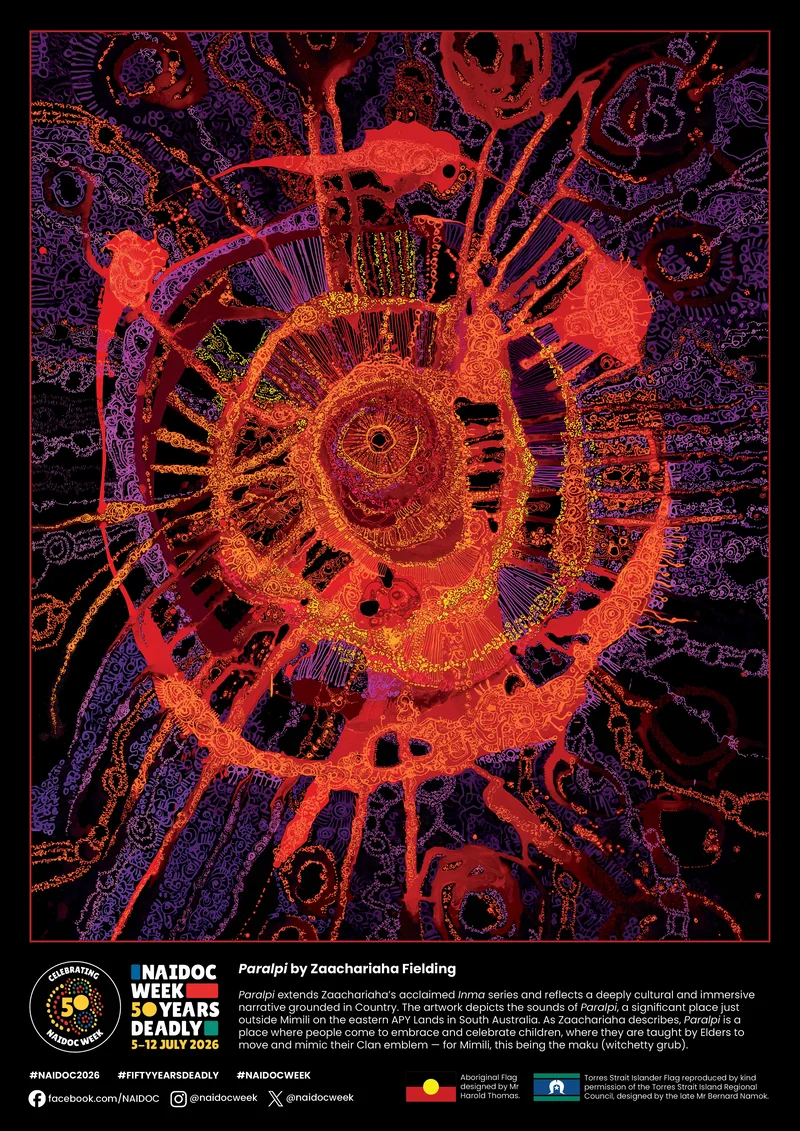
This week marks five decades of NAIDOC. Fifty years of Elders, organisers and communities carrying this forward.
We’re using the week to name a gap the sector hasn’t closed: First Nations people with disability sit at the intersection of two systems that too often fail them separately, and fail them more together.
What the Disability Royal Commission found
The Disability Royal Commission’s Final Report was clear on this. Racism and ableism don’t operate in isolation. They found:
Higher rates of institutionalisation and justice system contact
Communication and cultural barriers in mainstream disability services
Kinship, community and connection to Country are often left out of support planning, and
Elders are carrying ageism on top of both.
Why cultural safety is foundational, not optional
Cultural safety isn’t an add-on to disability support. It’s foundational: how a worker understands identity, family structure and decision making from the very first interaction.
Training built for this
At the NGO Training Centre, we recognise the gap in the training that Disability and Aged Care Workers were receiving. Training was often overlooked or not even considered unless mandated by funding bodies, which in itself is a sad story. Our courses ensure that we provide the voice of First Nations peoples. We offer the living experiences of our First Nations People. Two courses we offer are built for this:
Cultural Awareness (Disability): The foundational knowledge and self-reflective practice for genuinely culturally safe disability support. This is a great course that invites workers to look at their own beliefs and practices, and recognise unconscious bias.
Supporting First Nations Elders (Aged Care), recognising the authority and role of Elders in the community, and supporting them without overriding that role. Monica, who lives in an Elder’s facility in Shepparton, VIC, speaks about her experiences receiving care and how workers can deliver culturally safe care to her in a personal and respectful way.
Author: Amanda Robinson (She/Her) BA, MMHealthPrac. Dja Dja Wurrung and Taungurung Country
Amanda, Head of Learning and Development and an experienced specialist in NDIS and Aged Care, promotes capability and sustainability within the disability and health sectors. With over 15 years of experience, a Master’s in Mental Health Leadership and Management, and an MBA underway, she offers extensive expertise and personal insight as someone with lived experience of disability. A military veteran and dedicated carer of a veteran, Amanda advocates for Human Rights, striving to reduce stigma and eliminate barriers for those with disability and mental health challenges. She is enthusiastic about fostering strong stakeholder relationships through her advocacy, communication, strategic thinking, and analytical abilities.
Somewhere in Australia right now there is a person sitting in their home office with a laptop open and a cup of coffee going cold beside it. They have an ABN. They have a logo they built at eleven o’clock one night. They have a folder of policies they found from a template, downloaded, lightly skimmed, mostly believed. They have 10 support staff actively supporting participants accessing the scheme, and demand just keeps growing. They think the hard part is behind them.
It is not. But the work is learnable, and they have a little time – though less than the calendar might suggest.
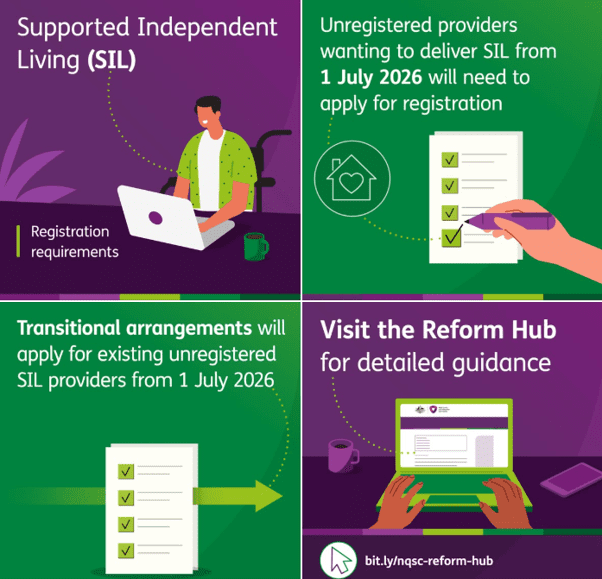
In December 2025, the Minister for the NDIS confirmed that supported independent living (SIL) providers and platform providers must register with the NDIS Quality and Safeguards Commission. That requirement starts on 1 July 2026. From that date, SIL and the relevant digital platforms move from “register if you feel like it” to “register, full stop”.
Now the part everyone wants pinned down: how long do you have?
The honest answer is that the Commission has not locked the final transition end date. Providers already delivering SIL without registration will not need to be fully registered on the morning of 1 July 2026. There is a transition period, and the Commission has said it will hand down the staged arrangements and further guidance as they are confirmed.
That sounds generous. It’s really not, and here’s why.
SIL sits on the Certification pathway. That means a two-stage audit – a documentation review, then an on-site audit against the NDIS Practice Standards, including the new SIL-specific standards. From start to finish, Certification takes eight to twelve months for a provider who is organised and arrives without major problems. Auditors are a finite resource. Every provider racing the same deadline lines up in the same queue, and the queue only tightens as the date gets closer.
So, the real answer to “how long do I have?” is not “until the transition ends”. It is “long enough, if you start now and not long at all, if you wait.”
A note for everyone reading this from the sidelines: certain it does not apply to them. In April 2026, the government made another HUGE announcement. It announced that mandatory registration will expand to cover personal care, daily living supports, and supports delivered in closed settings, with the expansion expected to commence from July 2027, with details still to be confirmed. If you deliver one of those supports, your turn is coming, and the same arithmetic applies.
The part that catches most providers out
The piece of this that trips up good providers is the self-assessment.
When you apply, you assess your own organisation against the NDIS Practice Standards. In writing. With evidence behind every claim. This is where capable services come unstuck, not because the support they deliver is poor, but because nobody has shown them what a quality response looks like or what evidence the Commission expects to see beneath it. Nearly one in four registration applications were rejected in a single year. A common reason was generic, template-style responses. There is a task force whose job is to spot exactly that.
A rejection is not a gentle tap on the wrist. It can stall the services you wanted to deliver, cost real money in fees and reapplication, and tarnish a reputation you have only just started building.
What the NGO Training Centre can offer
The NDIS Practice Standards are made up of a core module and a set of supplementary modules that apply depending on what you deliver.
Our NDIS Self-Assessment Preparation Courses are built the same way, so you pick only the ones relevant to your registration. Each course explains what the standard actually requires, shows you what a strong response reads like, and tells you the kind of evidence you need to support it. They run between twenty and sixty minutes, on a computer, tablet or phone, whenever it suits you.
They are built for people applying for the first time, for registered providers preparing for audit, and for practitioner roles such as behaviour support practitioners.
If you want to understand the shape of the thing before you spend a cent, start with the free introductory course. It walks through the registration application process, and what the self-assessment involves, so you go in knowing the terrain rather than guessing at it.
An auditor, Marguerite Hoiby, put it clearly in her review below. When the people who audit you say the preparation is worth doing, that is worth a pause.
“The Introduction course is highly comprehensive, simple, straightforward with some very helpful tips and hints. Worthwhile for any new providers.”
For the providers reading this with 1 July 2026 already circled, a dedicated SIL module is in the works and will be released in the near future, built around the new SIL-specific Practice Standards.
If SIL is your world, keep an eye out for it here on our website.
What next?
Getting registered is the start. Staying registered means staying compliant, and compliance was never a one-person job. I strongly advise you to outsource your training to ensure your staff receive the most up-to-date training and easily accessible evidence that auditors just froth over.
Our full course suite is built so the whole organisation stays trained and compliant across the areas it actually services. This ranges from frontline staff and management all the way to the board. Audit readiness is not a sprint at a deadline. It should be the norm. If you are a regular reader of my articles, you may remember one of my previous pieces in which I mention my own mantra as a former Quality Assurance Manager for a Disability Advocacy Organisation: ‘ARFA’, or ‘Always Ready For Audit’.
Which brings us back to the kitchen table, and the coffee that is now ice-cold.
The person sitting there was never going to be undone by the ‘work’. They were only ever at risk of being surprised by it. Surprise is the expensive part. Preparation is the cheap one.
Be ahead of the game. Don’t wait until it’s too late.
Not ONLY do we provide these great courses, but we also have over 100 disability-specific, fully NDIS-compliant microlearning courses you can access starting at only $29 per staff member per year. All providers, including Allied Health and Support Coordinators, can also access our bundles or pathways that can be purchased online if you need very specific training or to fill any gaps in your current training.
You can talk to us about all of your options by contacting our friendly and supportive team using the form below, or at 1300 990 995.
We want to ensure that you are not left behind when these changes are implemented. The disability community needs you!
As Head of Learning and Development and a seasoned NDIS expert, Amanda drives capability and sustainability in the disability and health sectors. With over 15 years of experience, post-graduate qualifications in Mental Health Leadership and Management, and currently pursuing an MBA, she brings deep expertise and personal insight as someone with lived experience of disability. A devoted carer, Amanda champions Human Rights, working to dismantle stigma and barriers for individuals with disability and mental health challenges. She is passionate about building robust stakeholder relationships, leveraging her advocacy, communication, strategic thinking, and analysis skills.
Until Everyone Is Safe – Including the Ones We Forget to Count
World Refugee Day falls on 20 June 2026, and 2026 marks seventy-five years since the world adopted the 1951 Convention relating to the Status of Refugees. Born from the ruins of war, that promise was never meant for one region, one generation or one people. It was meant for humanity as a whole. People forced to flee should not be returned to danger, and they should be able to live in dignity while they are displaced.
That safeguard is needed now more than it has been in a long while. More than 117 million people are forcibly displaced across the world, families uprooted by war in the Sudan, by violence in the Democratic Republic of the Congo, by the long crises in Ukraine, Afghanistan, the Syrian Arab Republic, Myanmar and beyond.
When people fleeing danger are refused protection, the harm does not stay still. Families are pushed onto more perilous routes. Children lose years of learning they never get back. Women and girls face greater risk. Host communities are left holding need without the support to meet it.
Protecting refugees is an act of compassion, yes. It is also a condition for stability and peace, which is less sentimental and more just as true.
This year’s theme is: Until Everyone Is Safe.
When I was leading advocacy work into the Disability Royal Commission, the government set us a target. Thirteen per cent. That was the share of our engagement across the Disability community to tell their stories and share their experiences in our community. We committed to reaching out among culturally and linguistically diverse communities, I guess because the government decided that if you do not name a number, the number quietly becomes zero.
It was still not enough. Reaching it was hard. It was hard for reasons that should embarrass a country as wealthy as this one. The Commission’s own findings spelled it out. People from CALD backgrounds face severe barriers navigating the NDIS, and it called for simpler access pathways and services that actually meet people where their language and culture sit. It urged that disability and rights information be available in many languages, not one. It urged organisations to employ people with disabilities from CALD backgrounds and to seat them on boards and advisory groups where decisions are made, not just in the consultation that is merely tokenistic.
It pointed to the place where the harm concentrates. The risk that lands on women, on children, on people who arrive carrying more than one reason to be turned away. Refugee, person with disability, woman, child, all at once, in one human being who is simply trying to seek help and support.
This is the part of the work we can do something about. At the NGO Training Centre, we provide a Cultural Awareness course for disability staff. It challenges your thinking about cultural awareness and translates that thinking into how you can best support people in the community who have experienced refugee status.
Our aged care courses are coming soon: Cultural Awareness and CALD Support, built so that workers understand the CALD community and refugees well enough to keep them safe from violence, abuse, neglect and exploitation and not as another tick box on a compliance form.
Whilst we are just one access point in the network of resources, there is a vast array of support available for Refugees and the CALD community here in Australia. Know what’s out there because until everyone is safe, the work is not done. Everyone, including the ones we keep forgetting to count.
Resources
National Ethnic Disability Alliance (NEDA) – is run by and for people from culturally and linguistically diverse backgrounds with disability, with advocacy and rights information written for migrants and refugees. Phone 0402 610 399, email comms@neda.org.au, neda.org.au
AMPARO Advocacy – offers independent advocacy and plain-language NDIS fact sheets and videos in community languages, including Arabic, Swahili, Kurdish Kurmanji, Burmese and Auslan. Phone (07) 3354 4900, email info@amparo.org.au, amparo.org.au
TIS National – provides free interpreting in more than 160 languages. Phone 131 450 and ask to be put through to the NDIS on 1800 800 101, or to any provider with their number ready.
NDIS access line – is where an access request begins. Phone 1800 800 101, with TIS on the line if an interpreter is needed.
Disability Gateway** is the national information and referral service for people with disability, their families and carers, with translated material. Phone 1800 643 787, disabilitygateway.gov.au
NDIS Quality and Safeguards Commission – takes complaints and concerns about NDIS services anywhere in the country. Phone 1800 035 544.
NOTE: People on permanent humanitarian visas can reach the NDIS. People on bridging visas, Temporary Protection Visas or Safe Haven Enterprise Visas usually cannot, so check the visa first before you point anyone at these numbers and raise a hope the system will not meet.
–
Author: Amanda Robinson BA, MMHealthPrac,
As Head of Learning and Development and a seasoned NDIS expert, Amanda drives capability and sustainability in the disability and health sectors. With over 15 years of experience, post-graduate qualifications in Mental Health Leadership and Management, and currently pursuing an MBA, she brings deep expertise and personal insight as someone with lived experience of disability. A devoted carer, Amanda champions Human Rights, working to dismantle stigma and barriers for individuals with disability and mental health challenges. She is passionate about building robust stakeholder relationships, leveraging her advocacy, communication, strategic thinking, and analysis skills.
It was wonderful to see such a diverse array of providers come together, each doing their part to ensure that individuals accessing aged care and disability support receive the care and respect they deserve. The energy across the room reflected exactly what these events are about: empowerment, education and community.
Connecting with our customers
A real highlight of my day was the chance to meet face-to-face with our customers, Your Care and Empire South, and to see firsthand the wonderful work they are doing in the community. Conversations like these are a reminder of the genuine impact happening on the ground every day.
I also took the opportunity to gather feedback and insights from across the sector, listening closely to providers’ approaches, the challenges they are navigating, the opportunities ahead, and the barriers emerging from the recent reforms to both aged care and disability support. These perspectives are invaluable as we continue to learn alongside the people and organisations we work with.
More than an expo
The day offered far more than a chance to browse the latest products, services and technologies designed to enhance the lives of individuals with disability and those accessing aged care. Informative seminars and interactive workshops created space to learn, engage and celebrate the diverse abilities within our community.
The Aged and Disability Expo is dedicated to connecting individuals, families and carers with the right resources and support networks. With a wide variety of exhibitors and engaging activities, these expos foster a welcoming environment where everyone can find solutions tailored to their unique needs. A big thank you to the organisers, exhibitors and everyone who made today such a meaningful occasion. I left informed, inspired and more connected to the community I am proud to serve.
–
Author: Amanda Robinson BA, MMHealthPrac,
As Head of Learning and Development and a seasoned NDIS expert, Amanda drives capability and sustainability in the disability and health sectors. With over 15 years of experience, post-graduate qualifications in Mental Health Leadership and Management, and currently pursuing an MBA, she brings deep expertise and personal insight as someone with lived experience of disability. A devoted carer, Amanda champions Human Rights, working to dismantle stigma and barriers for individuals with disability and mental health challenges. She is passionate about building robust stakeholder relationships, leveraging her advocacy, communication, strategic thinking, and analysis skills.
Meet one of the experts behind our Aged Care suite: Thirty years of nursing, leadership and dementia care expertise, built into every course.
Behind every great training course is someone who has lived the work. For our Aged Care Suite, that person is Lusie Glogovac, a Registered Nurse with more than 30 years of experience in the Aged Care sector and the Subject Matter Expert behind our courses.
Lusie’s career spans nearly every corner of aged care: nursing in residential facilities, quality improvement projects, clinical care and operational management. She understands the pressures care staff face mid-shift, as well as the compliance obligations on a manager’s desk. That dual perspective makes her course content practical and aligned with what providers are accountable for.
Lusie is passionate about ensuring people living with dementia can live the best life they can. Her approach starts with seeing the person, not the diagnosis. She empowers and mentors staff to focus on the individual and support them in whatever they wish to do, putting choice, dignity and identity at the centre of care. That thinking runs through the entire Aged Care Suite.
As an independent consultant, Lusie was recently involved in the roll-out and implementation of the new Strengthened Aged Care Quality Standards. She knows what the Standards ask of providers because she has helped organisations put them into practice. Your teams’ training reflects the sector as it is today.
Courses Shaped by Lusie’s Expertise:
View course
This product has multiple variants. The options may be chosen on the product page
Training only changes practice when it is grounded in reality. With Lusie as Subject Matter Expert, providers can be confident their teams are learning from someone who has done the work, led the work and helped shape the standards that now govern it.
June is Pride Month, and it is a moment worth pausing on.
This is the month we remember the birth of the global movement for LGBTIQASB+ equality, and the Pride marches that grew out of the 1969 Stonewall riots. Around the world, events like the Sydney Pride Festival now run throughout June to lift up voices, celebrate culture, and protect the human rights of LGBTIQASB+ communities. It is a time to raise awareness and to remember the pioneers who fought for equality, even when doing so put their own safety and freedom at real risk.
It also feels like the right time to talk about care, because the people who built that movement are ageing, and many of them rely on disability and aged care services today.
So, we want to share two courses we are proud of.
For disability support professionals
Our disability course teaches you how to provide person-centred, gender-affirming support for LGBTIQASB+ participants. You will discover what the term LGBTIQASB+ represents, where the acronym comes from, and why language and specific terminology matter so much. Using the Genderbread Unicorn analogy, we break down gender identity and expression, along with related ideas like sex assigned at birth and attraction. We also explore intersectionality and how it shapes the way LGBTIQASB+ participants access important social and medical supports. Finally, you will learn how Disability Support Professionals can help participants connect and feel included within both their LGBTIQASB+ and their disability communities.
We were lucky enough to work with Daniel Witthaus, Founder and CEO of Rural Pride Australia, to build this course, and we are very glad we did.
Daniel has spent 28 years challenging homophobia and growing LGBTIQA+ inclusion one cuppa at a time, in schools, rural communities, and occasionally in countries like Poland, Indonesia and Sri Lanka. His work spans Kids Helpline, VicHealth, the Victorian Equal Opportunity and Human Rights Commission, and No to Violence, a national men’s family violence organisation. For the last eight years, Rural Pride Australia has partnered with the Victorian State Government and its Commissioners for LGBTIQ+ Communities to deliver the LGBTIQ+ Equality Roadshow, Regional Communities of Practice, and the Rainbow Ready Roadmap across 29 regional and rural Victorian communities. We feel privileged to have such a knowledgeable human as our subject matter expert.
For aged care staff
Our aged care course was crafted by Brooke Dunn, a Perth-based educator and advocate working at the intersection of peer support and inclusive training. Brooke works part-time in Education and Peer Support with Queer and Diverse Pathways Pty Ltd, and serves as a Training Facilitator with TransFolk of WA, where she delivers training on gender diversity. Through both roles, she is committed to building understanding, inclusion, and safer spaces for LGBTIQA+ communities.
The course gives aged care staff the language, knowledge, and practical skills to provide genuinely inclusive care. It builds the foundations of inclusive language and terminology, unpacks the difference between sex, gender and sexual orientation along with common myths, and explores the lived experiences of ageing LGBTIQASB+ people, from identity harm and social isolation to discrimination, health concerns and trauma. By understanding how histories of stigma, criminalisation and exclusion have eroded trust in aged care, staff learn why compassion, cultural safety, and awareness matter so much. The course then finishes with concrete strategies for delivering inclusive, trauma-informed, rights-based care. The result is a team that feels more confident, and a service where every older person feels they belong.
This course will be released very soon! Stay tuned!
This June, you can gain the understanding, awareness, and allyship to better support the people in your care. Use the buttons above to access our courses, and see further resources below:
🌈 Support and peer resources
QLife: Call 1800 184 527 (3:00 PM to 9:00 PM daily) for anonymous, free, Australia-wide LGBTIQ+ peer support and referral.
Queerspace: Specialised LGBTIQ+ health and wellbeing services, plus family support. Visit the website.
Lifeline: Available 24/7. Call 13 11 14, text 0477 13 11 14, or visit www.lifeline.org.au for online chat and self-management resources.
⚖️ Advocacy
Equality Australia: For information, resources, and to support community protections and legislative advocacy, visit Equality Australia.
–
Author: Amanda Robinson BA, MMHealthPrac,
As Head of Learning and Development and a seasoned NDIS expert, Amanda drives capability and sustainability in the disability and health sectors. With over 15 years of experience, post-graduate qualifications in Mental Health Leadership and Management, and currently pursuing an MBA, she brings deep expertise and personal insight as someone with lived experience of disability. A devoted carer, Amanda champions Human Rights, working to dismantle stigma and barriers for individuals with disability and mental health challenges. She is passionate about building robust stakeholder relationships, leveraging her advocacy, communication, strategic thinking, and analysis skills.
There’s a lot happening in the world right now. Oil prices are volatile, global supply chains are under pressure, and uncertainty from the Middle East is making every business owner think harder about where their money goes and how resilient their operation really is.
Smart leaders in the disability sector are responding the same way smart leaders always do in uncertain times: they double down on their people.
Turn Training Costs into Tax Wins
When economic conditions get choppy, the organisations that come out ahead are the ones that use every available advantage. Right now, one of the clearest advantages available to you is sitting right there in the tax calendar.
Investing in NGO Training Centre’s NDIS-compliant and My Aged Care-compliant online courses before June 30th isn’t just good workforce development; it’s a legitimate, ATO-recognised business expense that reduces your tax bill. Instead of surrendering extra dollars at the end of a financially uncertain year, you could be channelling that money into the one thing no global crisis can take from you: a skilled, confident team. Chat with your accountant to make sure you’re ticking all the right boxes.
Built for Uncertain Times
Here’s the thing about unpredictable environments: they expose weak foundations fast. Audits don’t pause because the world is distracted, and spot checks are only becoming more frequent. The “we’ll deal with it later” approach to compliance training is a gamble no provider should be taking right now.
NGO Training Centre’s platform offers more than 100 courses meticulously aligned with the NDIS Practice Standards and Strengthened Aged Care Quality Standards. When auditors come knocking, you’ll have comprehensive training records, confident staff, and zero scrambling. That kind of readiness isn’t luck. It’s a choice you make before the pressure hits.
Flexibility That Works in the Real World
Nobody has time to waste right now. Support workers are busy, margins are tighter, and every hour counts. That’s exactly why online microlearning makes sense. 30-minute modules your team can complete between clients, on their phones, on their own schedule.
No travel costs. No venue hire. No catering bills. The platform has already saved organisations thousands of hours and dollars, and in a year where every dollar and every hour matters more than usual, that’s a huge boost.
Train Smarter, Not Longer: Introducing NGO Xpress
Here’s where the value proposition of training with NGO Training Centre gets even stronger. The newly launched NGO Xpress suite uses adaptive learning technology to assess what your experienced staff already know, and fast-tracks them past it. Most seasoned support workers complete their compliance modules in just 5 to 10 minutes, rather than the standard 45 minutes, without any reduction in compliance outcomes, certificate validity, or audit readiness. For an organisation with 10 experienced staff completing 10 Xpress courses each, that translates to over $2,000 in recovered labour costs. Savings that compound every single compliance cycle, year after year, with no additional investment required. NGO Xpress courses are already included across all NGO Training Centre Disability Support, Aged Care, and Combined Sector training packages at no extra cost.
When global markets are rattled, and economic forecasts are murky, one investment consistently holds its value: your team. NGO Training Centre’s 93% engagement rate and 90% completion rate across over 50,000 learners tells you something important. People respond when they feel genuinely invested in.
Lower turnover, better service delivery, higher job satisfaction. In a sector where great staff are genuinely hard to find, building a culture of learning is one of the smartest things you can do. Regardless of what’s happening on the world stage.
As Zig Ziglar put it: “You don’t build a business; you build people, and then people build the business.”
The Window Is Open. Don’t Wait for It to Close.
June 30th is approaching, and the financial year waits for no one. Once that date passes, you’ll be waiting another 12 months for this tax advantage. In a year already marked by uncertainty and rising costs, that is not a delay you can afford.
The organisations that come through uncertain periods strongest are not the ones that froze. They are the ones that invested wisely, built capable teams, and made decisions with clarity while others hesitated.
This is your window. The tax savings are real. The compliance protection is real. The cost advantages of online, flexible training are real, and in 2026, more relevant than ever.
Don’t spend another financial year wondering “what if.” Make this the year you turn training expenses into tax savings, compliance exposure into audit confidence, and global uncertainty into a reason to build the strongest team you’ve ever had.
Disclaimer: The information provided in this article is for general informational purposes only and does not constitute financial, tax, or legal advice. While we highlight potential tax benefits of investing in training, you should consult with a qualified accountant or tax professional to ensure any decisions align with your specific financial circumstances and comply with Australian Taxation Office (ATO) regulations.
–
Author: Matthew Crawford, PGCert(Bus)
Matt has over a decade of experience in B2B sales and business development and with a passion for human services, is deeply committed to driving meaningful solutions within the disability and aged care sectors. His commitment to improving service quality and his deep understanding of client needs make him a trusted partner in advancing the capabilities of organisations that support ageing individuals and people with disability across Australia.
If you deliver NDIS supports, change is coming, and for one group of providers, it’s coming fast.
The NDIS Quality and Safeguards Commission is reforming the NDIS Practice Standards: the quality and safety benchmarks every registered provider must meet. At their heart, these standards exist so participants can shape how safe, quality supports are delivered to them.
The reform is being driven by two parallel projects: a brand-new set of Practice Standards for supported independent living (SIL), and a broader review of the Practice Standards as a whole.
Here’s what each means for your organisation:
The headline: new SIL Practice Standards and mandatory registration
If you provide SIL supports, this is the part to read carefully.
In December 2025, the Minister for the NDIS announced that SIL providers must register from 1st July 2026 and comply with new NDIS Practice Standards for supported independent living. With that date now just weeks away, the window to prepare is short.
The reform didn’t appear from nowhere. Recent reviews and the NDIS Commission’s Own Motion Inquiry into Aspects of Supported Accommodation (OMI) surfaced real risks in supported independent living. Those risks were raised by participants, their supporters, advocates and the Commission itself.
Importantly, the new standards were co-designed. The Commission worked with Inclusion Australia and people with disability to develop them, so participant voices sit at the core of the new module rather than being added on afterwards.
What’s actually changing for SIL providers
A few practical points:
From 1st July 2026, providers of supported independent living supports will need to comply with the new SIL Practice Standards.
The new standards focus on quality and safety in shared accommodation with daily supports; and on giving clearer, more usable guidance to frontline workers.
The final SIL Practice Standards will be published on the NDIS Practice Standards page before 1st July 2026, so it’s worth bookmarking that page now.
The bigger picture: the NDIS Practice Standards Review
Alongside the SIL work, the Commission ran a national consultation to support a wider review of the Practice Standards.
That consultation asked some foundational questions: whether current obligations are appropriate and genuinely focused on what matters, what an NDIS Quality Framework should look like, and how guidance can better support safe, high-quality, participant-centred supports. The Commission is now working through the feedback, insights and recommendations to shape the next steps.
This isn’t separate from the SIL changes; it directly informed them. The consultation led to the introduction of Expectation Statements, which set out the perspectives of participants, workers and providers, along with guidance material that spells out what “good” actually looks like in practice. Expect this approach: clearer expectations, plainer guidance to flow through future reform.
What providers should do now:
If you deliver SIL supports, treat 1st July 2026 as a live deadline:
Read the draft module and map it against how you currently operate and identify the gaps now, not in July.
Confirm your registration pathway using the mandatory registration links above.
Brief your frontline teams early; much of the new standard is aimed squarely at day-to-day support quality.
Share the Easy Read factsheet with participants and their supporters so the change is understood on all sides.
Watch the Practice Standards page for the final version ahead of the deadline.
For providers outside SIL, the broader review signals the direction of travel: clearer expectations, stronger guidance, and standards that keep participants at the centre. Getting familiar with that thinking now will make whatever comes next far easier to absorb.
We’ll keep you updated on any changes. If you’re a new provider, pending renewal, or unregistered and need help to get registered, we’re here to support you.
We have a suite of courses to assist you with your Online NDIS Self-assessment, to get you started and to help you understand your requirements for application and audit.
We even offer a FREE Introductory course to kick off your registration journey.
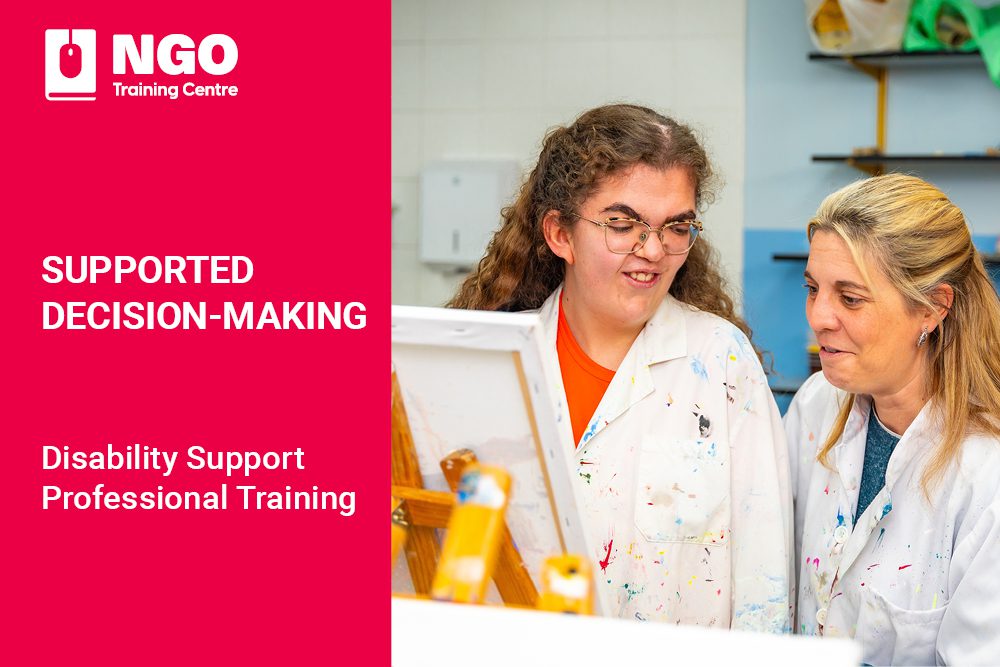
Here is the part I am genuinely excited about. The NGO Training Centre has just released two new training options for providers and individuals: a brand-new Supported Decision-Making course, purpose-built for the Module 5A world, plus an all-in SIL Pathway collection of courses covering all SIL-related topics.
1. Supported Decision-Making course
Supported Decision-Making sits at the very heart of the new standards. It is the difference between doing things for people and doing things with them, and it underpins every other standard in the module. Our new course gives frontline workers, coordinators and leaders the practical skills to put participant choice and control into everyday practice, not just policy.
With this course added to our library, the NGO Training Centre catalogue will soon cover every training requirement across all four SIL Practice Standards, for every staff member.
Our new SIL Pathway collection of courses compiles all the relevant courses for the new SIL Standards into one convenient bundle, allowing you or your team to learn everything you need to know for SIL supports in one convenient enrolment.
Positive Behaviour Support (Parts 1, 2 and 3) – including De-escalation, Restrictive Practices, and Positive Behaviour Support and Plans
✓
✓
Abuse and Neglect
✓
✓
Trauma-Informed Care
✓
✓
Cultural Awareness
✓
✓
A tick ✓ indicates the course provides evidence for that SIL practice area.
3. Complete Team Training Packages
All of our Disability Support and Combined Sector Training Packages include all of the above courses plus many more to provide your team with complete skills-focused and person-centred training that is up-to-date with the latest NDIS Standards reforms – including the new SIL requirements.
Our training packages start at only $1040 per year (less than $3 per day) and include expert-designed courses covering all NDIS Practice Standards (including the new SIL Standards), and a leading LMS with its own mobile app that makes delivering and reporting on training simple and fast on any device!
Plus, all our packages now include our new NGO Xpress refresher courses, designed to save your staff time when completing courses containing content they already know.
See why providers and auditors love our training packages in the video below:
Find out more about our Training Packages for Disability Support provider organisations and get in touch with our team to book a demonstration! You’re sure to be impressed!
If your organisation provides Supported Independent Living (SIL), NDIS registration is no longer optional. From 1 July 2026, SIL providers must be registered with the NDIS Commission, with existing unregistered providers required to apply for registration by 1 October 2026 if they want to continue delivering SIL supports.
This is a significant change for SIL providers, with registration bringing new requirements around quality, safeguarding, governance and participant-centred practice. Registered SIL providers must meet the NDIS Core Practice Standards as well as the new SIL-specific Practice Standards, and will be subject to certification audits.
NDIS Online Self-Assessment SIL Course
Our NDIS Online Self-Assessment – Supported Independent Living (SIL) course is designed to help providers understand what they need to address when completing their NDIS online self-assessment and preparing their supporting evidence.
In just 30 minutes, you’ll explore the four key SIL Practice Standards:
Supported decision-making
Safeguarding
Governance
Tenancy, housing and support arrangements
You’ll also learn how to develop effective, tailored responses to the self-assessment questions and identify the types of policies, procedures and worker qualifications that can help demonstrate compliance.
Most importantly, the course helps you understand what evidence you need to prepare for your registration or renewal application, so you can approach the process with greater confidence and identify potential gaps before they become a problem.
SIL registration is about more than completing an application. Providers need to be able to demonstrate that their organisation has the systems, processes, workforce and practices required to deliver safe, high-quality, person-centred SIL supports.
This course gives your organisation a practical starting point for understanding the new SIL requirements, preparing your self-assessment and getting your evidence in order.
Prepare your team. Understand the requirements. Strengthen your self-assessment. Get ready for SIL registration.
Webinar – NDIS Reforms & New SIL Standards
The NDIS is changing quickly, and the new SIL requirements are now rolling out. But what do providers actually need to do to prepare?
In this webinar, our expert panel provides practical guidance on the NDIS reforms, new SIL Standards, registration requirements, audits, staff training and evidence.
You’ll hear from:
🎤 Amanda Robinson – Head of Learning & Development, NGO Training Centre What training is required under each new SIL Standard and how to prepare your team.
🎤 Marguerite Hoiby – NDIS & Aged Care Auditor and Subject Matter Expert What auditors will be looking for, common compliance mistakes and how to stay audit-ready.
🎤 Belinda Llamas – Managing Director, Provider Institute An overview of the new NDIS registration process, including a walkthrough of the new SIL Standards online self-assessment modules.
Whether you’re preparing for NDIS registration, adapting to the new SIL requirements or getting your organisation ready for an audit, this webinar provides practical insights to help you understand what’s changed and what to do next.
We also welcome providers to book a meeting with our friendly team to discuss any questions or concerns about the NDIS Reforms and new SIL Standards:
Please get in touch if you require any advice, guidance or solutions to help you navigate these changes and challenges:
Contact our friendly and supportive team
–
Author: Amanda Robinson BA, MMHealthPrac,
As Head of Learning and Development and a seasoned NDIS expert, Amanda drives capability and sustainability in the disability and health sectors. With over 15 years of experience, post-graduate qualifications in Mental Health Leadership and Management, and currently pursuing an MBA, she brings deep expertise and personal insight as someone with lived experience of disability. A devoted carer, Amanda champions Human Rights, working to dismantle stigma and barriers for individuals with disability and mental health challenges. She is passionate about building robust stakeholder relationships, leveraging her advocacy, communication, strategic thinking, and analysis skills.
I am located on the traditional lands of the Dja Dja Wurrung and the Taungurung Peoples of the Kulin Nation. They are the traditional custodians of this land. I would like to pay my respects to Elders, past, present, and emerging.
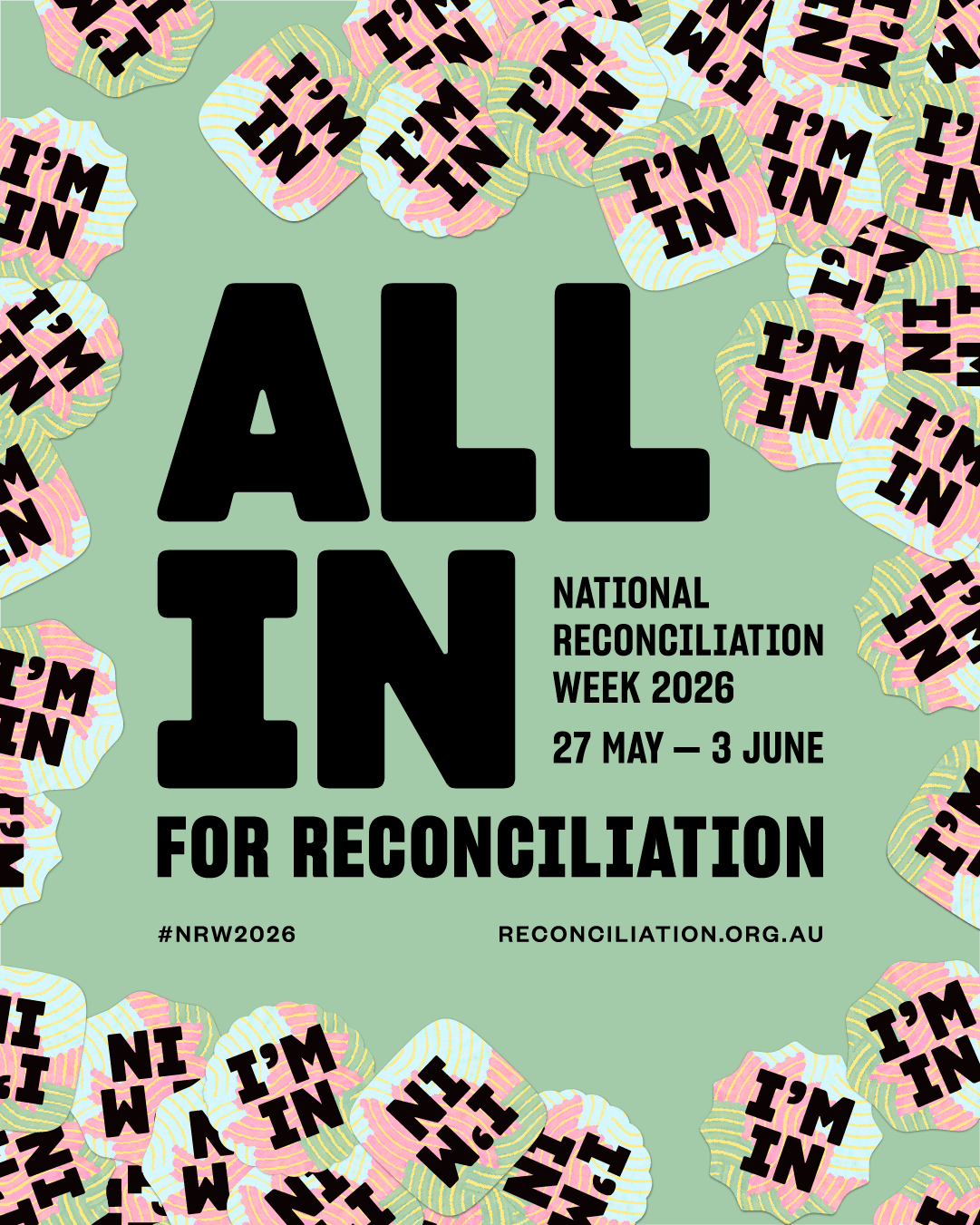
From 27 May to 3 June each year, Australians come together to recognise and reflect during National Reconciliation Week 2026. It is a significant time to learn about our shared histories, cultures and achievements, while considering how we can all contribute to reconciliation in meaningful ways.
The 2026 theme, All In, is a powerful reminder that reconciliation is everyone’s responsibility. It calls on all Australians to move beyond awareness alone and actively contribute to positive change every day through our workplaces, communities, services and conversations. As highlighted by Reconciliation Australia, reconciliation is not a passive activity. Aboriginal and Torres Strait Islander peoples have carried the emotional and cultural labour of advocating for equality and understanding for generations. The All In theme encourages all Australians to stand alongside First Nations peoples and commit to listening, learning and taking action together.
I have been on a steep learning journey since my professional career began in 2010. Without giving away my age, school and community education around First Nations Peoples was vastly different from what it is today. My eyes have been well and truly opened by education, seeking the truth, listening, and learning from incredible mentors along the way.
In my advocacy and support roles, including supporting the voices of First Nations People to be heard in the recent Disability Royal Commission, I had the privilege of working alongside a First Nations Elder who taught me so much about First Nations culture, unconscious bias, and the importance of cultural connection and culturally safe, respectful care. He shared his lived experience of being raised in an institution, and of racism and segregation. Ultimately, he guided me, but I took it upon myself to learn, research, and discover the truth about the history and the current barriers that First Nations Peoples still face today.
This is such an important part of reconciliation as it is not the sole responsibility of First Nations people to educate, explain and act; they have been doing this for far too long.
I wanted to share this knowledge and experience, so we engaged a subject matter expert and an Elder to share their lived and living experiences and to create an engaging and accessible course for all aged care staff supporting Elders. We are proud to offer our course ‘Supporting First Nations Elders‘ which is designed to educate disability and aged care workers in delivering compassionate, informed and culturally responsive care to First Nations Elders.
One of the most meaningful aspects of our aged care course is hearing directly from Elder, Monica, who currently resides in an Elder Facility in Shepparton, VIC. I had the privilege of being invited into Monica’s home, where she shared her story and the incredible impact she is having in the community through her support for cultural connection and her involvement in First Nations celebrations and activities across regional Victoria.
Monica generously shared parts of her personal story, experiences and reflections on growing up as a proud Aboriginal woman and what culturally respectful care looks like in our ‘Voice of Experience’ video segment in our aged care course. Her voice provides learners with valuable insight into the lived experiences, resilience, culture and identity of First Nations peoples.
Here is an insightful snippet of my conversation with Monica – the full version of Monica’s video is available in our ‘Supporting First Nations Elders‘ course:
Through our training, we aim to strengthen understanding and confidence for those providing care to First Nations Elders, and we provide learning outcomes such as:
Discussing First Nations cultures, including the diversity of histories, languages and traditions across communities
Understanding the historical background of First Nations peoples and the enduring impacts this has had on health and wellbeing
Demonstrating culturally safe and respectful care practices for First Nations Elders, and
Practising culturally safe communication that supports dignity, connection and trust. We also provide a broad range of additional learning resources to support ongoing education and reflection for workers across the aged care sector.
For many First Nations Elders, culture, Country, family and community are deeply connected to health and wellbeing. Delivering culturally safe care means recognising and respecting these connections while ensuring Elders feel heard, valued and understood.
National Reconciliation Week is an opportunity for all of us to reflect on how we can contribute to a more inclusive and respectful Australia, not just during one week of the year, but every single day.
Join us to celebrate National Reconciliation Week.
Because reconciliation is not about standing on the sidelines.
It is about being All In.
–
Author: Amanda Robinson BA, MMHealthPrac,
As Head of Learning and Development and a seasoned NDIS expert, Amanda drives capability and sustainability in the disability and health sectors. With over 15 years of experience, post-graduate qualifications in Mental Health Leadership and Management, and currently pursuing an MBA, she brings deep expertise and personal insight as someone with lived experience of disability. A devoted carer, Amanda champions Human Rights, working to dismantle stigma and barriers for individuals with disability and mental health challenges. She is passionate about building robust stakeholder relationships, leveraging her advocacy, communication, strategic thinking, and analysis skills.
If I told you that you could improve business operations, boost compliance, increase audit readiness, and improve staff morale by cutting costs, would that sound too good to be true?
There’s an old saying that suggests that ‘if something is too good to be true, it probably is’. Not in this case! Instead, I am going to prompt you to read on with another well-known saying.
The phrase ‘work smarter, not harder’ has stood the test of time for many reasons! It’s not about cutting corners. It’s about channelling effort where it genuinely counts, and eliminating waste where it doesn’t. When it comes to compliance training in the disability and aged care sectors, that philosophy has never been more relevant.
Introducing NGO Xpress. A suite of short, adaptive compliance courses built specifically for experienced support workers and care staff who already know their stuff.
The Problem With “One Size Fits All” Compliance Training
Let’s be honest: putting a seasoned support worker through a 45-minute compliance module they could recite in their sleep isn’t training. It’s busywork. It costs time, kills engagement, and quietly signals to your best people that you don’t recognise what they already bring to the table.
The disability and aged care sectors are demanding enough without adding unnecessary friction to your team’s day. Yet across Australia, organisations are still rolling out the same full-length courses to every staff member, regardless of experience, knowledge, or tenure. The result? Staff fatigue, disengagement, and a significant and entirely avoidable drain on your budget.
It’s worth asking: if compliance training has become so tedious that some staff are reportedly having others complete it on their behalf just to get it done, what does that say about the training itself? With adaptive learning that respects what your people already know, that temptation disappears. Because training that takes 5–10 minutes and recognises existing expertise, is training that the staff will actually do themselves.
What NGO Xpress Actually Does
NGO Xpress courses use adaptive learning technology to work with your staff’s existing knowledge, not against it. Each course begins with a short assessment quiz. If a learner demonstrates competency upfront, the system automatically fast-tracks them past familiar content and focuses only on where they do not demonstrate competency.
The result: most experienced workers complete their compliance training in just 5–10 minutes, compared to the standard 45 minutes per course. All while meeting the same learning objectives, receiving a full certificate, and remaining audit-ready under the NDIS Practice Standards and Strengthened Aged Care Quality Standards.
If a learner doesn’t demonstrate sufficient knowledge? They’re directed only to the parts of the course they need to learn (adapting in real time based on their knowledge), ensuring no compliance gaps are left open. The safety net is built in.
The Numbers Don’t Lie: This Is a Massive Return on Investment
Here’s where the “smarter, not harder” argument becomes impossible to ignore.
Take a single staff member completing 10 compliance courses:
Traditional Course
NGO Xpress Course
Time per course
45 minutes
10 minutes
Total time
7.5 hours
1.7 hours
Cost at $35/hr
$262.50
$59.50
Saving
–
$203 per staff member
Now multiply that by only half of your workforce. An organisation with 50 staff saves over $5,000 in training time across a single compliance cycle. For an organisation with 100 staff, that figure doubles. The savings scale with you.
And this isn’t money lost to reduced outcomes. It’s money recovered from repetition on the theoretical aspects of competency. Your staff are still assessed against every learning objective. Your audit trail is intact. Your certificates are indistinguishable from those earned through the full course. You simply get there in a fraction of the time.
Without NGO Xpress, Organisations Are Actively Leaving Money on the Table
I’m not gonna lie: in most circumstances, organisations without access to NGO Xpress courses are worse off. Financially and operationally, than those who have them.
Every hour a support worker spends in training they don’t need is an hour they’re not with a participant. Every dollar spent on unnecessary training repetition is a dollar that isn’t going back into your service, your staff, or your growth. And in a sector where margins are tight and workforce retention is a constant challenge, that ongoing inefficiency compounds.
The good news is that NGO Xpress courses are already included in all NGO Training Centre Disability Support, Aged Care, and Combined Sector training packages at no additional cost. If you’re already an NGO Training Centre customer, you have access to this right now. If you’re not yet a customer, this is one more compelling reason to make the switch.
Over 80 Xpress Courses Across Disability and Aged Care
The NGO Xpress suite spans both sectors and covers the compliance topics that matter most to your workforce. Currently available courses include Manual Handling, Infection Control, Hand Hygiene, Behaviour Support (Parts 1–3), Assisting with Medication, PPE for Disability Support Professionals, Complaints and Reportable Incidents, and more. With an extensive coming-soon pipeline that includes Trauma-Informed Care, Suicide Prevention, Seizure Management, Wound Care, Workplace Safety, Professional Boundaries, and more.
Every course in the suite is developed and governed by a team of genuine subject-matter experts: registered nurses, clinical psychologists, NDIS auditors, behaviour analysts, physiotherapists, and sector specialists. Each has qualifications, often at the Master’s level, and extensive real-world experience in their field. This isn’t generic or AI-generated eLearning content. It’s sector-specific, clinically grounded, and built to withstand auditor scrutiny.
Don’t Wait Another Year
Karen Lamb once wrote:
“A year from now, you may wish you had started today.”
It’s the quiet truth behind every delayed decision. Every month, an organisation runs compliance training the old way, the cost accumulates: in dollars, in hours, in staff morale. The organisations that have already made the shift are banking those savings now, cycle after cycle.
NGO Xpress isn’t a future investment to consider. It’s a current advantage to activate.
If you’re already with NGO Training Centre, log in and explore your Xpress courses today. If you’re not yet a customer, get in touch with our team to discover how our training packages, now supercharged with NGO Xpress, can transform the way your organisation meets compliance, manages costs, and supports the people who matter most.
Work smarter. Your staff deserve it. Your budget demands it. And the participants benefit most when the people supporting them are engaged, capable, and not burned out from sitting through training they didn’t need.
NGO Training Centre is Australia’s trusted provider of online compliance training for NDIS disability support and aged care organisations. Supported. Trusted. Expertise.
–
Author: Matthew Crawford, PGCert(Bus)
Matt has over a decade of experience in B2B sales and business development and with a passion for human services, is deeply committed to driving meaningful solutions within the disability and aged care sectors. His commitment to improving service quality and his deep understanding of client needs make him a trusted partner in advancing the capabilities of organisations that support ageing individuals and people with disability across Australia.