Meta Pixel

The NGO Training Centre is a great starting point if you are looking to understand the key requirements and responsibilities of an aged care worker, or to maintain your skills and knowledge once you are qualified and in the workforce.

Our training is all written by subject-matter experts and field auditors, and the courses will help keep your skills and knowledge fresh and up to date with changes in legislation, particularly during these reforms.

It can fill gaps and introduce you to concepts to help close them and get you up to speed with the sector, which can be great if you are still unsure about committing to a certification that will take you anywhere from 6 to 12 months.

Check out our popular career starter pathways below and begin your learning journey today!

Pathway 1: Aged Care Foundations Pathway – only $338
Aged Care Foundations Pathway for Aged Care Careers Training - NGO Training Centre

This pathway gives you the essential knowledge about how aged care works in Australia.

You will learn about the Strengthened Aged Care Quality Standards, how to prevent and report elder abuse, how to support people’s independence and dignity, incident reporting, mealtime safety, falls prevention, and how to respond to choking.

These are the things every aged care worker must understand before they start work.

Pathway 2: Aged Care Support Induction Pathway – only $338
Aged Care Support Induction Pathway for Aged Care Careers Training - NGO Training Centre

This pathway builds the practical, day-to-day skills of a great aged care worker.

You will learn about person-centred care, how to write professional progress notes, how to communicate well, how to work as part of a team, how to set professional boundaries, and how to support people living with dementia.

These are the skills that make you genuinely useful and trustworthy on the job.

To become an Aged Care Worker, however, you will very likely (at a minimum) need to complete a qualification in individual support if you don’t already have a nursing background or Australian qualifications in the field. Aged care providers, particularly residential facilities, will request this as a minimum qualification. Some may allow you to commence employment whilst studying, usually at their own risk.

You can complete the Certificate III in Individual Support (CHC33015) at a TAFE or a quality Registered Training Organisation (RTO). BUT… make sure you do your research, as not all training providers are created equal.

‘Buyer beware’ and those training providers or RTOs that seem to be too good to be true, or don’t offer support, resources or placement opportunities probably are. You can check that they are accredited and deliver nationally recognised training via the training.gov.au website. Make sure you research their validity, including checking their trainers on LinkedIn or Google. A key indicator of quality is that they sport the Nationally Recognised Training Logo and a 5-digit provider code. Another good indicator is that they provide mandated work placement support. A sign of a good RTO is that they arrange your placement for you, rather than leaving you to find your own. This process itself is very stressful for a learner and can be overwhelming when navigating an unfamiliar system.

Sadly, there have been some dishonest online training organisations that claim their modules/units can be used as Recognised Prior Learning (RPL) towards a Certificate III in Individual Support; again, approach these with great caution. You need more than microlearning credentials to become a fully qualified aged care worker.

Alternatively, if you are after more specialised training, you can complete a Certificate IV in Ageing Support (CHC40315). This will give you a good overview of aged care, the safety, legal and ethical protocols you need to know when working with the ageing individuals, as well as some leadership skills.

Above this qualification, ensure that you also have up-to-date immunisations as required, and complete certifications and checks, such as a First Aid Certificate and a National Police Check. Some organisations may fund or reimburse you for completing these, so you can always check with them before applying for a position.

With more and more regulatory requirements and a much lower risk appetite from the Aged Care Quality and Safety Commission, ongoing education has never been more important to people wanting to enter the industry.

So, please do your research and become familiar with the requirements for the field you wish to specialise in before diving in headfirst.

The sector needs you. Start today.

Marguerite Hoiby is a highly experienced Registered Nurse, auditor, and consultant with extensive expertise across the health, disability, and human services sectors. She brings decades of practical and governance experience in quality, compliance, and clinical practice.

Marguerite has played a key role in developing several Aged Care and Disability courses for the NGO Training Centre, drawing on her deep knowledge of regulatory frameworks, service standards, and workforce capability requirements.

She is an experienced auditor, assessor, and technical reviewer across multiple national frameworks, including the National Safety and Quality Health Service (NSQHS) Standards, the NDIS Practice Standards (across all modules as a Lead Auditor and Technical Reviewer), Disability Employment Services, Human Services, and Quality Management Systems ISO 9001.

Marguerite’s clinical background spans general, paediatric, and operating theatre nursing, complemented by specialised expertise in spinal injuries and rehabilitation. She also holds postgraduate qualifications in business and educational administration, enabling her to bridge clinical practice with organisational governance, workforce development, and quality improvement.

Her incredible work continues to support providers across aged care, disability, and health services in strengthening quality systems, meeting regulatory standards, and delivering safe, person-centred care.

We are privileged to have Marguerite on board as our Subject Matter Expert, and we are sure you will find her course content invaluable to your organisation for both quality and compliance.

Learn more about all our brilliant Subject Matter Experts on our About Us page.

On International Women’s Day 2026, we celebrate progress.

We must also confront an uncomfortable truth: not all women experience equality in the same way.

For women with disability and women in aged care, gender inequality is compounded by ableism, ageism and systemic barriers that continue to limit autonomy, safety and voice.

In Australia, the late Stella Young powerfully challenged society’s views on disability. She rejected narratives that reduced people to objects of inspiration and instead demanded recognition of rights, leadership and agency.

Her advocacy remains deeply relevant today, particularly for women with disability whose voices are too often spoken about rather than listened to.

Women with disability are disproportionately impacted by violence, underemployment and exclusion from decision-making. Older women, particularly those in residential aged care, can experience invisibility at a time when dignity, consent and autonomy matter most.

Gender does not disappear with age. Nor does the right to self-determination.

At the NGO Training Centre, we believe that quality workforce education is one of the most practical levers for change.

If staff understand consent in the context of cognitive decline, they better protect autonomy.

If leaders understand gendered violence risk factors, they respond earlier and more effectively.

If organisations embed person-centred care and trauma-informed practice, women are safer.

Training alone does not solve inequality. But capability shapes culture. And culture shapes outcomes.

International Women’s Day must be more than a symbolic gesture or another tokenistic post. It must challenge the disability and aged care sectors to examine whether our systems truly uphold the rights of women, or whether convenience, compliance and outdated assumptions still influence practice.

The standard we set in disability and aged care environments reflects what we believe about women’s worth.

On 8 March 2026, our position is clear:

Women with disability and ageing women deserve visibility, leadership, safety and respect.

Not merely an aspiration, but the standard practice. And that is work we remain committed to every day.

How are you supporting your organisation to rise above discrimination and balance the scales?

Author: Amanda Robinson BA, MMHealthPrac,

As Head of Learning and Development and a seasoned NDIS expert, Amanda drives capability and sustainability in the disability and health sectors. With over 15 years of experience, post-graduate qualifications in Mental Health Leadership and Management, and currently pursuing an MBA, she brings deep expertise and personal insight as someone with lived experience of disability. A devoted carer, Amanda champions Human Rights, working to dismantle stigma and barriers for individuals with disability and mental health challenges. She is passionate about building robust stakeholder relationships, leveraging her advocacy, communication, strategic thinking, and analysis skills. 

Contact our friendly and supportive team

    Right now, in one of the most volatile climates the NDIS has ever seen, we’re watching something alarming.

    Plans are being cut.

    Costs are rising.

    Participants are being removed from the scheme.

    Funding is tightening.

    Last week, a carer contacted me after the NDIS declined funding for an air-conditioner filter for her partner’s approved medical cooling unit. The case is now at the tribunal, costing the government thousands in lawyers and causing years of unnecessary stress.

    How much is the filter? Around $250.

    The risk to the participant?

    Priceless.

    And yet somehow, training providers are popping up overnight like it’s a gold rush. Outsourced from offshore individuals claiming to be organisations using AI as a weapon, not a tool, just to make money. It’s not Eureka; it’s downright dangerous.

    That should concern every credible disability and aged care provider in this country because, whilst revenue is shrinking, risk is rising.

    Providers are now supporting more complex participants with fewer resources. Margins are thinner. Scrutiny is higher. The NDIS Quality and Safeguards and Aged Care Commission are watching closely. Families are watching even closer.

    And yet some organisations are still choosing the cheapest training option they can find.

    Let’s be blunt: not all training is created equal.

    If the training you purchase is not aligned to the NDIS Practice Standards, if it is not compliant, if it is not created by genuine subject matter experts who understand restrictive practices, high-risk behaviours, mental health complexities and duty of care, then you are not building capability.

    You are building liability.

    As a disability advocate, I’ve seen providers send undertrained staff into high-risk environments with nothing more than a rushed induction and a PDF.

    I’ve seen ‘training’ delivered by friends, people with no formal expertise, or by people with no training at all. I’ve seen staff taught incorrect practices that escalate behaviours rather than support regulation and safety.

    And I have seen the consequences.

    When staff are inadequately trained, participants are placed at risk. Families lose trust. Organisations unravel, and sometimes, the cost is devastatingly permanent.

    This is not just about compliance paperwork. It’s about safeguarding human lives.

    So, here’s the decision every provider must make:

    Do you choose the cheapest training because budgets are tight?

    Or, do you choose a training provider with a proven track record in the sector, highly qualified subject matter experts who audit NDIS and Aged Care organisations in Australia, real instructional designers, a deep knowledge of the Commission’s requirements, and a history of standing behind their work?

    Because cutting corners on training will not protect your bottom line.

    It will expose it, and the only corner you will feature on is Four Corners.

    In today’s climate, you do not want to be the next provider facing sanctions, investigations, or worse, the subject of a national exposé. If you own or lead an organisation, invest in training the same way you would invest in your governance, insurance, and safeguarding systems.

    Smart providers know that training is not a cost centre.

    It is risk management.

    It is an ethical responsibility.

    And in the NDIS environment of 2026;

    It is survival.

    Choose accordingly.

    Author: Amanda Robinson BA, MMHealthPrac,

    As Head of Learning and Development and a seasoned NDIS expert, Amanda drives capability and sustainability in the disability and health sectors. With over 15 years of experience, post-graduate qualifications in Mental Health Leadership and Management, and currently pursuing an MBA, she brings deep expertise and personal insight as someone with lived experience of disability. A devoted carer, Amanda champions Human Rights, working to dismantle stigma and barriers for individuals with disability and mental health challenges. She is passionate about building robust stakeholder relationships, leveraging her advocacy, communication, strategic thinking, and analysis skills. 

    Contact our friendly and supportive team

      International Wheelchair Day is a global day to celebrate the positive impact wheelchairs have on the lives of millions of people worldwide and to recognise the importance of accessibility, inclusion, and choice.

      At NGO Training Centre, we acknowledge that use of a wheelchair is not a limitation, it is a tool of independence, mobility, participation and identity.

      Today is an opportunity to:

      • Celebrate the achievements and contributions of people who use wheelchairs
      • Promote inclusive communities and accessible environments
      • Challenge stigma and outdated assumptions, and
      • Reflect on how we can strengthen inclusive practice across aged care, disability and community services.

      For organisations working within the NDIS and aged care sectors, International Wheelchair Day is also a reminder of our responsibility to:

      • Support individual’s choice and control
      • Ensure environments are physically accessible
      • Promote dignity, respect and rights, and
      • Listen to lived experience.

      REAL inclusion goes beyond ramps and doorways.

      It’s about attitudes, language, service design and meaningful engagement.

      As the best training provider in Australia, we support disability and aged care professionals across Australia and remain committed to building workforce capability that centres on lived experience, human rights, and practical inclusion.

      Because accessibility is not a feature, it’s a right.

      Author: Amanda Robinson BA, MMHealthPrac,

      As Head of Learning and Development and a seasoned NDIS expert, Amanda drives capability and sustainability in the disability and health sectors. With over 15 years of experience, post-graduate qualifications in Mental Health Leadership and Management, and currently pursuing an MBA, she brings deep expertise and personal insight as someone with lived experience of disability. A devoted carer, Amanda champions Human Rights, working to dismantle stigma and barriers for individuals with disability and mental health challenges. She is passionate about building robust stakeholder relationships, leveraging her advocacy, communication, strategic thinking, and analysis skills. 

      Contact our friendly and supportive team

        NDIS registration audits are no longer a one-off expense you can budget around once and forget. In 2026, they are a recurring, significant, and often underestimated operational cost. How well-prepared your organisation is at audit time can mean the difference between a smooth sign-off and a costly follow-up.

        Here’s what the numbers look like for most providers right now.

        For higher-risk providers seeking certification, initial audit costs often start at $3,000 and can exceed $10,000, particularly where multiple sites, complex supports, or travel are involved. Then there’s the mid-term surveillance audit around the eighteen-month mark, typically costing between $1,500 and $5,000. Add in the renewal audit at the end of the registration period (budgeted at roughly the same cost as your initial audit), and it’s not uncommon for a provider to spend $15,000 to $25,000 or more across a single registration cycle. This is before accounting for any conditional or out-of-cycle audits triggered by scope expansion or identified non-conformities.

        Experienced providers now treat audits as a recurring line item, not a surprise. The smartest ones go a step further: they treat training as the investment that makes every audit dollar count.

        What Auditors Are Actually Looking For

        NDIS auditors are assessing whether your workers have the knowledge and skills to deliver safe, high-quality, person-centred supports in line with the NDIS Practice Standards. They want to see evidence, not just intention. That means documented, completed training that is current, compliant, and traceable.

        When your team can’t clearly demonstrate the evidence, non-conformities are identified. Non-conformities mean follow-up audits. Follow-up audits mean more cost.

        When your team walks into an audit backed by comprehensive, standards-aligned training and clean LMS reporting, the process is faster, smoother, and less likely to generate costly remediation.

        The ROI Case for Quality Online Training

        Consider a mid-sized provider with 30 support workers. At NGO Training Centre, a full-suite training package can cost as little as $88 per user per year. That investment gives every worker access to over 100 NDIS-compliant courses covering everything from NDIS foundations and induction training through to complex care, medication management, and specialised skills.

        Now compare that to the cost of a single follow-up audit triggered by gaps in staff training documentation: a minimum of $1,500 to $5,000. Or the reputational and operational impact of a conditional audit following an incident linked to inadequate worker knowledge.

        The training pays for itself many times over. Not just in audit outcomes, but in the quality of care your workers deliver every day.

        One of our clients, Care Provisions Australia, put it plainly in their review:

        The NGO training modules have significantly contributed to enhancing our integrity, credibility, and quality… I can confidently state that it has proven to be one of the best business decisions we have made.

        Another client, Sindy from Enabled Care, noted that the

        breadth and quality of the training not only met but exceeded the expectations of our NDIS auditor.

        What Makes NGO Training Centre Different

        Our platform is purpose-built for NDIS and Aged Care providers who need training that performs in the real world, not just on paper.

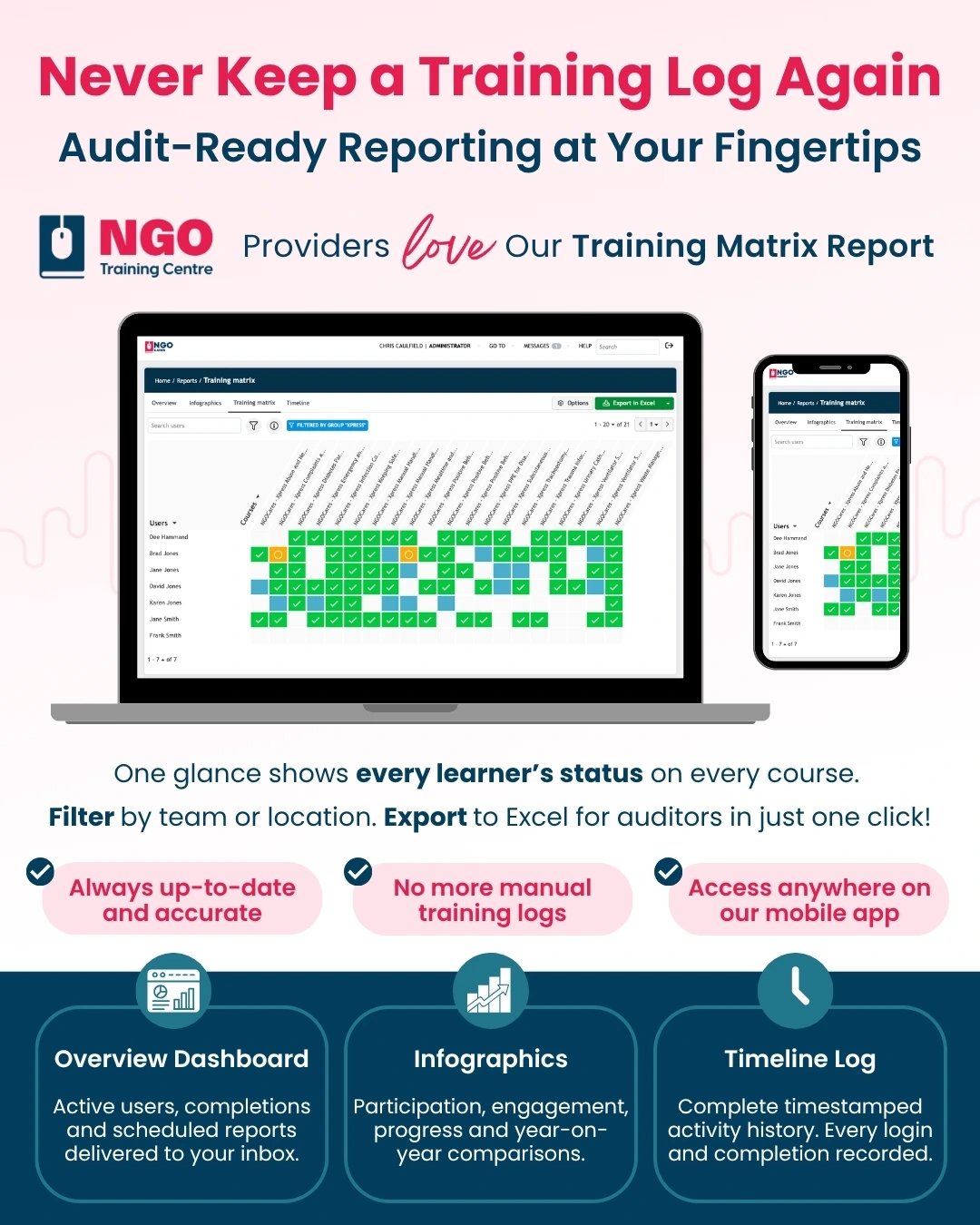
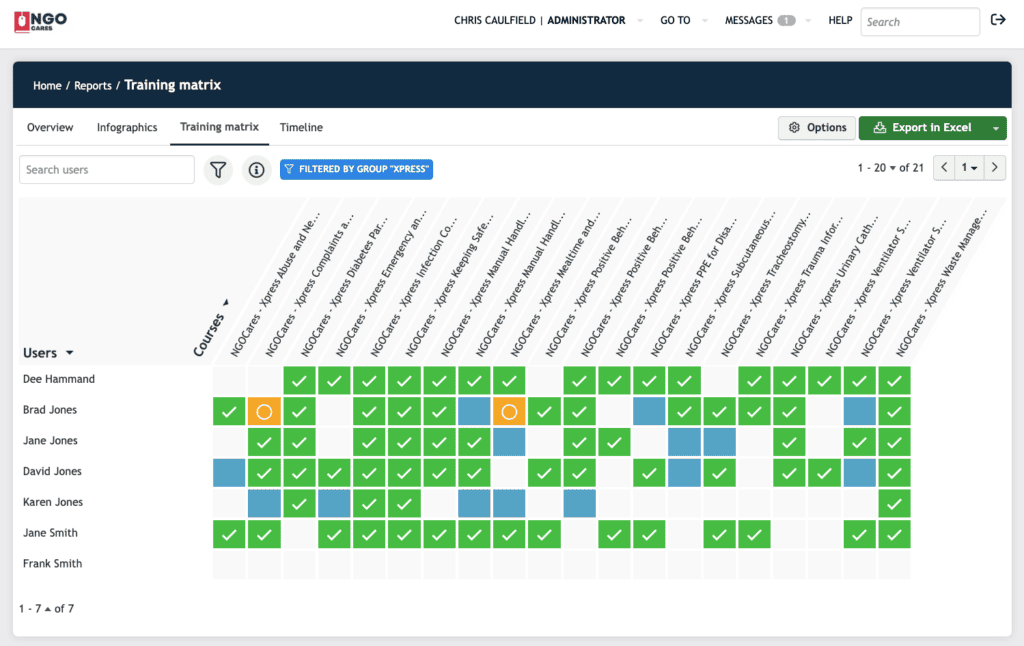
        Every course is created by sector experts, compliant with current NDIS Practice Standards, and updated regularly to reflect changes in the regulatory landscape. Our world-class Learning Management System gives administrators instant access to completion reports, competency assessments, and user progress, which is exactly the kind of clean documentation trail your auditor wants to see.

        And because your workers are often on the move, our mobile app means learning happens wherever they are. On shift, between visits, or at home, all with progress saved automatically, so nothing is lost.

        Over 50,000 learners and 1,000 organisations across Australia trust NGO Training Centre to keep their teams skilled, compliant, and audit-ready.

        Don’t Let the Audit Find Your Gaps Before You Do

        Audit costs are going up. Regulatory expectations are rising. The providers who will navigate this environment confidently are the ones who have invested in a training solution that doesn’t just tick a box but builds genuine capability across their workforce.

        If you’re spending thousands on audits and hoping for the best, it’s worth asking: Is your training investment giving you the best possible return on that spend?

        Explore our training packages for NDIS and Aged Care providers — or get in touch with our team to find the right solution for your organisation.

        Author: Matthew CrawfordPGCert(Bus)

        Matt has over a decade of experience in B2B sales and business development and with a passion for human services, is deeply committed to driving meaningful solutions within the disability sector. His commitment to improving service quality and his deep understanding of client needs make him a trusted partner in advancing the capabilities of organisations that support people with disability across Australia.

        Get in touch

          We’re proud to introduce Julie Dundon, our Subject Matter Expert behind two of the newest additions to the NGO Training Centre Aged Care course suite.

          Julie is an Advanced Accredited Practising Dietitian and Nutrition Practitioner (NPA) and the Managing Director of Nutrition Professionals Australia. She is driven by a simple but powerful goal: helping older people eat smarter and live happier, healthier lives through food and nutrition.

          With decades of experience, Julie has partnered with organisations across Australia to deliver practical, evidence-based nutrition solutions across a wide range of care settings. She is also a respected leader in the sector, having spent 10 years on the Board of Dietitians Australia, including four years as President, and serving as Subject Matter Lead – Aged Care.

          Julie is currently a member of the Aged Care Quality and Safety Advisory Council, contributing directly to national reform and quality improvement.

          Julie has crafted two engaging and practical courses for our aged care workforce:

          These courses translate best-practice nutrition into everyday care, supporting staff to improve wellbeing, dignity and quality of life for older people.

          We’re delighted to partner with Julie and bring her expertise to aged care teams across Australia.

          Learn more about all our brilliant Subject Matter Experts on our About Us page.

          The “Getting It Right: A New Definition for NDIS Providers” consultation, launched in December 2025 and open until 28 February 2026, is a pivotal moment for the sector. This isn’t just another paperwork exercise; it will reshape who counts as an “NDIS provider” under the NDIS Act and determine which providers must register with the NDIS Quality and Safeguards Commission based on risk levels of the supports they deliver.

          Why It Matters

          The NDIS Review in 2023 highlighted the need for a risk-proportionate regulatory model. The NDIS Provider and Worker Registration Taskforce, after consulting widely, released advice in August 2024 recommending a narrowed definition focused on businesses or organisations delivering higher-risk disability supports. This shifts away from the broad current definition (which captures almost anyone paid with NDIS funds, including sole traders or family members in some cases).

          The new approach enables graduated registration tiers:

          • Higher-risk supports (such as SIL, personal care, behaviour support) = full registration and audits.
          • Lower-risk = lighter touch or just visibility.

          This creates a fairer system that protects participants without overburdening low-risk providers, while giving the Commission better oversight where it counts.

          Key Proposals in the Consultation Paper

          1. Definition of NDIS Provider

          Current Approach: Very broad – includes any person/organisation providing supports funded under a participant’s plan.

          Proposed Change: Narrower – focuses on businesses/organisations delivering specific lists of disability-related supports/services (as recommended by Taskforce). Excludes mainstream retailers, family members, or very low-risk arrangements.

          Provider Impact: Many current “unregistered” providers stay unregistered if low-risk; others (e.g., SIL, platforms from July 2026) must register. Reduces red tape for low-risk but increases accountability for higher-risk.

          2. Registration Triggers

          Current Approach: Based on support categories chosen by provider/participant.

          Proposed Change: Based on type/risk of supports delivered (Taskforce’s list of services). Mandatory for high-risk from 2026 onwards.

          Provider Impact: Providers can assess their services against the proposed list early – plan for registration if you deliver SIL, support coordination, therapy, or specialist behaviour supports.

          3. Obligations for Registered Providers

          Current Approach: NDIS Practice Standards, Code of Conduct, auditing, worker screening.

          Proposed Change: Similar but refined – clearer proportionate obligations (e.g., complaints management, incident reporting, governance). Potential new monitoring via electronic payments.

          Provider Impact: Stronger focus on compliance culture. Providers who invest in robust systems now will transition smoothly.

          The paper includes 6 guiding questions on these areas, but you can submit on anything relevant, such as written, video, or images via the survey or email [email protected]

          At the NGO Training Centre, we have worked with hundreds of NDIS providers undergoing registration, audits, and achieving practice standards, and we believe this change is overwhelmingly positive. A sharper definition stops the “all or nothing” problem in which good, low-risk providers avoid registration to retain flexibility, while gaps remain in higher-risk areas.

          For participants, it means better safeguards. For providers, it levels the playing field and reduces unnecessary bureaucracy. The big win? Proportionate regulation that rewards providers who already prioritise quality, governance, and staff training.

          If your team delivers any higher-risk supports, start preparing now. You can:

          • Review the Taskforce’s support lists
          • Gap-assess against the NDIS Practice Standards, and
          • Upskill on the Code of Conduct and incident management reporting

          Take Action

          This consultation closes 28 February 2026, so don’t miss it. Your experience as providers is crucial to getting the definition right.

          Have your say here: NDIS provider definition consultation survey (or Easy Read version).

          At the NGO Training Centre, we’ve helped hundreds of providers achieve and maintain registration seamlessly, and our courses are fully aligned with the latest NDIS Practice Standards and the strengthened Aged Care Quality Standards. If you want to get ahead of these changes with practical, audit-ready training, let’s chat.

          What are your biggest concerns or hopes for the new definition? Join the conversation using the links below. Let’s keep supporting each other to deliver the best outcomes for participants.

          Author: Amanda Robinson BA, MMHealthPrac,

          As Head of Learning and Development and a seasoned NDIS expert, Amanda drives capability and sustainability in the disability and health sectors. With over 15 years of experience, post-graduate qualifications in Mental Health Leadership and Management, and currently pursuing an MBA, she brings deep expertise and personal insight as someone with lived experience of disability. A devoted carer, Amanda champions Human Rights, working to dismantle stigma and barriers for individuals with disability and mental health challenges. She is passionate about building robust stakeholder relationships, leveraging her advocacy, communication, strategic thinking, and analysis skills. 

          Contact our friendly and supportive team

            In November 2025, Australia started big changes to aged care. The goal was to give older people respect, choices, and safe help. The new Aged Care Act 2024 and the Support at Home program promised to fix the problems identified in a 2021 report. But after three months, one thing has made many very upset: the new fees.

            At the NGO Training Centre, we spend our days talking with aged care providers across the country. Lately, one topic keeps coming up again and again, and not quietly. The new home care co-payment arrangements have become the loudest, most emotional flashpoint in the broader aged care reforms.

            And honestly, it is not hard to see why.

            Under the new settings, everyone now contributes something toward the cost of their home care. How much they pay depends on income and assets, including the value of the home, with contributions reaching up to 50 per cent of service costs. On paper, this is about sustainability. In real life, it is about older people and families trying to make sense of bills they never expected to see.

            We are hearing the same stories that providers are. A simple shower, help with meals, or domestic support suddenly feels expensive. Families are shocked when they see hourly rates climb into the hundreds. For people who sit just above concession thresholds, the system can feel like a trap rather than a safety net. As Queensland Greens Senator Penny Allman-Payne put it bluntly, “We are making it hard for parents to stay home.”

            The anger has spilled everywhere. Senate hearings in December were tense, with senators grilling officials about complaints that appear to have gone nowhere. Stories surfaced of families paying $3,000 for minor gardening jobs, or $14,000 for safety rails, leaving little funding for actual health supports. In Queensland, assessment wait times are around 20 per cent longer than the national average. Some older people report skipping meals to save money. These are not abstract policy debates. They are daily realities.

            Advocacy groups like COTA Australia warn that 20 to 30 per cent of people may withdraw from home care altogether because it has become unaffordable. As COTA’s Ian Yates said, rights look good on paper, but they mean very little if people cannot afford to exercise them. Media commentators have gone further, describing the shift as “money-first care for the old,” arguing that some for-profit providers are using the complexity of the new rules to overcharge for small jobs.

            At the same time, there is another truth we cannot ignore. Australia’s population is ageing rapidly. There are now around 4.9 million people aged 65 or older, and that number is expected to reach 6 million by 2030. Without some form of shared contribution, many argue the system simply will not survive. Peak bodies representing providers point out that the workforce is already stretched thin, grappling with reform fatigue, compliance changes, and rising operational costs.

            So here we are, caught between sustainability and fairness.

            One story that stayed with us was shared by a 78-year-old woman interviewed by the ABC. Her fees tripled. She now showers only twice a week to keep costs down. “I worked for 40 years to relax,” she said, “not to choose between clean and broke.” Calls to My Aged Care have reportedly jumped by 40 per cent, driven by confusion and frustration. Officials describe these issues as “start-up problems,” but for the people living through them, they do not feel temporary.

            From our perspective, this is where providers sit in an incredibly difficult position. You are the face of a system you did not design, explaining rules you did not write, to clients who are scared, angry, or both. The reputational risk is real, even when pricing reflects genuine costs. So is the moral distress felt by staff who entered aged care to help, not to argue about invoices.

            As we head toward the May 2026 budget, pressure is mounting for adjustments. Some are calling for an additional $5 to $10 billion in funding to soften co-payments. Others suggest that technology fixes, such as faster digital assessments, could reduce delays and frustration. Those conversations matter, and they will continue.

            But right now, the dominant mood is not optimism. It is raw frustration.

            This is why we believe training has never been more critical. Not just clinical skills, but communication, ethical decision-making, trauma-informed care, and navigating difficult conversations about cost and choice. Providers need support to help their workforce explain the system with empathy, recognise when financial stress is affecting wellbeing, and advocate appropriately within the boundaries they operate in.

            These reforms were meant to support Australians in their later years with dignity. At the moment, many feel they are being tested by fire instead. Our role as a training organisation is to stand alongside providers as you navigate this space, build confidence in your teams, and keep the focus where it belongs: on people, not just policy.

            The debate about co-payments will continue. In the meantime, the way we support older Australians through it will matter more than ever.

            Author: Cathy Kerr BANurs, GDAET, Cert IV Training and Assessment.

            Cathy brings over three decades of expertise to the field of nursing education, with a distinguished career as a registered nurse, educator, and now aged care consultant. Her extensive experience spans clinical practice, training, and consultancy, where she has dedicated herself to improving care standards and supporting both ageing individuals and healthcare professionals. With a deep understanding of the sector’s challenges and opportunities, Cathy combines her nursing background with a passion for education to drive positive outcomes in aged care.

            Get in touch

              I’ve been keeping an eye on recent developments in the NDIS, and some of the stories are worrying.

              In the past year, several providers have faced substantial fines for failures in participant safety and neglect, with inadequate staff training often cited as a key factor. These cases remind us that good intentions alone aren’t enough when knowledge gaps lead to real harm.

              For instance, in Tasmania this month, a provider was fined $1.1 million for serious breaches, including failing to follow care plans, improper medication administration, and poor supervision. Court findings noted that staff lacked adequate training to meet complex needs, contributing to neglect and health risks.

              Another case from last year saw a provider fined $1.9 million after a tragic choking death. The court stressed that support workers received no formal training on managing known choking risks, despite clear plans in place.

              There’s also a record $2.5 million penalty against a supported living operator for widespread safety lapses, stemming from insufficient incident management and staff preparation that left participants and workers exposed.

              These aren’t just fines…they’re about the people who deserved safer support, and they show how quickly issues escalate without prioritised training.

              The NDIS is tightening up, with new laws introduced in November 2025 set to raise penalties for serious misconduct to as much as $16.5 million. The emphasis is on prevention through stronger oversight and readiness. Quality training is therefore vital…not a tick-box exercise, but a foundation for trust, compliance, and truly impactful care.

              From my time in the sector, I’ve found no one that offers the quality and breadth of courses that the NGO Training Centre offers. They provide practical, current NDIS courses that help providers meet these standards effectively. They cover everything from incident reporting to medication management and person-centred support, helping build a genuine safety culture without overwhelming staff.

              If you’re in aged care too, our new courses aligned with the Strengthened Aged Care Quality Standards are worth noting. They focus on governance, consumer dignity, clinical care, infection control, and personalised planning. These are straightforward ways to stay compliant and deliver better outcomes.

              What do you think about these cases? Have you faced similar training challenges? I’d value your thoughts on our LinkedIn or Facebook posts about this issue.

              Let’s support each other in this important work.

              Author: Amanda Robinson BA, MMHealthPrac,

              As Head of Learning and Development and a seasoned NDIS expert, Amanda drives capability and sustainability in the disability and health sectors. With over 15 years of experience, post-graduate qualifications in Mental Health Leadership and Management, and currently pursuing an MBA, she brings deep expertise and personal insight as someone with lived experience of disability. A devoted carer, Amanda champions Human Rights, working to dismantle stigma and barriers for individuals with disability and mental health challenges. She is passionate about building robust stakeholder relationships, leveraging her advocacy, communication, strategic thinking, and analysis skills. 

              Contact our friendly and supportive team

                NGO Training Center Online NDIS learning
                Trigger Sidebar Cart0
                ×
                Your cart is empty. Return Home