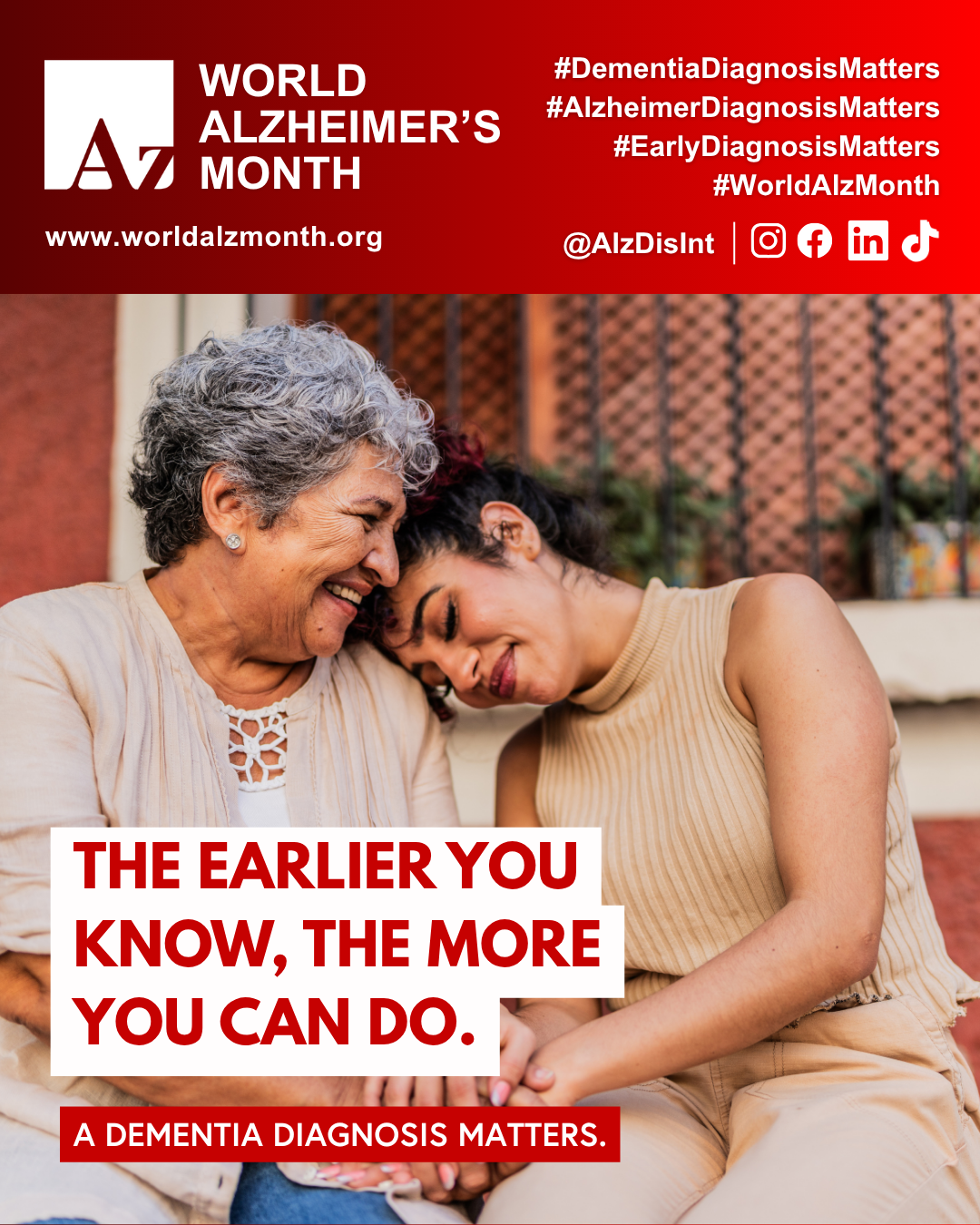
September is World Alzheimer’s Month, and September 21st is World Alzheimer’s Day.
It is an international campaign to raise awareness of dementia and challenge stigma. Each year, Alzheimer’s and dementia associations, along with those involved in treating, caring for, and supporting people living with dementia worldwide, unite to organise advocacy and information events, as well as Memory Walks and fundraising days.
Alzheimer’s Disease International’s (ADI) global campaign message this year is
“The Earlier You Know, The More You Can Do: A Dementia Diagnosis Matters.”
This year focuses on early diagnosis, and for providers, it reframes diagnosis not as a clinical endpoint but as a trigger that can kick-start supports, funding pathways, and care planning for individuals.
More than 55 million people live with dementia worldwide, with a person developing it every 3 seconds, and that’s not just in ageing individuals. Numbers are projected to reach 78 million by 2030.
For providers in the aged care and disability sector, the biggest gap is what happens after diagnosis. About 85% of people living with dementia don’t have any post-diagnostic support at all. We need stronger post-diagnosis support models, not only to improve care but also to save costs by delaying hospital and residential admissions and helping people stay at work, education and in their own homes longer. That sits at the heart of quality and safeguarding expectations across the aged care and NDIS sectors, and it will remain a national priority.
One thing I’d like to mention is stigma. Whilst we see stigma as such a barrier across so many conditions, it’s mind-blowing to learn that around 65% of health and care professionals still believe that dementia is just a normal part of ageing. This is just not the case. On top of that, 46% of people with dementia and their carers say they have fear of diagnosis and stigma as reasons why they don’t get support, and 35% of carers actually have hidden a family member’s diagnosis for that reason.
Now more than ever, we must ensure the workforce and providers support staff to recognise early signs, talk about dementia without stigma, and connect people to assessment and supports early.
My KEY message to providers:
Use this month to ensure all your staff receive dementia training, whether in aged care or disability. Review how your intake and care plans respond to a new or suspected diagnosis, and make sure supports are built into the service, not an afterthought.
The NGO Training Centre provides quality courses for both the disability and the aged care sector, with our aged care training providing a lived experience of a carer supporting her own father with dementia. You can view a clip of this video here.
Alzheimer’s Disease International (ADI) has a free campaign toolkit with ready-made social cards, posters, and messages that you can adapt for your staff, participants, and their families.
On September 21, the World Alzheimer Report 2026 will be released.
Be sure to send it to all of your staff to learn more about Alzheimer’s and dementia and how they impact the world and the community.
You can make a real difference in the lives of people living with dementia, so why not start today?
–
Author: Amanda Robinson (She/Her) BA, MMHealthPrac.
Dja Dja Wurrung and Taungurung Country
Amanda, Head of Learning and Development and an experienced specialist in NDIS and Aged Care, promotes capability and sustainability within the disability and health sectors. With over 15 years of experience, a Master’s in Mental Health Leadership and Management, and an MBA underway, she offers extensive expertise and personal insight as someone with lived experience of disability. A military veteran and dedicated carer of a veteran, Amanda advocates for Human Rights, striving to reduce stigma and eliminate barriers for those with disability and mental health challenges. She is enthusiastic about fostering strong stakeholder relationships through her advocacy, communication, strategic thinking, and analytical abilities.