Meta Pixel

This year’s Mental Health Month theme, A Little Connection Goes a Long Way, reminds us that small, everyday moments of connection can do a lot for our mental wellbeing.

Connection looks different for everyone, and it works best when it happens in ways that feel safe and comfortable. It might mean reaching out to the world around you, such as waving to a neighbour, chatting with the cashier or a support worker, spending time with the people you love, playing with a pet, or volunteering in your community.

It can also mean connecting with yourself.

Whether you’re connecting with others or reconnecting with yourself, small and simple acts can make a big difference.

Isolation is one of the most significant factors that leads us to feelings of loneliness and despair, and contributes to poor mental health. It occurs even more often in the disability and aged care communities.

I have seen time and time again that a lack of access and inclusivity can marginalise and isolate people to the point that they do not want to leave their homes. Helping people feel understood, included, and safe matters, and we can all contribute by showing compassion, understanding, and awareness of each person’s needs and wants.

Research has shown that feeling connected can ease stress, support emotional balance, and help us cope when things get tough. Across our communities, humans find connection in ways that feel meaningful to them, shaped by who they are, what they value and what’s happening in their lives.

This year’s theme invites us to take small, achievable steps toward connection that feels supportive. That might be with humans, animals, places, routines or moments that help us feel grounded.

After all, every little connection counts.

Check out the General Mental Health Month Calendar from Wayahead below. It’s a traditional monthly calendar featuring a different connection-focused prompt for each day of October. Designed for individuals, families, community groups and organisations looking for an easy way to participate in Mental Health Month.

Wayahead General Connection Calendar

–

Author: Amanda Robinson (She/Her) BA, MMHealthPrac.
Dja Dja Wurrung and Taungurung Country

Amanda, Head of Learning and Development and an experienced specialist in NDIS and Aged Care, promotes capability and sustainability within the disability and health sectors. With over 15 years of experience, a Master’s in Mental Health Leadership and Management, and an MBA underway, she offers extensive expertise and personal insight as someone with lived experience of disability. A military veteran and dedicated carer of a veteran, Amanda advocates for Human Rights, striving to reduce stigma and eliminate barriers for those with disability and mental health challenges. She is enthusiastic about fostering strong stakeholder relationships through her advocacy, communication, strategic thinking, and analytical abilities.
Contact our friendly and supportive team

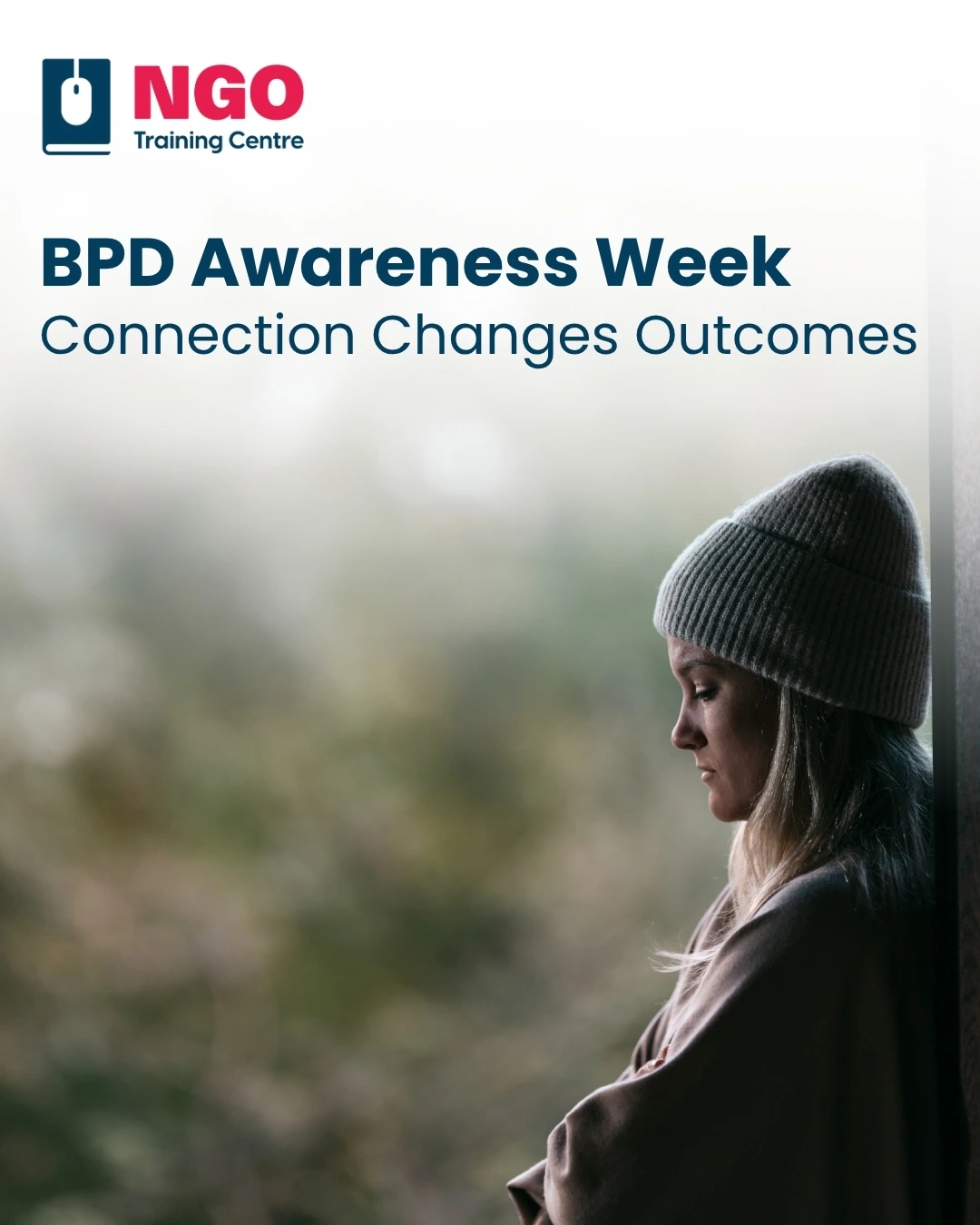
    This year’s BPD Awareness Week theme, ‘Connection Changes Outcomes: In BPD, Every Interaction Matters’, puts relationships at the heart of recovery.

    For people living with Borderline Personality Disorder (BPD), how others respond to them can shape how safe, hopeful and supported they feel.

    Stigma, misunderstanding, rejection and invalidation can deepen shame, distress and disconnection. Empathy, safety, consistency and understanding do the opposite. They can reduce crisis and build hope for recovery. The language and words that we choose, the way we listen and whether we stay present when things get hard can all change what happens next.

    I have seen many times how even the most well-meaning support staff have inadvertently created or inflated a situation that could have been avoided, through better education and understanding of this widely misunderstood diagnosis. I have personally heard psychologists say that they will ‘refuse’ to work with someone with this diagnosis, saying it is ‘too hard’, leaving them with no support and ultimately at even higher risk of becoming unwell.

    This is just not good enough, and things need to change.

    The campaign calls on people living with BPD, carers, clinicians, policy makers, politicians and the wider community to help create safer, more compassionate spaces where recovery is possible.

    • People living with BPD need others to listen without judgement, stay present during distress, and see their strengths, resilience and humanity, not only a diagnosis or a moment of crisis.
    • Carers need to be included, understood and practically supported, with reassurance that relationships can improve over time.
    • Clinicians often know that language, tone, consistency and presence can make a lasting difference, but may not have the time, training or system support to work in the ways they value most.
    • Politicians can help by promoting greater awareness of BPD and advocating for the rights and needs of people living with BPD, both within the mental health system and across state and federal government, and
    • Policy makers, system leaders and the community are being asked to recognise that connection, continuity of care and relational safety are not optional extras. They are central to effective support and recovery.

    What this means for providers

    For anyone working in disability, mental health or community support, every interaction is a chance to build trust. Like in any relationship, trust is key. Listening well, keeping your word, staying calm and consistent, and responding with warmth rather than judgement can help someone feel safe enough to keep reaching out. These skills can grow with education, understanding, and practice.

    If you’d like to deepen your understanding of personality disorders, including how to offer respectful and effective support, NGO Training Centre’s Personality Disorder course is a great place to start. It covers what personality disorder is, the three clusters, risk factors, and practical ways to support the humans you work alongside.

    This BPD Awareness Week, think about the small moments. Train your staff, create awareness. Reduce stigma.

    A little more patience, a kinder word, or simply staying present can change someone’s day, and sometimes their lives.

    –

    Author: Amanda Robinson (She/Her) BA, MMHealthPrac.
    Dja Dja Wurrung and Taungurung Country

    Amanda, Head of Learning and Development and an experienced specialist in NDIS and Aged Care, promotes capability and sustainability within the disability and health sectors. With over 15 years of experience, a Master’s in Mental Health Leadership and Management, and an MBA underway, she offers extensive expertise and personal insight as someone with lived experience of disability. A military veteran and dedicated carer of a veteran, Amanda advocates for Human Rights, striving to reduce stigma and eliminate barriers for those with disability and mental health challenges. She is enthusiastic about fostering strong stakeholder relationships through her advocacy, communication, strategic thinking, and analytical abilities.

    Contact our friendly and supportive team

      Did you know that?

      In Australia, since 1967, life expectancy has jumped by almost 14 years for males and 11 years for females

      By 2066, the size of the population aged 65 years and over is projected to grow by 264 per cent, and the population aged 85 years and over is projected to grow by 506 per cent during the same period

      By 2066, there will be 1.9 million people aged 85 and over, up from 580,000 today.

      People are staying in their homes for longer. Between 2017 and 2025, the number of people utilising structured Home Care Packages grew by over 300%

      By contrast, permanent residential aged care grew by less than 10% over that same eight-year period.

      Australians are living longer than ever, and in their own homes for longer… but not all of those extra years are healthy ones.

      The time people spend in both good health and poor health is rising, and the growing number of years lived with illness is driving up demand for, and spending on, health and aged care services. Several factors are behind the shift.

      Chronic disease and lifestyle are key culprits, with around 61 per cent of Australians now living with at least one chronic health condition. For people in regional and remote communities, the picture is worse, with many facing unequal access to healthcare and support services. Policies that champion lifelong health, disease prevention and fair access to care could help Australians live not just longer, but better.

      This International Day of Older People, we are celebrating the people, places and services that help older persons to stay active and connected in the community – while shining a light on the barriers that can make them harder to access.

      Our new suite of Aged Care Courses provides aged care workers with the knowledge and skills to support older persons both living in the community and in residential aged care.

      Our courses shift the focus from rigid checklists to the individual, in line with the new Strengthened Aged Care Quality Standards, ensuring older Australians receive safer, more dignified care that prioritises their rights, nutrition, and personal choices.

      Australians are living longer than ever. Making sure those extra years are lived well, with the right to be heard and to make their own choices, starts with the people who support them every day.

      –

      Author: Amanda Robinson (She/Her) BA, MMHealthPrac.
      Dja Dja Wurrung and Taungurung Country

      Amanda, Head of Learning and Development and an experienced specialist in NDIS and Aged Care, promotes capability and sustainability within the disability and health sectors. With over 15 years of experience, a Master’s in Mental Health Leadership and Management, and an MBA underway, she offers extensive expertise and personal insight as someone with lived experience of disability. A military veteran and dedicated carer of a veteran, Amanda advocates for Human Rights, striving to reduce stigma and eliminate barriers for those with disability and mental health challenges. She is enthusiastic about fostering strong stakeholder relationships through her advocacy, communication, strategic thinking, and analytical abilities.

      Contact our friendly and supportive team

        Early in my advocacy work, I supported a woman in her early 30s to access the NDIS. We booked a medical appointment with a GP to complete her access request form. As an independent woman, we approached the clinic reception desk.

        She was standing right there.

        Her hands moved as she told the receptionist exactly what she needed.

        The receptionist turned to me, her advocate, and asked,

        “What’s she after?”

        I have thought about that moment for years.

        Not because it was cruel. The receptionist wasn’t cruel. She was just built, like most of our systems, to hear a voice and nothing else. When a language arrived that she couldn’t process, she reached past the person using it and looked for someone more convenient to talk to.

        Another man I supported was unaware that he had a hearing impairment until it was too late. His employer took his lack of communication as arrogance and disengagement, and he was laid off. It wasn’t until months later that he found out that his hearing loss was so significant that he required aids, which we then had to fight for from the NDIS.

        He learned to adapt, but not enough to pick up the nuances of communication, small talk, and banter he needed to keep his job.

        That is the whole problem in one gesture.

        And it is why 23 September matters.

        The United Nations marks the International Day of Sign Languages every year on that date. The General Assembly established it by resolution in 2017, proposed by the World Federation of the Deaf, and 2026 carries weight the earlier years didn’t. This year the Federation turns 75. It is also 20 years since the world adopted the Convention on the Rights of Persons with Disabilities.

        This year’s theme is:

        Declaring Deaf People’s Human Rights. No Human Rights Without Sign Language Rights.

        FACT: There are more than 300 different sign languages in use around the world. They are full languages, with their own grammar, their own regions and their own jokes that don’t translate cleanly, the same way ours don’t. Auslan is not signed English. It is its own thing, carried by its own community, and it deserves the same respect we hand a spoken language.

        Over 70 million people are Deaf worldwide, with more than 80 per cent residing in developing nations. In these countries, having access to an interpreter in court or classroom is often a matter of chance rather than a right. Think about what that means for a medical appointment where the diagnosis lands second-hand. A parent-teacher night the parent can only partly follow. An NDIS tribunal where your future is discussed in a language nobody has bothered to translate into yours.

        As having worked in the disability sector, we were very good at writing “inclusion” into our values statements and very slow to book the interpreter. Often, it was challenging to find one available when we needed it most. Access that depends on someone being available or someone remembering to arrange it is not access.

        The fix is not that complicated, which is the frustrating thing. We need to recognise sign languages properly in law and in funding. Fund interpreters as infrastructure, the way we fund ramps and lifts, rather than as an optional extra someone has to fight for. Teach sign language early, to Deaf children and to the hearing world around them. Hire Deaf people to design the services meant for Deaf people.

        On the human level, learn a little.

        You do not need to be fluent to change a room.

        A greeting in someone’s own language is never a small thing. It says I see you standing there, and I am talking to you, not about you or around you.

        Which brings me back to the front desk. I have imagined that scene ending differently more times than I can count. The receptionist looks up, meets the woman’s eyes, and finds a way. It could be an interpreter on a screen, a notepad, a few learned signs, anything that says you are the person I am speaking with. It costs almost nothing. It changes almost everything.

        The NGO Training Centre offers an exceptional course on Communication. If you’d like to learn to:

        • Define and explain effective communication
        • Describe the best practices for effective written and verbal communication
        • Understand how a person’s body language influences communication
        • Recognise some of the different Communication aids you will come across in your role.

        You’ll get clear on what effective communication actually is, and pick up the practices that make your written and verbal messages land the way you meant them. You’ll learn to read the part of the conversation nobody says out loud, the body language that’s often telling you more than the words.

        You will also get to know the range of communication aids you’ll meet in your role, so that when the usual channels don’t fit a person, you’ve got others ready.

        Because good communication isn’t just a trait humans are born with. It’s a skill. And like any skill, it gets sharper the moment you decide to work on it.

        –

        Author: Amanda Robinson (She/Her) BA, MMHealthPrac.
        Dja Dja Wurrung and Taungurung Country

        Amanda, Head of Learning and Development and an experienced specialist in NDIS and Aged Care, promotes capability and sustainability within the disability and health sectors. With over 15 years of experience, a Master’s in Mental Health Leadership and Management, and an MBA underway, she offers extensive expertise and personal insight as someone with lived experience of disability. A military veteran and dedicated carer of a veteran, Amanda advocates for Human Rights, striving to reduce stigma and eliminate barriers for those with disability and mental health challenges. She is enthusiastic about fostering strong stakeholder relationships through her advocacy, communication, strategic thinking, and analytical abilities.

        Contact our friendly and supportive team

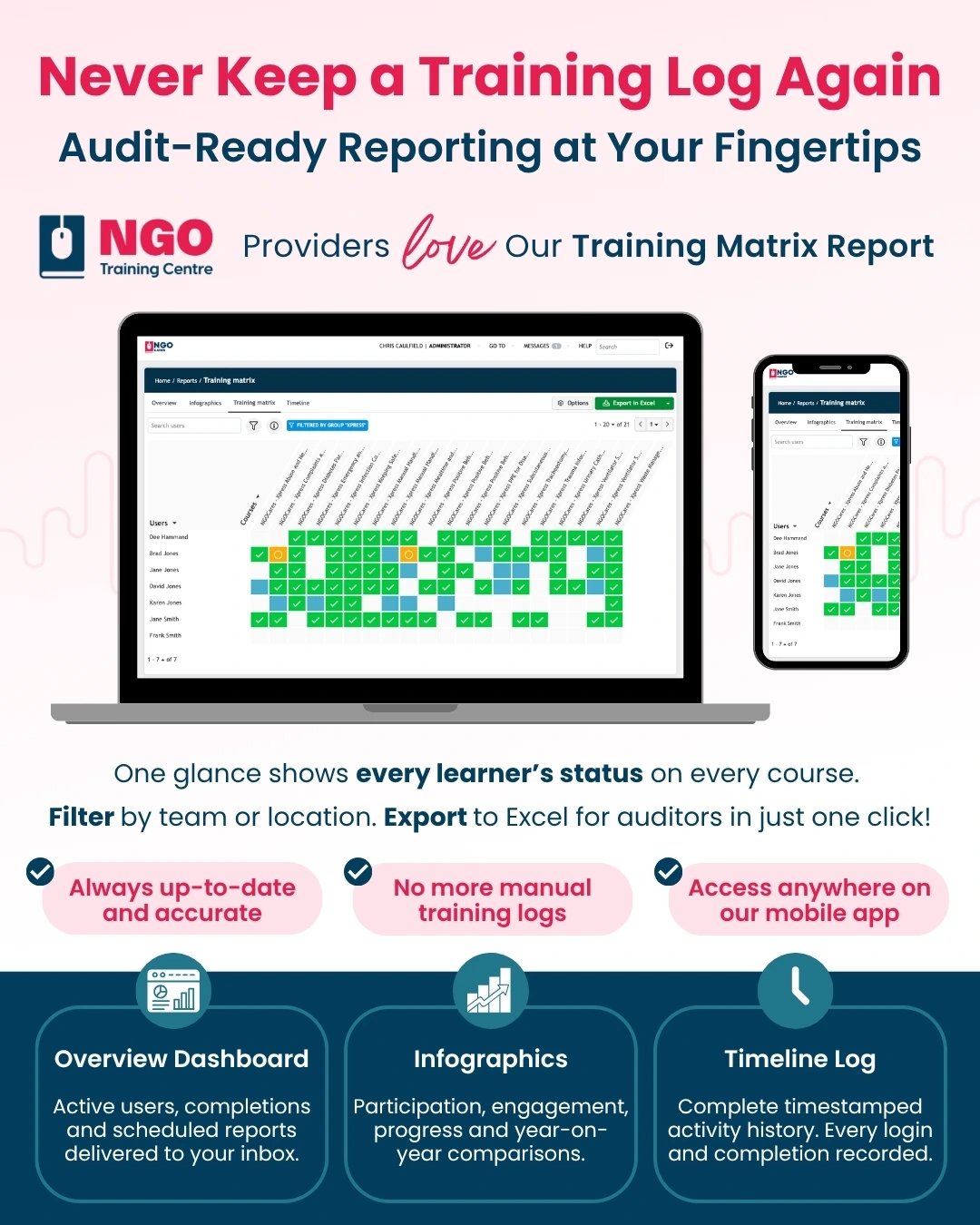
          Our unique Training Matrix Report puts audit-ready evidence at your fingertips.

          As a Disability Support or Aged Care provider, accurate, detailed training records are non-negotiable. Audits require clear proof that every team member has completed the right training, on time, and that records are complete and current. Manual spreadsheets, chasing certificates, and worrying about whether everything is up to date create unnecessary stress and waste time.

          With NGO Training Centre’s world-class LMS and mobile app, that burden ends. Robust, simple, comprehensive, real-time reporting is available instantly on any device, anywhere, anytime. You will never have to keep a training log again.

          The Feature Providers Love Most: The Training Matrix Report

          Our customers consistently praise the Training Matrix as the standout tool. This report turns compliance from a headache into a simple, visual, one-click process.

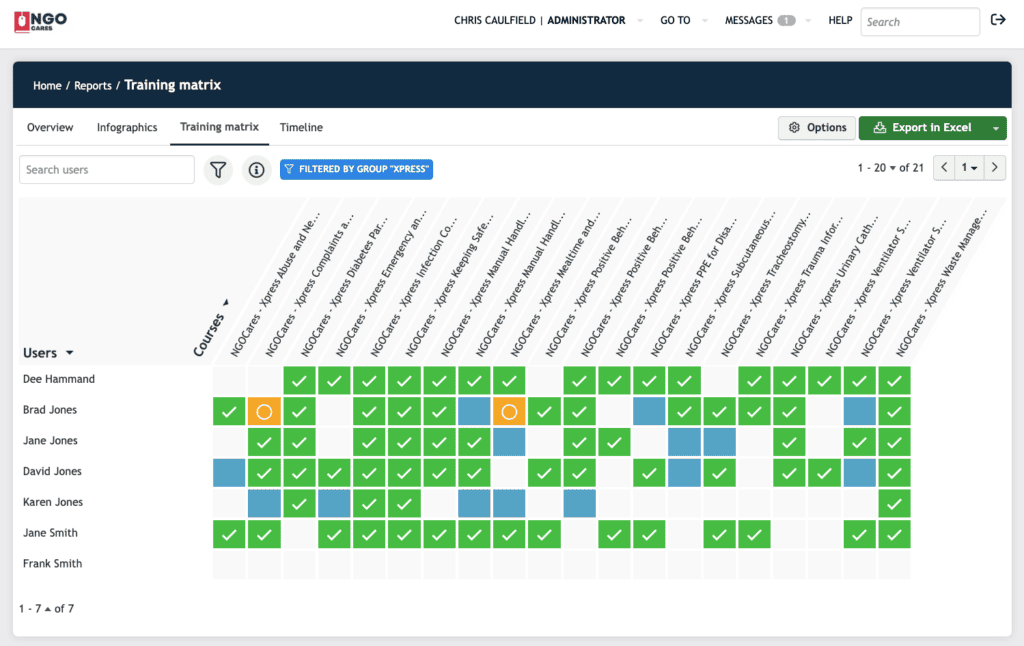
          In the Training Matrix, you see every learner listed down the left-hand side and every course across the top. Colour coding shows status at a glance:

          Blue = Enrolled but not started

          Yellow = In-progress indicators

          Green = Completed

          In one simple view, you know exactly where every person stands on every required course. No more digging through folders or cross-checking spreadsheets.

          Filter instantly by groups, teams, locations, roles, or any structure that matches your operations. Need to check SIL compliance training only? Or induction pathways for new hires starting next week? Apply the filter and the Matrix updates in seconds.

          NGO Training Centre Matrix Report on Learning Management System

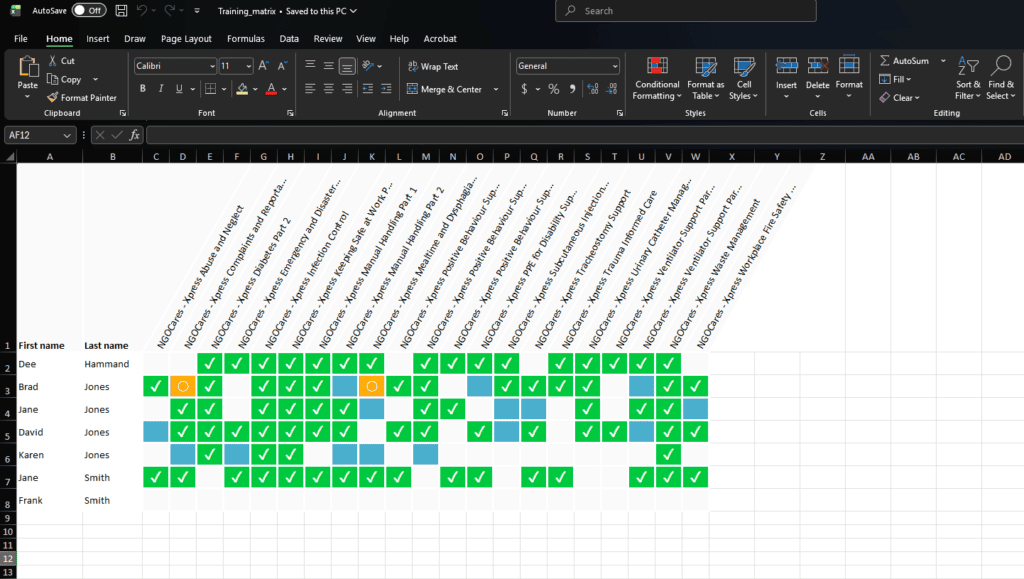
          When audit time arrives, simply export the Matrix to Excel. Many providers hand (or email) this clean, professional document straight to their NDIS or Aged Care auditor. It is comprehensive, accurate, system-timestamped, and always up to date because the LMS records every completion the moment it happens.

          NGO Training Centre Matrix Report on Learning Management System Excel Report

          This single report eliminates the need to maintain separate training logs. The evidence is generated automatically, visually clear, filterable, and export-ready. Auditors see exactly what they need, and you can be confident nothing has been missed.

          Watch a Training Matrix overview video below, explained by our Customer Experience Specialist, Chris:

          Supporting Reporting Tools That Keep Everything Current

          While the Training Matrix is the highlight, the full reporting suite works seamlessly alongside it:

          • Overview – Active users, logins, and course completions with time filters (today, week, month, year). The Training Progress Report downloads as a spreadsheet and can be scheduled to arrive in your inbox automatically.
          • Infographics – Participation rates, engagement, progress, completion rates, training time, pass/fail results, and gamification metrics, with easy period-to-period comparisons.
          • Timeline – A complete activity log of every login and course completion, searchable by user and event type.

          All of this is available through a simple, intuitive interface and our excellent mobile app, so managers can check the Matrix or download reports on the go.

          Watch Chris’ full reporting walkthrough to see how our easy-to-use LMS makes tracking and reporting simple, with a closer look at the Overview, Infographics, Training Matrix and Timeline tools:

          –

          Author: Matthew Crawford, PGCert(Bus)

          Matt has over a decade of experience in B2B sales and business development and with a passion for human services, is deeply committed to driving meaningful solutions within the disability and aged care sectors. His commitment to improving service quality and his deep understanding of client needs make him a trusted partner in advancing the capabilities of organisations that support ageing individuals and people with disability across Australia.

          Get in touch

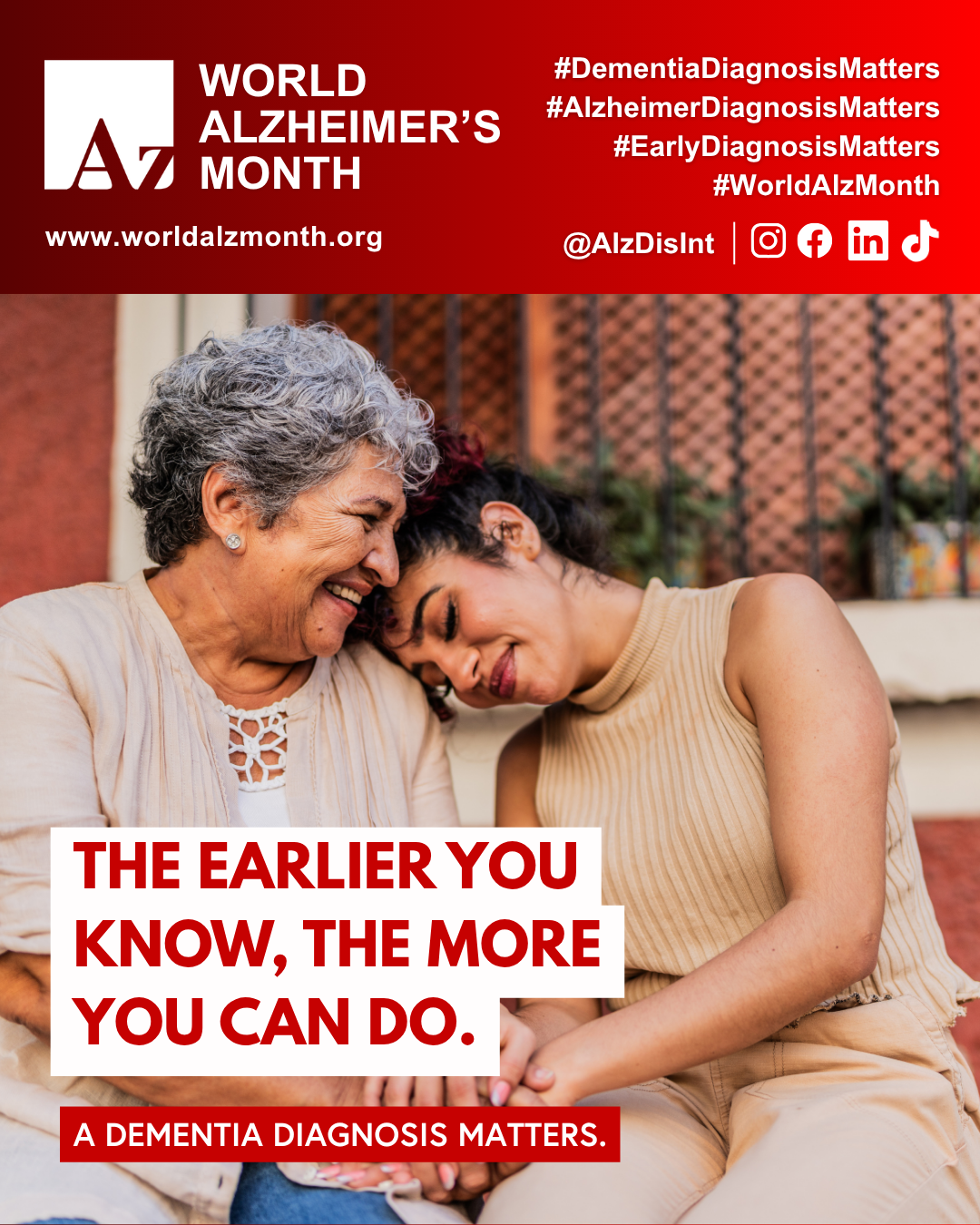
            September is World Alzheimer’s Month, and September 21st is World Alzheimer’s Day.

            It is an international campaign to raise awareness of dementia and challenge stigma. Each year, Alzheimer’s and dementia associations, along with those involved in treating, caring for, and supporting people living with dementia worldwide, unite to organise advocacy and information events, as well as Memory Walks and fundraising days.

            Alzheimer’s Disease International’s (ADI) global campaign message this year is

            “The Earlier You Know, The More You Can Do: A Dementia Diagnosis Matters.”

            This year focuses on early diagnosis, and for providers, it reframes diagnosis not as a clinical endpoint but as a trigger that can kick-start supports, funding pathways, and care planning for individuals.

            More than 55 million people live with dementia worldwide, with a person developing it every 3 seconds, and that’s not just in ageing individuals. Numbers are projected to reach 78 million by 2030.

            For providers in the aged care and disability sector, the biggest gap is what happens after diagnosis. About 85% of people living with dementia don’t have any post-diagnostic support at all. We need stronger post-diagnosis support models, not only to improve care but also to save costs by delaying hospital and residential admissions and helping people stay at work, education and in their own homes longer. That sits at the heart of quality and safeguarding expectations across the aged care and NDIS sectors, and it will remain a national priority.

            One thing I’d like to mention is stigma. Whilst we see stigma as such a barrier across so many conditions, it’s mind-blowing to learn that around 65% of health and care professionals still believe that dementia is just a normal part of ageing. This is just not the case. On top of that, 46% of people with dementia and their carers say they have fear of diagnosis and stigma as reasons why they don’t get support, and 35% of carers actually have hidden a family member’s diagnosis for that reason.

            Now more than ever, we must ensure the workforce and providers support staff to recognise early signs, talk about dementia without stigma, and connect people to assessment and supports early.

            My KEY message to providers:

            Use this month to ensure all your staff receive dementia training, whether in aged care or disability. Review how your intake and care plans respond to a new or suspected diagnosis, and make sure supports are built into the service, not an afterthought.

            The NGO Training Centre provides quality courses for both the disability and the aged care sector, with our aged care training providing a lived experience of a carer supporting her own father with dementia. You can view a clip of this video here.

            Alzheimer’s Disease International (ADI) has a free campaign toolkit with ready-made social cards, posters, and messages that you can adapt for your staff, participants, and their families.

            –

            Author: Amanda Robinson (She/Her) BA, MMHealthPrac.
            Dja Dja Wurrung and Taungurung Country

            Amanda, Head of Learning and Development and an experienced specialist in NDIS and Aged Care, promotes capability and sustainability within the disability and health sectors. With over 15 years of experience, a Master’s in Mental Health Leadership and Management, and an MBA underway, she offers extensive expertise and personal insight as someone with lived experience of disability. A military veteran and dedicated carer of a veteran, Amanda advocates for Human Rights, striving to reduce stigma and eliminate barriers for those with disability and mental health challenges. She is enthusiastic about fostering strong stakeholder relationships through her advocacy, communication, strategic thinking, and analytical abilities.
            Contact our friendly and supportive team

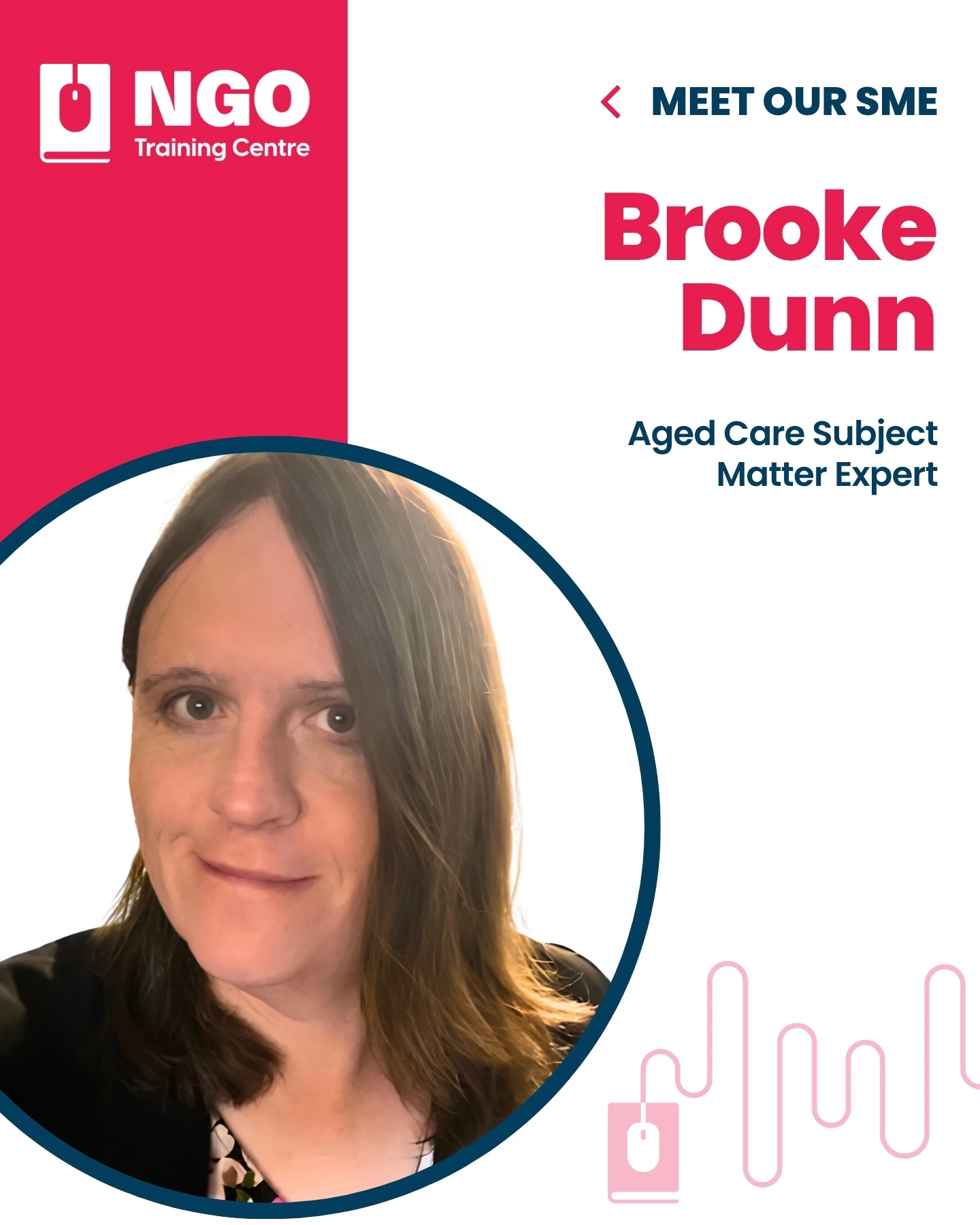
              Educator, Advocate, and the Mind Behind Our LGBTIQASB+ Aged-Care Course

              At the NGO Training Centre, the quality of our courses rests on the people who build them. Brooke Dunn is a Subject Matter Expert, a valued member of our governance team, and the creator of our new course Supporting LGBTIQASB+ Individuals.

              Brooke is a mathematics and physics educator with nearly two decades of experience teaching ATAR Mathematics Methods, Specialist, and Physics across Catholic, Independent, and tertiary settings. She has taught throughout Western Australia and currently teaches Physics at UWA College.

              With a grounding in pure mathematics, science, and law, Brooke brings genuine academic depth to her work. What colleagues and students notice, though, is her clarity and her gift for building relationships. She has a way of making complex material feel approachable, and of making every learner feel like they belong in the room.

              Brooke is also a Training Facilitator with TransFolk WA, delivering professional learning on gender diversity. It’s this combination of academic precision and a deep commitment to inclusion that makes her contribution to our governance team and course library so distinctive.

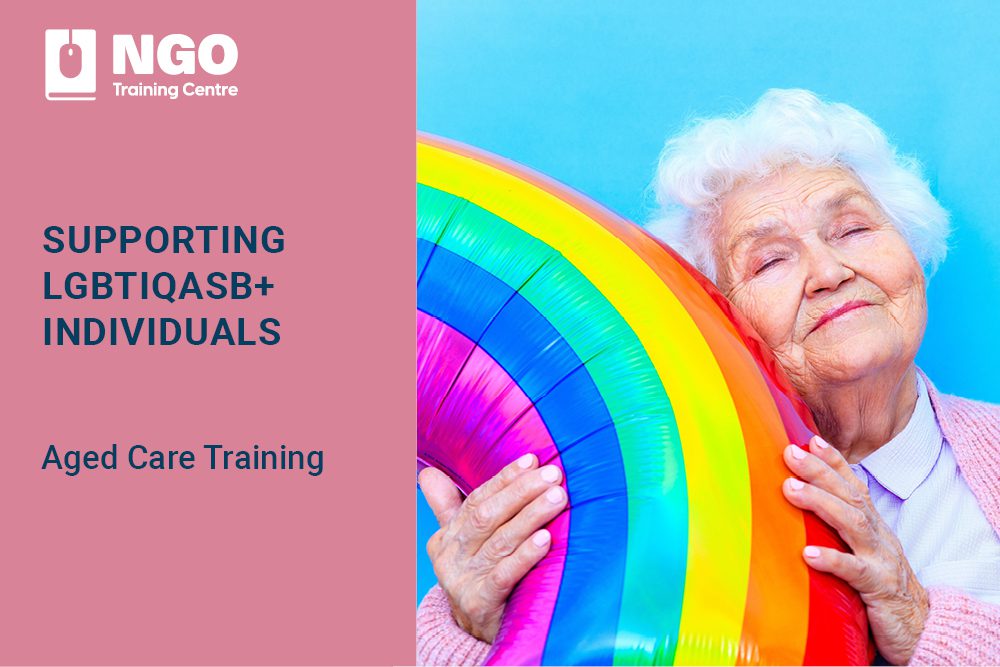
              72 SUPPORTING LGBTQASB+ INDIVIDUALS - NGO Training Centre Aged Care Course Online

              Supporting LGBTIQASB+ Individuals is a 35-minute course designed to help aged-care workers provide genuinely person-centred care to ageing LGBTIQASB+ people.

              It begins with key terminology and inclusive language, then unpacks the differences between sex, gender, and sexual orientation and confronts the myths that get in the way of good care.

              From there it turns to lived experience: the identity harm, social isolation, discrimination, and trauma many ageing LGBTIQASB+ people carry. Brooke doesn’t shy away from the harder history of stigma, criminalisation, and exclusion that eroded trust in aged-care services. It closes with practical strategies for inclusive, trauma-informed, rights-based care.

              By the end, learners are able to:

              • Define LGBTIQASB+ terminology, identities, and inclusive language to recognise different experiences and foster cultural understanding.
              • Describe the differences between sex, gender, and sexual orientation while identifying and debunking common myths and misconceptions.
              • Discuss the lived and ongoing experiences of ageing LGBTIQASB+ individuals, including the impacts of stigma, discrimination, trauma, and exclusion.
              • Identify and deliver inclusive, trauma-informed, and rights-based care in aged-care settings.

              In aged care, the difference between a service that feels safe and one that feels threatening often comes down to whether staff understand the person in front of them.

              Brooke has taken her educator’s clarity and her advocate’s heart and built something that helps care workers do exactly that.

              We’re proud to have Brooke on our governance team. Her course reflects everything she stands for: depth, inclusivity, and a belief that every person deserves to be seen and cared for with dignity and respect.

              Interested in the course? Reach out to the NGO Training Centre to learn more about Supporting LGBTIQASB+ Individuals.

              Learn more about all our brilliant Subject Matter Experts on our About Us page.

              Suicide. A word that is often tiptoed around for fear of its contagiousness, or feelings of shame or fear...

              As a carer of a Veteran who experiences daily thoughts of suicide, we use this term more often than not in our household.

              The stark reality is that it has become so normalised that it can creep into our daily conversations, whether it’s a check-in, revisiting a safety plan, or organising therapy or treatment. For many thousands of Australians, this is the norm. For many others, though, the term is avoided and not ‘spoken about.’ This in itself presents another danger. That doesn’t mean it doesn’t exist. It just means it is shrouded by fear or shame.

              In 2014, I recall presenting to various schools across regional QLD for a program called ‘Living Proof’, where I supported people with lived experience of mental health challenges to talk to students about their own experiences of mental health, their journey and how they overcame some of the challenges experienced during times of unwellness. They often spoke about a point in their lives where they experienced thoughts of suicide, but the schools had prohibited the use of the term ‘suicide’, and any reference to it meant that we were not permitted to present at the school.

              Again, tiptoeing around the subject rather than creating awareness and reducing stigma. Needless to say, our presenters often challenged this with the schools, as did I, but unfortunately, we were up against a system that was outdated and thought that by using the term, we would start a suicide cluster. Fast-forward to 2026, and although things have become better, people are now talking about suicide more openly; there are still people and places who simply refuse based on this mythology.

              2026 is the third and final year of the triennial World Suicide Prevention Day theme (2024–2026), Changing the Narrative on Suicide, and its call to action, Start the Conversation. The theme asks all of us to challenge harmful myths, break down stigma, and make room for open, compassionate conversations about suicide, moving away from silence and misunderstanding towards openness, empathy and support, so that people feel able to speak up and ask for help.

              Changing the narrative is also about systemic change. It calls for suicide prevention and mental health to sit high on the public policy agenda, and for governments and institutions to act: developing and delivering evidence-based strategies, improving access to quality care, and making sure people in distress get the support they need.

              HOW you talk about it matters.

              Language is powerful. The term ‘Committed Suicide’ denotes that a person is committing a crime or a sin and is very obsolete. It is important to use terms such as ‘died by suicide’ or ‘took their own life’ when speaking about suicide. The language we use to communicate about these experiences can isolate people and reinforce stigma, or it can engage and empower people to take action.

              Another way to create awareness is to be aware of the signs and symptoms of someone who is thinking about suicide, and it can sometimes even be more difficult to recognise this in people with disability, chronic illness or those who are ageing. You can help someone in distress safely by knowing what to look for, how to help them manage their distress and how to support them to seek help.

              At the NGO Training Centre, our course called ‘Suicide Prevention’ provides the learner with not only awareness of the prevalence of suicide in Australia, but vital information, strategies and supports for people who are experiencing thoughts of suicide.  

              –

              Author: Amanda Robinson (She/Her) BA, MMHealthPrac.
              Dja Dja Wurrung and Taungurung Country

              Amanda, Head of Learning and Development and an experienced specialist in NDIS and Aged Care, promotes capability and sustainability within the disability and health sectors. With over 15 years of experience, a Master’s in Mental Health Leadership and Management, and an MBA underway, she offers extensive expertise and personal insight as someone with lived experience of disability. A military veteran and dedicated carer of a veteran, Amanda advocates for Human Rights, striving to reduce stigma and eliminate barriers for those with disability and mental health challenges. She is enthusiastic about fostering strong stakeholder relationships through her advocacy, communication, strategic thinking, and analytical abilities.
              Contact our friendly and supportive team

                This September, red shoes are stepping back into the spotlight.

                Throughout the month, and especially on 9 September, International FASD Awareness Day, people across Australia and around the world will pull on red shoes, red socks and red laces to spark conversations about Fetal Alcohol Spectrum Disorder (FASD) as part of the global Red Shoes Rock campaign.

                Red Shoes Rock began in 2013, when Canadian educator and advocate RJ Formanek, who lives with FASD, started wearing red shoes to

                “Stand out, be noticed and have fun starting conversations about FASD.”

                In 2014, Jodee Kulp of Better Endings New Beginnings joined as co-founder, and what began as one person’s bright idea has grown into an international movement. Today NOFASD Australia promotes the campaign alongside the Foundation for Alcohol Research and Education (FARE), the National Aboriginal Community Controlled Health Organisation (NACCHO) and the FASD Hub Australia.

                A hidden disability worth talking about

                FASD describes the range of lifelong effects that can occur when a baby is exposed to alcohol before birth. It can affect learning, memory, attention, communication and behaviour, and it is entirely preventable. Yet it remains poorly understood, in part because it is largely invisible. Between 80 and 90 per cent of people with FASD have no obvious physical features, which is why the condition is so often missed, misdiagnosed or misunderstood.

                The numbers underline why awareness matters. It is estimated that between 2.91 and 4.41 per cent of Australians may have FASD, and that around 60 per cent of Australian pregnancies involve some alcohol exposure, often before a pregnancy is confirmed. The evidence is clear and consistent: there is no known safe amount, and no safe time, to drink alcohol during pregnancy. The safest choice is no alcohol at all.

                Red Shoes Rock exists to turn that invisibility into visibility, to start conversations, challenge stigma, and replace judgement with understanding and support. A pair of red shoes is a small, friendly prompt that invites someone to ask, “Why red?” and opens the door to a conversation that might otherwise never happen.

                How can you get involved?

                Taking part is simple, and every gesture adds up. This September you could:

                Wear red shoes, socks or laces to school, work, sport or your local community group, and be ready to explain why.

                Host a red-themed morning tea and set out FASD information and brochures for people to take.

                Share a photo on social media using #RedShoesRock and #FASDAwareness to widen the conversation.

                Light up a local landmark, hall or window in red on 9 September to mark FASD Awareness Day.

                Learn more, and pass that knowledge on, through the resources at NOFASD Australia and the FASD Hub.

                Everyone plays a part

                This year’s theme is a fitting one for the training and community sector. Educators, health and community workers, sports clubs, workplaces and families all shape the conversations that surround pregnancy and alcohol, and all of them can help make FASD understood rather than hidden. Building that understanding, one informed conversation at a time, is exactly the kind of change a well-supported community can achieve together.

                So this September, we’re lacing up. If you spot a pair of red shoes and wonder why, please ask.

                That question is the whole point.

                –

                Author: Amanda Robinson (She/Her) BA, MMHealthPrac.
                Dja Dja Wurrung and Taungurung Country

                Amanda, Head of Learning and Development and an experienced specialist in NDIS and Aged Care, promotes capability and sustainability within the disability and health sectors. With over 15 years of experience, a Master’s in Mental Health Leadership and Management, and an MBA underway, she offers extensive expertise and personal insight as someone with lived experience of disability. A military veteran and dedicated carer of a veteran, Amanda advocates for Human Rights, striving to reduce stigma and eliminate barriers for those with disability and mental health challenges. She is enthusiastic about fostering strong stakeholder relationships through her advocacy, communication, strategic thinking, and analytical abilities.
                Contact our friendly and supportive team

                  Every year on 19 August, World Humanitarian Day recognises the people who respond when crisis hits, and the millions of lives caught up in disasters and conflict around the world.

                  It’s a day to honour humanitarian workers, but also to ask an honest question: when the worst happens, who gets left behind? Too often, the answer is people with disability. They are among the most at risk in any emergency, and among the most overlooked in the response.

                  The numbers are hard to sit with. During disasters, death rates for people with disability can be two to four times higher than for the general population. When evacuations are ordered and early-warning systems sound, they are frequently designed without a thought for physical access or accessible communication, so people who cannot move quickly, see an alert, or hear a siren are simply left behind.

                  We are getting better at this in Australia at least. With the introduction of AusAlert the new national emergency warning system designed to send near-instant messages to compatible mobile phones, tablets, and smartwatches. The system integrates with assistive technologies like screen readers, Braille displays, and hearing aids, but its loud 10-second siren may still cause distress for people with sensory sensitivities.

                  Relief packages routinely miss the essentials that make survival possible, like wheelchairs, hearing aids, other assistive devices, and specialised hygiene products.


                  Up to three-quarters of people with disability affected by a crisis lack proper access to food, safe water, or shelter.

                  None of this is inevitable. It happens because systems are built for an imagined “average” person, and because the people most affected are rarely in the room when plans are made. The good news is that we know what better looks like.

                  Inclusive humanitarian action rests on a few clear principles. These are:

                  1. The first is a twin-track approach: providing targeted, disability-specific support while also making accessibility a standard part of every general program, not an afterthought bolted on later.

                  2. The second is meaningful participation, which means involving people with disability and their representative organisations in planning, designing, and evaluating the response, because the people who live with these barriers are the ones who understand them best, and

                  3. The third is better data. Collecting disability and age disaggregated information is how aid actually reaches those most at risk, rather than assuming everyone’s needs are the same.

                  At its heart, this is the same principle that guides good support anywhere: it’s person-centred and strength-based. It starts with the person’s own needs and capabilities, follows their lead, and builds systems that include them by design rather than excluding them by accident. Preparedness is what turns those principles into action before a crisis hits, not during it.

                  If you or your team want to build that readiness, NGO Training Centre’s Emergency and Disaster Management course is a practical place to start. It helps workers understand the risks people may face, plan ahead for emergencies, and respond in ways that keep the people they support safe and included.

                  47-EMERGENCY-AND-DISASTER-MANAGEMENT - NDIS Disability Support Training Course Australia - NGO Training Centre

                  Rather than treating disability as an afterthought, it builds the habit of asking who might be at greater risk and what they will need, so that when a real emergency comes, everyone is accounted for and no one is left behind.

                  To every humanitarian worker who shows up in the hardest places, and to every person with disability whose resilience is tested by crises they did not create: we see you. World Humanitarian Day is a reminder that a response is only truly humanitarian when it leaves no one behind.


                  –

                  Author: Amanda Robinson (She/Her) BA, MMHealthPrac.
                  Dja Dja Wurrung and Taungurung Country

                  Amanda, Head of Learning and Development and an experienced specialist in NDIS and Aged Care, promotes capability and sustainability within the disability and health sectors. With over 15 years of experience, a Master’s in Mental Health Leadership and Management, and an MBA underway, she offers extensive expertise and personal insight as someone with lived experience of disability. A military veteran and dedicated carer of a veteran, Amanda advocates for Human Rights, striving to reduce stigma and eliminate barriers for those with disability and mental health challenges. She is enthusiastic about fostering strong stakeholder relationships through her advocacy, communication, strategic thinking, and analytical abilities.
                  Contact our friendly and supportive team

                    NGO Training Centre Online NDIS Training
                    Trigger Sidebar Cart0
                    ×
                    Your cart is empty. Return Home