Meta Pixel

It’s our Core Value #5: WE ARE DISRUPTORS
‘We have the courage to disrupt an industry that has traditionally accepted the status quo. We are not afraid to do the things that have not been done before. We believe that we can shape a better future with and for you.’

If you’re contemplating investing in top-notch training and education for your staff, this article could just nudge you in the right direction- towards the best training in the Australian Disability Sector.
Research on the benefits of combining e-learning and micro-learning for disability support workers is an evolving field. While specific studies are limited, there are several benefits that I have found based on general findings in education, training, and technology-enhanced learning. These findings are further based on the feedback that we have received from our customers of the NGO Training Centre.

From our most recent user data collected from over 20,000 learners, the engagement rate is over 93%, the completion rate is over 90% and not only that, our learners are passing the certifications with a score of over 98%.

Now that is something that I know every organisation will want, every participant will benefit from and every auditor will celebrate.

So, why does it work so well?

I will take you through some of the reasons why.

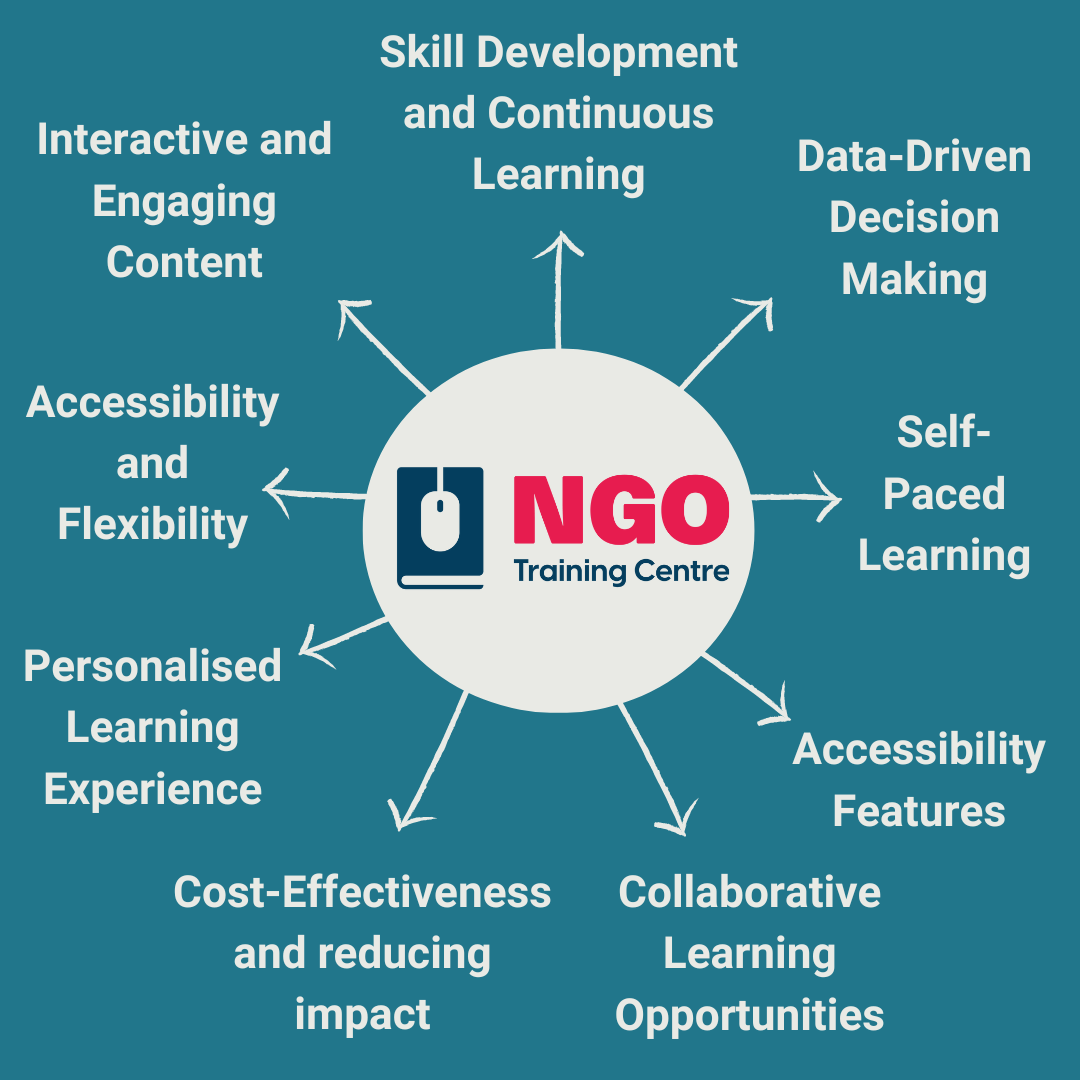
  1. Accessibility and Flexibility:

E-learning and micro-learning platforms can offer flexibility in terms of timing, location, and pace of learning, making them more accessible to disability support workers who may have varying schedules or mobility constraints. NGO Training Centre offers its courses and learning platform also via an app, so learning can happen anywhere, at any time. If a course is half completed on an app and it needs to be finished off at the office- no worries- the progress is saved and it can be picked up again from any device.

  1. Personalised Learning Experience:

Micro-learning, with its bite-sized modules, allows for personalised learning experiences. Disability support workers and their organisations can focus on specific topics or skills that are relevant to their needs and interests, enhancing engagement and retention. Our courses run on average from 30 – 45 minutes and if they are any longer, they are broken down into different parts.

  1. Cost-Effectiveness and reducing environmental impact:

E-learning and micro-learning can be very cost-effective compared to traditional in-person training methods. Reduced travel expenses and the ability to reach a larger audience with online platforms can contribute to cost savings. It also contributes to less emissions that would normally be due to the use of vehicles for transport to and from training. Our current data states that our training has led to 289K fewer commute hours, $33M in training savings and -4.68GgCO2 on environmental impact. That’s pretty impressive!

  1. Skill Development and Continuous Learning:

E-learning and micro-learning facilitate continuous professional development by providing access to a wide range of training materials and resources. This enables disability support workers to acquire new skills, stay updated on best practices, and adapt to evolving needs in the field. We have hundreds of resources, checklists and templates to use in the field, making them practical and hands-on resources for everyday use.

  1. Interactive and Engaging Content:

All of our courses incorporate multimedia elements, interactive quizzes, and simulations, making learning more engaging and stimulating for disability support workers. Interactive features can enhance understanding and retention of key concepts. Gamification is used to keep users engaged, which includes badges, points and certificates to incentivise staff to keep learning. It doesn’t get boring!

  1. Self-Paced Learning:

Micro-learning allows disability support workers to learn at their own pace, enabling them to review material as needed and proceed to more advanced topics when ready. This self-paced approach can accommodate diverse learning styles, time limitations, languages and preferences.

  1. Accessibility Features:

Our courses incorporate accessibility features such as a written script, and the ability to slow down or speed up the course, ensuring that materials are accessible to disability support workers with disability, and for whom English is not their first language. It’s important to us to ensure we are inclusive and that everything that we do is aligned with our values.

  1. Data-Driven Decision Making:

Our learning platform collects data on learner progress and performance. Analysing this data can provide insights into the effectiveness of training programs, identify areas for improvement, and inform decision-making regarding future training initiatives. It’s a handy tool for management and leaders and it’s generated by the click of a button.

  1. Collaborative Learning Opportunities:

Organisations take it further and facilitate collaboration and communication among learners through discussion forums, group projects, or virtual classrooms. Collaborative learning opportunities can promote knowledge sharing and peer support among disability support workers. This allows flexibility and creativity with the delivery of the courses to ensure that training is geared towards its intended audience. You can be creative and find ways to incorporate learning into team activities.

As you can see, these are just some of the key benefits of E-Learning and Microlearning for organisations, their staff and ultimately the participants.

If you’re seeking unparalleled quality in staff training, your search stops with us.

At NGO Training Centre we offer tailored solutions designed exclusively for your needs.

Don’t settle for ordinary training when you can have the best.

Contact us today to schedule your free demo and take the first step towards unlocking your team’s full potential!

Remember, be DISRUPTIVE!


Written by Amanda Robinson, B.A., MMentalHealth Prac.
Amanda is a professional with over a decade of dedicated experience in the fields of Mental Health and Disability. Her extensive expertise lies in navigating the intricate landscape of the Disability Sector. She brings a unique perspective to her work, being both a person with lived experience of disability and a compassionate carer. She has a passion for advocacy, making her a staunch champion for the rights and well-being of individuals facing similar challenges.
The Albanese Labor Government is committed to improving life for people with disabilities. This week, they took a big step by sharing an update on their progress after receiving the final report from the Disability Royal Commission.

At the same time, they introduced new guidelines for Disability Employment Services, showing they’re serious about making sure everyone gets a fair chance.

In Darwin, there was a meeting this week called the First Nations Roundtable. It provided an opportunity for First Nations communities to share their thoughts on the Disability Royal Commission’s findings. First Nation’s groups are talking with Minister for Social Services Amanda Rishworth and Minister for Indigenous Australians Linda Burney about the specific challenges faced by First Nations people with disabilities.

Minister for Social Services, Amanda Rishworth, says the government is determined to make Australia safe and welcoming for everyone, including those with disabilities. They know they need to work closely with different groups to make lasting changes based on the Royal Commission’s 222 recommendations.

Minister Rishworth said, “we are taking tangible actions to improve access to employment for people with disability through reform to Disability Employment Services, including an immediate lift in quality, and have strengthened safeguarding arrangements for people with disability outside the NDIS through enacting the new Disability Services and Inclusion Act 2023”.

During the Royal Commission, the government put in place new policies and plans, and they’re planning more changes soon. Under the new Quality Framework, DES providers will be rated on whether their services exceed expectations, meet expectations, or require further improvement.

The Department of Social Services has analysed the National Standards for Disability Services audit results from 2023 against the Disability Employment Services Quality Framework. Initial results indicate 85 per cent of providers are meeting requirements and 15 per cent need further improvement.

Quality assessments commenced in January 2024 with initial assessment results due in the second half of the year.

Minister Rishworth says that everyone, including all levels of government and the disability community, needs to work together to make things better for people with disability and that all governments – both Australian State and National governments are committed to creating a fairer and more inclusive society for everyone.

If you want to know more about what the government is doing in response to the Disability Royal Commission, you can visit the Department of Social Services website here: https://shorturl.at/kqsAK


Written by Amanda Robinson, B.A., MMentalHealth Prac.

Amanda is a professional with over a decade of dedicated experience in the fields of Mental Health and Disability. Her extensive expertise lies in navigating the intricate landscape of the Disability Sector. She brings a unique perspective to her work, being both a person with lived experience of disability and a compassionate carer. She has a passion for advocacy, making her a staunch champion for the rights and well-being of individuals facing similar challenges.
📢 We have previously announced the formation of the NDIS Provider and Worker Registration Taskforce, which has been set up to offer guidance on crafting and executing the new graduated risk-proportionate regulatory model suggested in the NDIS Review Final Report.

💪🏼The task force is now underway and will engage in discussions with individuals with disabilities, their families, and advocates, the NDIS provider market, workforce representatives, and other relevant stakeholders.

🖊️You can find further information about the Taskforce on the DSS website.

🗨️Have your say!

You can now make a submission here:

Submissions began on March 6 and will conclude at 11:59 pm on April 28, 2024.

Written by Amanda Robinson, B.A., MMentalHealth Prac.

Amanda is a professional with over a decade of dedicated experience in the fields of Mental Health and Disability. Her extensive expertise lies in navigating the intricate landscape of the Disability Sector. She brings a unique perspective to her work, being both a person with lived experience of disability and a compassionate carer. She has a passion for advocacy, making her a staunch champion for the rights and well-being of individuals facing similar challenges.
Minister for the National Disability Insurance Scheme (NDIS), the Honorable Bill Shorten MP, has announced the appointment of Michael Phelan APM as the interim acting Commissioner of the NDIS Quality and Safeguards Commission for a three-month term.

With a distinguished background as the former head of the nation’s premier criminal research and intelligence agencies, Mr. Phelan brings invaluable experience to the forefront of ensuring the integrity and safety of NDIS participants.

Minister Shorten emphasised the significance of Mr. Phelan’s appointment, stating that his expertise in combating criminal activities, garnered from his roles as the former CEO of the Australian Criminal Intelligence Commission and director of the Australian Institute of Criminology, positions him perfectly to tackle fraudulent practices and protect Australians who received supports under the NDIS.

The appointment of Mr. Phelan highlights the government’s commitment to safeguarding NDIS funds and ensuring they are directed towards participants’ needs. Minister Shorten highlighted the various initiatives introduced by the Albanese Government, such as the Crack Down on Fraud Program and the establishment of the Fraud Fusion Taskforce and the NDIS Provider and Worker Registration Taskforce, aimed at strengthening the oversight and regulation of the Scheme.

The government will conduct an open recruitment process to fill the Commissioner role permanently, reflecting the need for continued strong leadership in guiding the Commission through its evolving responsibilities.

Minister Shorten emphasised the importance of engaging with the disability community to shape the future direction of the NDIS watchdog.

Mr. Phelan will assume the role of acting Commissioner from March 12, temporarily stepping in as the current Commissioner takes leave. This appointment marks a significant step forward in the ongoing efforts to ensure the safety and integrity of the NDIS for all participants.

Written by Amanda Robinson, B.A., MMentalHealth Prac.

Amanda is a professional with over a decade of dedicated experience in the fields of Mental Health and Disability. Her extensive expertise lies in navigating the intricate landscape of the Disability Sector. She brings a unique perspective to her work, being both a person with lived experience of disability and a compassionate carer. She has a passion for advocacy, making her a staunch champion for the rights and well-being of individuals facing similar challenges.
People with disability who identify within the LGBTQIA+ community face so many challenges, where the disadvantages stemming from their disability intersect with those related to their sexuality, gender, or identity.

Within the LGBTQIA+ community, there is a risk of reduced access to necessary support systems and a lack of advocacy for their rights. As a Disability Support Professional, understanding this intersectionality is crucial for effectively advocating and supporting the rights of all individuals with disabilities.

The absence of adequate support and services can result in isolation, vulnerability, bullying, and mental health issues. Even when services are available, the specific needs of LGBTQIA+ individuals with disabilities may be overlooked if these services are not inclusive, safe, and accessible.

For instance, LGBTQIA+ adults with intellectual disabilities residing in supported accommodation may struggle to express their sexual identity in non-inclusive settings due to preconceived assumptions and decisions made without their input.

Discrimination further silences individuals with disabilities who identify with diverse community groups, hindering their ability to express their views and preferences. LGBTQIA+ individuals with disabilities may rely on a limited network of supporters or caregivers who may not be aware of their sexual orientation, gender identity, or intersex status. Equally, they may openly identify as LGBTQIA+ but feel that their disability often hides this aspect of their identity.

For some LGBTQIA+ individuals with disabilities, disclosing their sexuality or identity may lead to loss of crucial family support for managing their disability and distancing from peers with similar disabilities. There may also be a lack of communication and understanding between disability service providers and the broader LGBTQIA+ community, leading to feelings of isolation and marginalisation within both communities.

While research on disability within the LGBTQIA+ community is inadequate, existing studies indicate:

  • Individuals with disabilities may face a heightened risk of sexual abuse, including intimate partner violence, compared to the general population.
  • Same-sex attracted, gender diverse, and intersex (SSAGDI) youth with disabilities may experience compromised sexual health due to inadequate sex education.
  • SSAGDI youth with intellectual disability may feel overlooked if sexual health education is not inclusive.
  • LGBTQIA+ individuals with disability are often assumed to be heterosexual or non-sexual.

Providing information and opportunities for LGBTQIA+ individuals with disabilities to explore and express their sexual orientation or gender identity can lead to positive health outcomes.

Some ways to achieve this expression could include:

  • open conversation
  • access to relevant literature
  • engagement on social media platforms, and
  • participation in supportive social groups,

All of these contribute to the overall well-being of LGBTQIA+ individuals with disabilities.

Here are Five other ways that you can help, by providing respectful and inclusive communication:

  • Move beyond assumptions: Avoid assuming someone’s sexuality or gender identity based on stereotypes. Respect how individuals define themselves and ask about their preferences. Consult widely to ensure language reflects the diversity of the group.
  • Acknowledge diversity: Recognize that LGBTIQA+ communities are diverse. Use language carefully, considering the intersections of identity, such as race, religion, gender, and sexual orientation.
  • Respect privacy: Everyone has the right to privacy. Respect individuals’ choices about disclosing personal information regarding their gender or sexuality. Do not share personal information without explicit consent.
  • Share your pronouns: Use correct pronouns to show respect and inclusion, and normalise the sharing of pronouns. Be open to wearing pronoun badges, introducing yourself with your pronouns, or adding them to your email signature.
  • Learn from mistakes: Understand that mistakes happen, but strive to use respectful language. Acknowledge and correct mistakes promptly, avoiding dwelling on them. Repeated mistakes can be hurtful and may constitute bullying or discrimination.

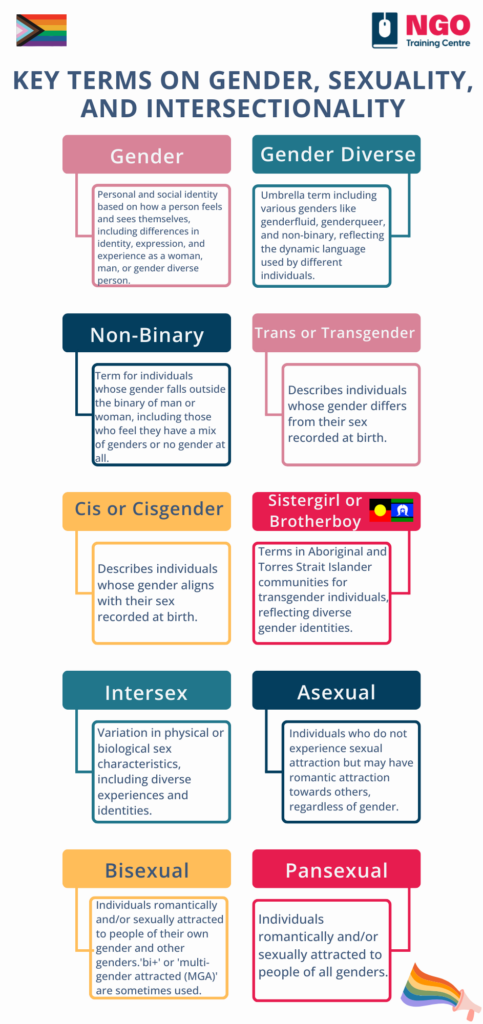
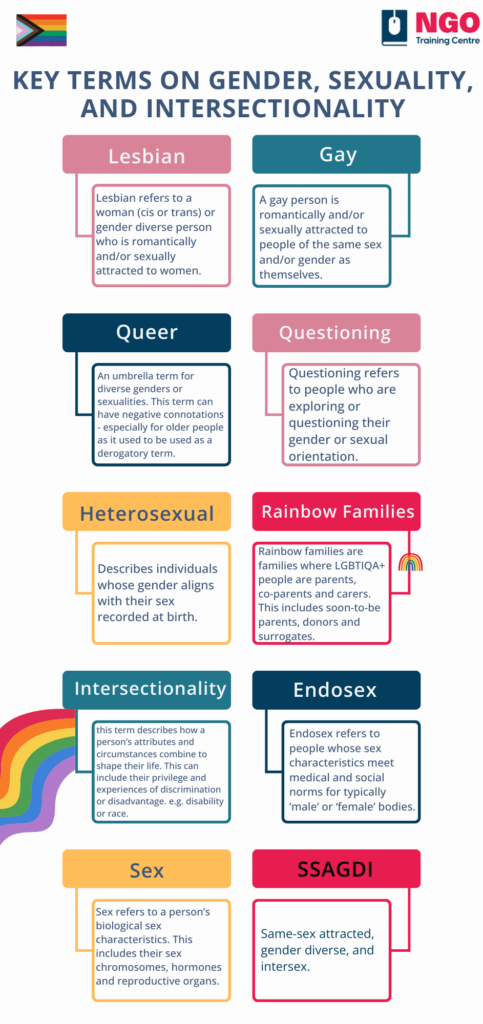
We have included a definition guide below to help, too.


Are you looking for information and resources to assist a person you are supporting?

Visit: https://www.disabilitygateway.gov.au/gender-and-sexuality

References:

https://www.vic.gov.au/inclusive-language-guide

Written by Amanda Robinson, B.A., MMentalHealth Prac.

Amanda is a professional with over a decade of dedicated experience in the fields of Mental Health and Disability. Her extensive expertise lies in navigating the intricate landscape of the Disability Sector. She brings a unique perspective to her work, being both a person with lived experience of disability and a compassionate carer. She has a passion for advocacy, making her a staunch champion for the rights and well-being of individuals facing similar challenges.
The Australian Government is allocating $83.9 million to boost the National Disability Insurance Scheme (NDIS), ensuring every dollar reaches those who need it most. This funding injection will strengthen the Crackdown on Fraud program, enhancing IT systems to safeguard funds for Australians with disabilities.

Here’s how the funding will be utilised:


  • Building a robust fraud case management system for seamless collaboration with enforcement agencies.
  • Enhancing IT infrastructure to expedite transactions and minimise errors.
  • Improving systems processing over 400,000 NDIS claims daily.
  • Strengthening identity verification for enhanced safety and privacy.
  • Enhancing the NDIS mobile app and online interfaces for improved accessibility.

This investment safeguards the sustainability of the NDIS, ensuring legitimate participants receive the support they deserve. Minister for the NDIS, Bill Shorten MP, highlights the Government’s commitment to restoring trust in the scheme’s integrity and meeting participants’ needs.

Stakeholder collaboration is at the core of this initiative. They are consulting with the disability community to ensure your voices shape the program’s design. Your feedback matters!

They’re committed to advancing the NDIS’s integrity and sustainability and this investment underscores the government’s dedication to protecting participant funds and ensuring the NDIS reaches its full potential.

Stay informed! Accessible communication materials, including AUSLAN, Braille, and Easy Read formats, are being developed to help you navigate upcoming changes seamlessly.

💬 Remember, if you or someone you know suspects fraudulent activity, please contact the NDIS fraud reporting and scams helpline on 1800 650 717, or email [email protected]

Written by Amanda Robinson, B.A., MMentalHealth Prac.

Amanda is a professional with over a decade of dedicated experience in the fields of Mental Health and Disability. Her extensive expertise lies in navigating the intricate landscape of the Disability Sector. She brings a unique perspective to her work, being both a person with lived experience of disability and a compassionate carer. She has a passion for advocacy, making her a staunch champion for the rights and well-being of individuals facing similar challenges.
As an independent disability advocate for many years, I received countless referrals from Disability Support Professionals (more commonly known as Support Workers) and service providers who were concerned about providing advocacy for their participants in fear of it being a ‘conflict of interest’ or giving the wrong advice or support with particularly ‘sticky’ issues.

Independent Disability Advocacy has its place- don’t get me wrong- and a very important role in the community. I speak later about when it may be required. Ultimately, Disability Support Professionals are a group of professionals that have profoundly important roles in delivering healthcare and support needs to participants on a daily basis.

This places that role in the best position to know the participant best- spending the most hands-on quality time together.

For many reasons, some participants are unable to speak up for themselves or do not have all of the information that they need to have to make decisions. This makes the role of a Disability Support Professional even more important when it comes to advocating to ensure that the participants are being treated fairly and that their rights and interests are being upheld.

Unlike a Disability Support Professional, an independent advocate is often short-term and issue-based so it’s not ideal to send a referral across to one for every issue that arises in a participant’s life. If you are unsure, you can call your local disability advocacy agency, which can give you further advice.

As a Disability Support Professional, when you do find yourself in a situation where you need to provide advocacy, there are a few ways to ensure that you are safely advocating on behalf of a participant, or assisting them to self-advocate. Some examples are:

  • Ensuring that the participant’s views and wishes are communicated positively and authentically.
  • Ensuring that the participant is given independent, accessible and accurate information to make their own informed choices and decisions without being influenced by others.
  • Ensuring that the participant has as many opportunities to communicate- such as through communication tools, which is very important.
  • Ensuring that any conflict can be negotiated and resolved successfully, and engaging professionals where required (such as tenancy support, legal, mediation or independent advocacy).
  • Understanding the rights of the participants that are being supported (Disability, Cultural, Youth, Aged etc.).

As I said earlier, there are times, however, when another party is better placed to fulfil the role of ‘advocate’, such as through the use of an independent advocacy organisation.

This is often due to a conflict of interest, which can include:

X The Disability Support Professional is too close to the person/situation.

X There is a complaint or issue with the Disability Support Professional or their employer.

X The Disability Support Professional has strong views on a subject that are at odds with the participant.

X The Disability Support Professional does not have to agree with the participant, but they do need to express the views and wishes of the participant clearly and accurately.

The ultimate aim, however, is for the participant to self-advocate, so that they no longer require someone to speak up on their behalf. Utilising all of the strategies and working alongside the participant will reinforce self-advocacy skills.

To strengthen these skills further for participants, there are some excellent self-advocacy groups around Australia that they can join who empower each other through peer support. This is a very powerful model. Through these groups, participants have a collective voice, and it can support them to go on to challenge systemic barriers or issues at a state or National level. You can find these, along with independent advocacy organisations here: https://www.daru.org.au/organisation-type/self-advocacy-support-groups

Disability Support Professionals must have the skills and knowledge to support participants to have their voices heard and their rights upheld. They must have good communication skills to communicate with participants and their families positively. This could mean using clear developmentally appropriate communication and being culturally appropriate in a way that the participant can understand and be comfortable with.

It is important that Disability Support professionals access training and ongoing professional development to become an advocate for the participants that they support.

At NGO Training, we provide quality training for Disability Support Professionals and leaders, with over 80 interactive and engaging courses that include communication and cultural competency to enhance these much-needed advocacy skills.

 For further information on how to access independent advocacy services, here is a useful EASY READ guide from The Department of Social Services (DSS) about the Disability Advocacy Support Helpline. The Disability Advocacy Support Helpline is a phone line that supports: 

• people with disability 

• families and carers 

• support workers (or Disability Support Professionals) 

You can find it through the Disability Gateway:
1800 643 787

They will help guide you in the right direction.


Written by Amanda Robinson, B.A., MMentalHealth Prac.

Amanda is a professional with over a decade of dedicated experience in the fields of Mental Health and Disability. Her extensive expertise lies in navigating the intricate landscape of the Disability Sector. She brings a unique perspective to her work, being both a person with lived experience of disability and a compassionate carer. She has a passion for advocacy, making her a staunch champion for the rights and well-being of individuals facing similar challenges.
The Albanese Government has launched the National Disability Data Asset Council, composed of representatives from various sectors including the disability community, data experts, and government officials.
This initiative aims to provide comprehensive insights into the lives of people with disabilities and identify areas for improvement in programs and services.
Minister for Social Services, Amanda Rishworth, highlights the significance of accurate national data to inform policies and programs effectively.

Minister for the National Disability Insurance Scheme (NDIS), Minister Shorten said the NDIS Review recommended all governments should agree to invest in actions to improve disability data quality and sharing.

“The National Disability Data Asset will help do that by linking de-identified NDIS data with other Commonwealth and state and territory data for the first time,” said Minister Shorten.

“As we reform the NDIS, this will give richer insights into how NDIS supports interact with supports and services in other systems outside the Scheme and how we can improve those connection points.”

The government has assigned $68.3 million for the analysis, research, and delivery of the Asset, with all states and territories on board for data transfer. Additionally, panels will be established to provide advice on specific priority areas.

Members of the public are invited to express their interest in joining these panels. The National Disability Data Asset is expected to be fully operational by the end of 2025, with the first sets of analyses available later this year.

Written by Amanda Robinson, B.A., MMentalHealth Prac.

Amanda is a professional with over a decade of dedicated experience in the fields of Mental Health and Disability. Her extensive expertise lies in navigating the intricate landscape of the Disability Sector. She brings a unique perspective to her work, being both a person with lived experience of disability and a compassionate carer. She has a passion for advocacy, making her a staunch champion for the rights and well-being of individuals facing similar challenges.
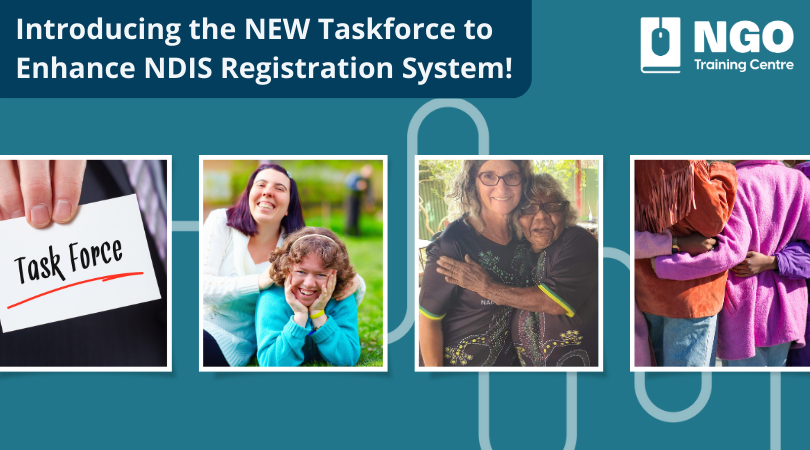
We’re thrilled to share with you the latest initiative from the Minister for the NDIS, the Hon Bill Shorten MP – the formation of an innovative task force dedicated to revamping the registration process for providers and workers within the National Disability Insurance Scheme (NDIS). Named the NDIS Provider and Worker Registration Taskforce, this dynamic team will collaborate closely with individuals living with disability to ensure that registrations lead to better outcomes for NDIS participants.

Led by a distinguished panel of experts including lawyer and disability advocate Natalie Wade, former chair of the Australian Competition and Consumer Commission Allan Fels, former ACTU Assistant Secretary Michael Borowick, and former Administrator of the Northern Territory Vicki O’Halloran, the task force will provide invaluable guidance to the government in redesigning the registration system.

Drawing from recommendations in the NDIS Review, the task force aims to introduce a graduated risk-proportionate regulatory model and a new provider risk framework to enhance the visibility and regulation of NDIS providers and workers.

Minister Shorten has highlighted that the goal of this new regulatory system is to ensure inclusivity and accountability within the NDIS. By working hand in hand with the disability community, the task force will address existing gaps in NDIS regulation, ensuring that the reforms uphold the independence of participants while minimising administrative burdens for providers.

Taking a gradual approach and gathering insights from stakeholders, the task force is committed to achieving the best possible outcomes for everyone involved. We anticipate the task force’s recommendations, slated for mid-2024, will mark a significant step towards enhancing the effectiveness, efficiency and integrity of the NDIS registration system.

Stay tuned for further updates as we work together to create a more inclusive and empowering future for individuals living with disabilities under the NDIS.

Written by Amanda Robinson, B.A., MMentalHealth Prac.

Amanda is a professional with over a decade of dedicated experience in the fields of Mental Health and Disability. Her extensive expertise lies in navigating the intricate landscape of the Disability Sector. She brings a unique perspective to her work, being both a person with lived experience of disability and a compassionate carer. She has a passion for advocacy, making her a staunch champion for the rights and well-being of individuals facing similar challenges.
The National Disability Insurance Scheme (NDIS) Commission has taken a significant step forward in promoting the rights and well-being of individuals with disabilities with the release of its new and updated Behaviour Support Plan (BSP) templates.

These templates, designed to put the person first, are a testament to the Commission’s commitment to human rights and eliminating restrictive practices. The updated templates follow the publication of the BSP Template Review – Summary of Findings in July 2023.

One of the most notable features of these new BSP templates is their unwavering focus on the individual and focusing on human rights.

Another key focus has been accessibility, which ensures that everyone can benefit from these BSP templates.  The templates are not just the result of internal brainstorming sessions; they have been shaped by the input and feedback of those directly involved in the disability support sector. Participants, providers, and practitioners have all contributed their insights, ensuring that the templates reflect real-world needs and challenges.

To ensure best practices are followed, the NDIS Commission has incorporated the latest research findings into these BSP templates. Drawing upon evidence-based approaches, the templates provide a solid foundation for developing effective behaviour support plans that promote positive outcomes for individuals with disabilities.

The NDIS Commission has equipped these templates with a wealth of tips and resources. From practical advice on implementation to links to relevant legislation, these resources are invaluable tools for crafting high-quality BSPs that align with legal requirements and promote the well-being of individuals.

The release of these new and updated BSP templates by the NDIS Commission marks a significant milestone in the ongoing efforts to improve the quality of disability support services in Australia. By prioritising the rights and dignity of individuals with disabilities, enhancing accessibility, incorporating stakeholder feedback, grounding in research, and providing comprehensive resources, these templates set a new standard for behaviour support planning.

What you need to know:

  • There are additional requirements for the Interim BSP Template and the Comprehensive BSP Templates. These must be reviewed very carefully to understand the full requirements. You can access these templates and explore the resources provided; they are available here: https://shorturl.at/uLRV0.
  • The timeframes for the development of BSPs have not changed even though there are more requirements:
    • Interim BSP- within one month of the BS Practitioner becoming engaged and
    • Comprehensive BSP- within five months of the interim BSP being submitted.

If you would like to provide feedback on these, we encourage you to complete their survey.

Written by Amanda Robinson, B.A., MMentalHealth Prac.

Amanda is a professional with over a decade of dedicated experience in the fields of Mental Health and Disability. Her extensive expertise lies in navigating the intricate landscape of the Disability Sector. She brings a unique perspective to her work, being both a person with lived experience of disability and a compassionate carer. She has a passion for advocacy, making her a staunch champion for the rights and well-being of individuals facing similar challenges.
NGO Training Center Online NDIS learning
Trigger Sidebar Cart0
×
Your cart is empty. Return Home