If you deliver NDIS supports, change is coming, and for one group of providers, it’s coming fast.
The NDIS Quality and Safeguards Commission is reforming the NDIS Practice Standards: the quality and safety benchmarks every registered provider must meet. At their heart, these standards exist so participants can shape how safe, quality supports are delivered to them.
The reform is being driven by two parallel projects: a brand-new set of Practice Standards for supported independent living (SIL), and a broader review of the Practice Standards as a whole.
Here’s what each means for your organisation:
The headline: new SIL Practice Standards and mandatory registration
If you provide SIL supports, this is the part to read carefully.
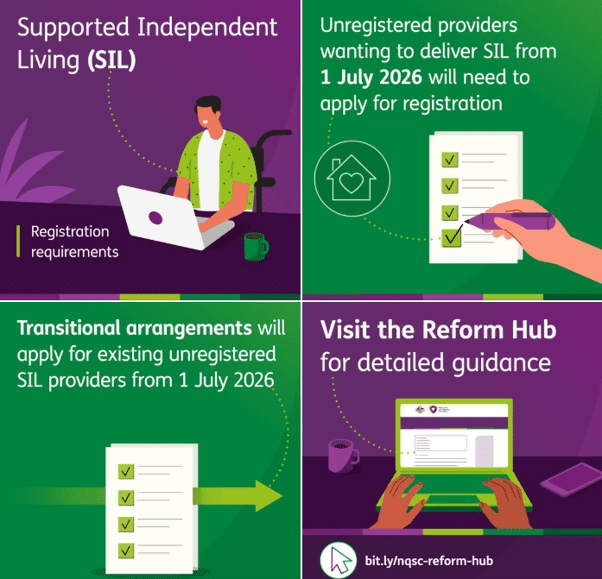
In December 2025, the Minister for the NDIS announced that SIL providers must register from 1st July 2026 and comply with new NDIS Practice Standards for supported independent living. With that date now just weeks away, the window to prepare is short.
The reform didn’t appear from nowhere. Recent reviews and the NDIS Commission’s Own Motion Inquiry into Aspects of Supported Accommodation (OMI) surfaced real risks in supported independent living. Those risks were raised by participants, their supporters, advocates and the Commission itself.
Importantly, the new standards were co-designed. The Commission worked with Inclusion Australia and people with disability to develop them, so participant voices sit at the core of the new module rather than being added on afterwards.
What’s actually changing for SIL providers
A few practical points:
- From 1st July 2026, providers of supported independent living supports will need to comply with the new SIL Practice Standards.
- The new standards focus on quality and safety in shared accommodation with daily supports; and on giving clearer, more usable guidance to frontline workers.
- The Commission has released the draft supported independent living Practice Standards module so you can see what’s proposed.
- There’s also an Easy Read factsheet — “Supported independent living: New rules for good and safe support” to help participants and supporters understand the changes.
For the registration detail, including what the transition looks like, you can start here:
- Mandatory registration
- Mandatory registration and transition pathways for supported independent living
The final SIL Practice Standards will be published on the NDIS Practice Standards page before 1st July 2026, so it’s worth bookmarking that page now.
The bigger picture: the NDIS Practice Standards Review
Alongside the SIL work, the Commission ran a national consultation to support a wider review of the Practice Standards.
That consultation asked some foundational questions: whether current obligations are appropriate and genuinely focused on what matters, what an NDIS Quality Framework should look like, and how guidance can better support safe, high-quality, participant-centred supports. The Commission is now working through the feedback, insights and recommendations to shape the next steps.
This isn’t separate from the SIL changes; it directly informed them. The consultation led to the introduction of Expectation Statements, which set out the perspectives of participants, workers and providers, along with guidance material that spells out what “good” actually looks like in practice. Expect this approach: clearer expectations, plainer guidance to flow through future reform.
What providers should do now:
If you deliver SIL supports, treat 1st July 2026 as a live deadline:
- Read the draft module and map it against how you currently operate and identify the gaps now, not in July.
- Confirm your registration pathway using the mandatory registration links above.
- Brief your frontline teams early; much of the new standard is aimed squarely at day-to-day support quality.
- Share the Easy Read factsheet with participants and their supporters so the change is understood on all sides.
- Watch the Practice Standards page for the final version ahead of the deadline.
For providers outside SIL, the broader review signals the direction of travel: clearer expectations, stronger guidance, and standards that keep participants at the centre. Getting familiar with that thinking now will make whatever comes next far easier to absorb.
We’ll keep you updated on any changes. If you’re a new provider, pending renewal, or unregistered and need help to get registered, we’re here to support you.
We have a suite of courses to assist you with your Online NDIS Self-assessment, to get you started and to help you understand your requirements for application and audit.
We even offer a FREE Introductory course to kick off your registration journey.
Training options for you and your team
Here is the part I am genuinely excited about. The NGO Training Centre has just released two new training options for providers and individuals: a brand-new Supported Decision-Making course, purpose-built for the Module 5A world, plus an all-in SIL Pathway collection of courses covering all SIL-related topics.
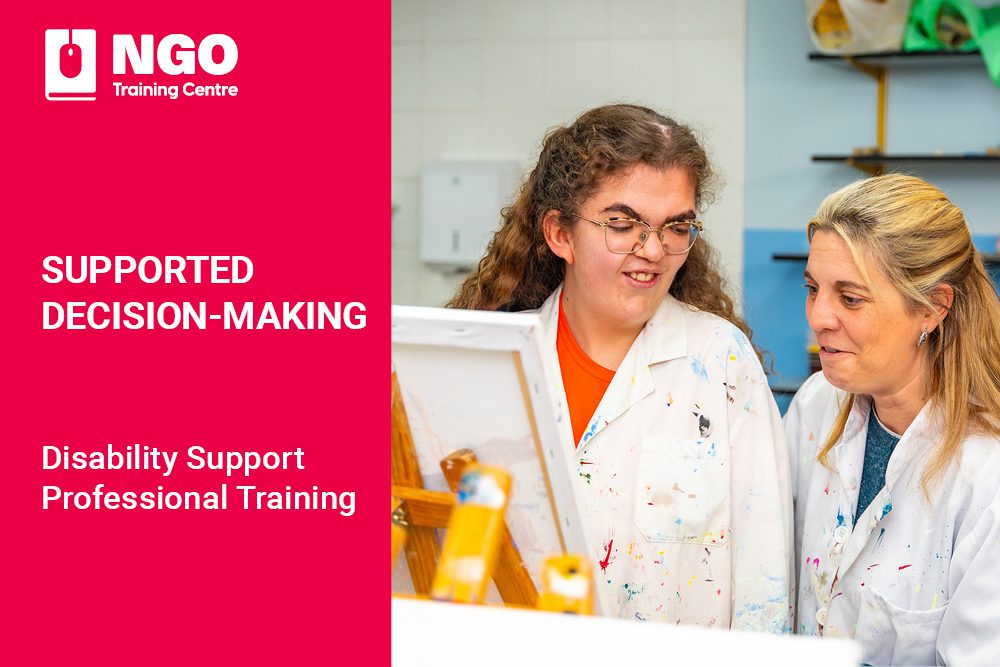
1. Supported Decision-Making course

Supported Decision-Making sits at the very heart of the new standards. It is the difference between doing things for people and doing things with them, and it underpins every other standard in the module. Our new course gives frontline workers, coordinators and leaders the practical skills to put participant choice and control into everyday practice, not just policy.
With this course added to our library, the NGO Training Centre catalogue will soon cover every training requirement across all four SIL Practice Standards, for every staff member.
2. The complete SIL Pathway collection

Our new SIL Pathway collection of courses compiles all the relevant courses for the new SIL Standards into one convenient bundle, allowing you or your team to learn everything you need to know for SIL supports in one convenient enrolment.
Courses in the SIL Module Pathway:
How the courses map to each standard:
| Training Course | Supported Decision-Making | Safeguarding | Practice Governance | Agreements |
| Supported Decision-Making (new) | ✓ | ✓ | ✓ | |
| Duty of Care, Informed Choice and Dignity of Risk | ✓ | ✓ | ✓ | ✓ |
| Person-Centred Active Support | ✓ | ✓ | ✓ | |
| Communication | ✓ | ✓ | ✓ | |
| Complaints and Reportable Incidents | ✓ | |||
| Emergency and Disaster Management | ✓ | |||
| Positive Behaviour Support (Parts 1, 2 and 3) – including De-escalation, Restrictive Practices, and Positive Behaviour Support and Plans | ✓ | ✓ | ||
| Abuse and Neglect | ✓ | ✓ | ||
| Trauma-Informed Care | ✓ | ✓ | ||
| Cultural Awareness | ✓ | ✓ |
A tick ✓ indicates the course provides evidence for that SIL practice area.
3. Complete Team Training Packages
All of our Disability Support and Combined Sector Training Packages include all of the above courses plus many more to provide your team with complete skills-focused and person-centred training that is up-to-date with the latest NDIS Standards reforms – including the new SIL requirements.
Our training packages start at only $1040 per year (less than $3 per day) and include expert-designed courses covering all NDIS Practice Standards (including the new SIL Standards), and a leading LMS with its own mobile app that makes delivering and reporting on training simple and fast on any device!
Plus, all our packages now include our new NGO Xpress refresher courses, designed to save your staff time when completing courses containing content they already know.
See why providers and auditors love our training packages in the video below:
Find out more about our Training Packages for Disability Support provider organisations and get in touch with our team to book a demonstration! You’re sure to be impressed!
Getting ready for mandatory SIL registration
If your organisation provides Supported Independent Living (SIL), NDIS registration is no longer optional. From 1 July 2026, SIL providers must be registered with the NDIS Commission, with existing unregistered providers required to apply for registration by 1 October 2026 if they want to continue delivering SIL supports.
This is a significant change for SIL providers, with registration bringing new requirements around quality, safeguarding, governance and participant-centred practice. Registered SIL providers must meet the NDIS Core Practice Standards as well as the new SIL-specific Practice Standards, and will be subject to certification audits.
NDIS Online Self-Assessment SIL Course
Our NDIS Online Self-Assessment – Supported Independent Living (SIL) course is designed to help providers understand what they need to address when completing their NDIS online self-assessment and preparing their supporting evidence.
In just 30 minutes, you’ll explore the four key SIL Practice Standards:
- Supported decision-making
- Safeguarding
- Governance
- Tenancy, housing and support arrangements
You’ll also learn how to develop effective, tailored responses to the self-assessment questions and identify the types of policies, procedures and worker qualifications that can help demonstrate compliance.
Most importantly, the course helps you understand what evidence you need to prepare for your registration or renewal application, so you can approach the process with greater confidence and identify potential gaps before they become a problem.
Don’t wait until your audit is approaching.
SIL registration is about more than completing an application. Providers need to be able to demonstrate that their organisation has the systems, processes, workforce and practices required to deliver safe, high-quality, person-centred SIL supports.
This course gives your organisation a practical starting point for understanding the new SIL requirements, preparing your self-assessment and getting your evidence in order.
Prepare your team. Understand the requirements. Strengthen your self-assessment. Get ready for SIL registration.
Webinar – NDIS Reforms & New SIL Standards
The NDIS is changing quickly, and the new SIL requirements are now rolling out. But what do providers actually need to do to prepare?
In this webinar, our expert panel provides practical guidance on the NDIS reforms, new SIL Standards, registration requirements, audits, staff training and evidence.
You’ll hear from:
🎤 Amanda Robinson – Head of Learning & Development, NGO Training Centre
What training is required under each new SIL Standard and how to prepare your team.
🎤 Marguerite Hoiby – NDIS & Aged Care Auditor and Subject Matter Expert
What auditors will be looking for, common compliance mistakes and how to stay audit-ready.
🎤 Belinda Llamas – Managing Director, Provider Institute
An overview of the new NDIS registration process, including a walkthrough of the new SIL Standards online self-assessment modules.
Whether you’re preparing for NDIS registration, adapting to the new SIL requirements or getting your organisation ready for an audit, this webinar provides practical insights to help you understand what’s changed and what to do next.
We also welcome providers to book a meeting with our friendly team to discuss any questions or concerns about the NDIS Reforms and new SIL Standards:
Please get in touch if you require any advice, guidance or solutions to help you navigate these changes and challenges:
Contact our friendly and supportive team
–
Author: Amanda Robinson BA, MMHealthPrac,
As Head of Learning and Development and a seasoned NDIS expert, Amanda drives capability and sustainability in the disability and health sectors. With over 15 years of experience, post-graduate qualifications in Mental Health Leadership and Management, and currently pursuing an MBA, she brings deep expertise and personal insight as someone with lived experience of disability. A devoted carer, Amanda champions Human Rights, working to dismantle stigma and barriers for individuals with disability and mental health challenges. She is passionate about building robust stakeholder relationships, leveraging her advocacy, communication, strategic thinking, and analysis skills.