I am located on the traditional lands of the Dja Dja Wurrung and the Taungurung Peoples of the Kulin Nation. They are the traditional custodians of this land. I would like to pay my respects to Elders, past, present, and emerging.
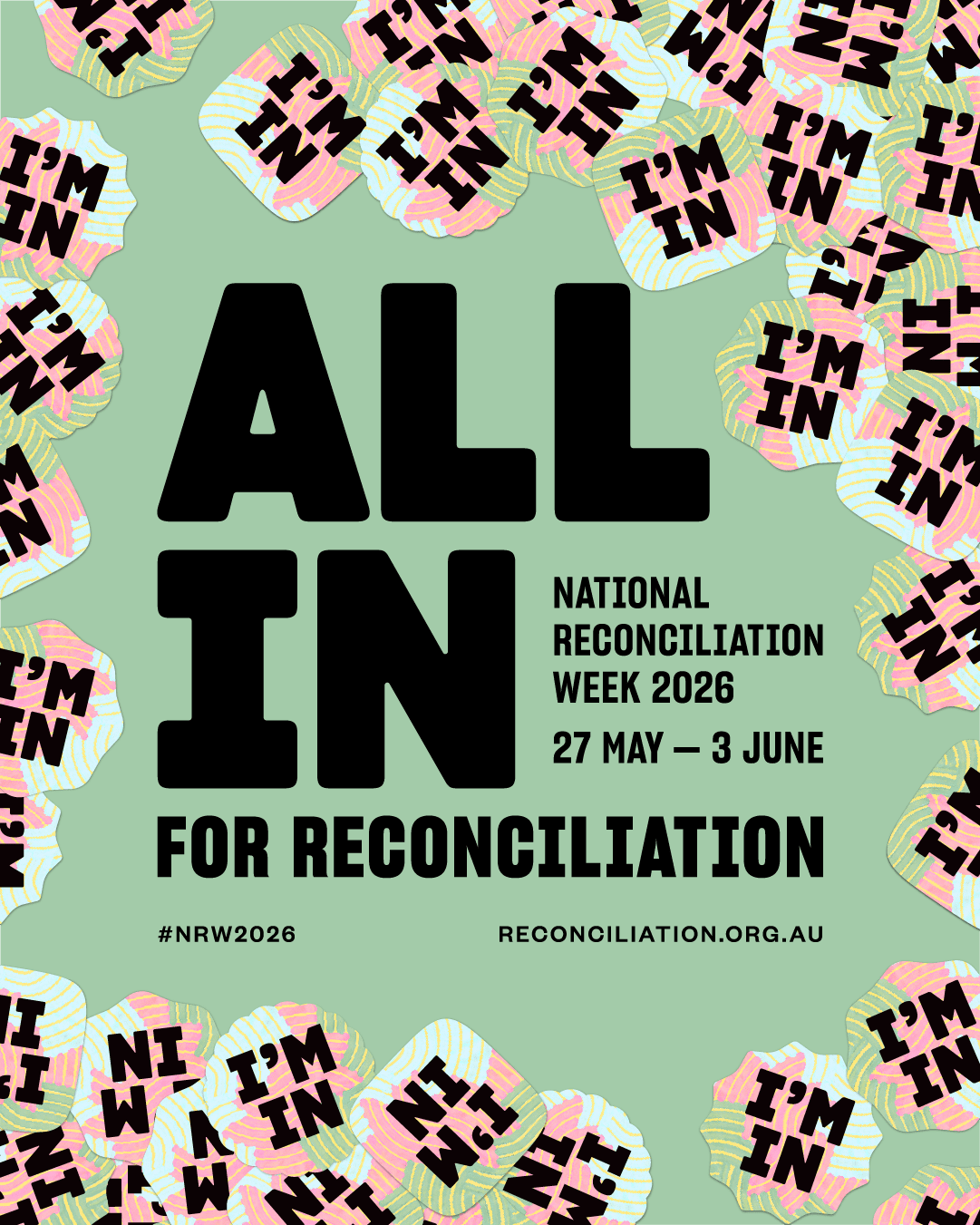
From 27 May to 3 June each year, Australians come together to recognise and reflect during National Reconciliation Week 2026. It is a significant time to learn about our shared histories, cultures and achievements, while considering how we can all contribute to reconciliation in meaningful ways.
The 2026 theme, All In, is a powerful reminder that reconciliation is everyone’s responsibility. It calls on all Australians to move beyond awareness alone and actively contribute to positive change every day through our workplaces, communities, services and conversations. As highlighted by Reconciliation Australia, reconciliation is not a passive activity. Aboriginal and Torres Strait Islander peoples have carried the emotional and cultural labour of advocating for equality and understanding for generations. The All In theme encourages all Australians to stand alongside First Nations peoples and commit to listening, learning and taking action together.
I have been on a steep learning journey since my professional career began in 2010. Without giving away my age, school and community education around First Nations Peoples was vastly different from what it is today. My eyes have been well and truly opened by education, seeking the truth, listening, and learning from incredible mentors along the way.
In my advocacy and support roles, including supporting the voices of First Nations People to be heard in the recent Disability Royal Commission, I had the privilege of working alongside a First Nations Elder who taught me so much about First Nations culture, unconscious bias, and the importance of cultural connection and culturally safe, respectful care. He shared his lived experience of being raised in an institution, and of racism and segregation. Ultimately, he guided me, but I took it upon myself to learn, research, and discover the truth about the history and the current barriers that First Nations Peoples still face today.
This is such an important part of reconciliation as it is not the sole responsibility of First Nations people to educate, explain and act; they have been doing this for far too long.
I wanted to share this knowledge and experience, so we engaged a subject matter expert and an Elder to share their lived and living experiences and to create an engaging and accessible course for all aged care staff supporting Elders. We are proud to offer our course ‘Supporting First Nations Elders‘ which is designed to educate disability and aged care workers in delivering compassionate, informed and culturally responsive care to First Nations Elders.
One of the most meaningful aspects of our aged care course is hearing directly from Elder, Monica, who currently resides in an Elder Facility in Shepparton, VIC. I had the privilege of being invited into Monica’s home, where she shared her story and the incredible impact she is having in the community through her support for cultural connection and her involvement in First Nations celebrations and activities across regional Victoria.
Monica generously shared parts of her personal story, experiences and reflections on growing up as a proud Aboriginal woman and what culturally respectful care looks like in our ‘Voice of Experience’ video segment in our aged care course. Her voice provides learners with valuable insight into the lived experiences, resilience, culture and identity of First Nations peoples.
Here is an insightful snippet of my conversation with Monica – the full version of Monica’s video is available in our ‘Supporting First Nations Elders‘ course:
Through our training, we aim to strengthen understanding and confidence for those providing care to First Nations Elders, and we provide learning outcomes such as:
- Discussing First Nations cultures, including the diversity of histories, languages and traditions across communities
- Understanding the historical background of First Nations peoples and the enduring impacts this has had on health and wellbeing
- Demonstrating culturally safe and respectful care practices for First Nations Elders, and
- Practising culturally safe communication that supports dignity, connection and trust. We also provide a broad range of additional learning resources to support ongoing education and reflection for workers across the aged care sector.
For many First Nations Elders, culture, Country, family and community are deeply connected to health and wellbeing. Delivering culturally safe care means recognising and respecting these connections while ensuring Elders feel heard, valued and understood.
National Reconciliation Week is an opportunity for all of us to reflect on how we can contribute to a more inclusive and respectful Australia, not just during one week of the year, but every single day.
Join us to celebrate National Reconciliation Week.
Because reconciliation is not about standing on the sidelines.
–
Author: Amanda Robinson BA, MMHealthPrac,
As Head of Learning and Development and a seasoned NDIS expert, Amanda drives capability and sustainability in the disability and health sectors. With over 15 years of experience, post-graduate qualifications in Mental Health Leadership and Management, and currently pursuing an MBA, she brings deep expertise and personal insight as someone with lived experience of disability. A devoted carer, Amanda champions Human Rights, working to dismantle stigma and barriers for individuals with disability and mental health challenges. She is passionate about building robust stakeholder relationships, leveraging her advocacy, communication, strategic thinking, and analysis skills.