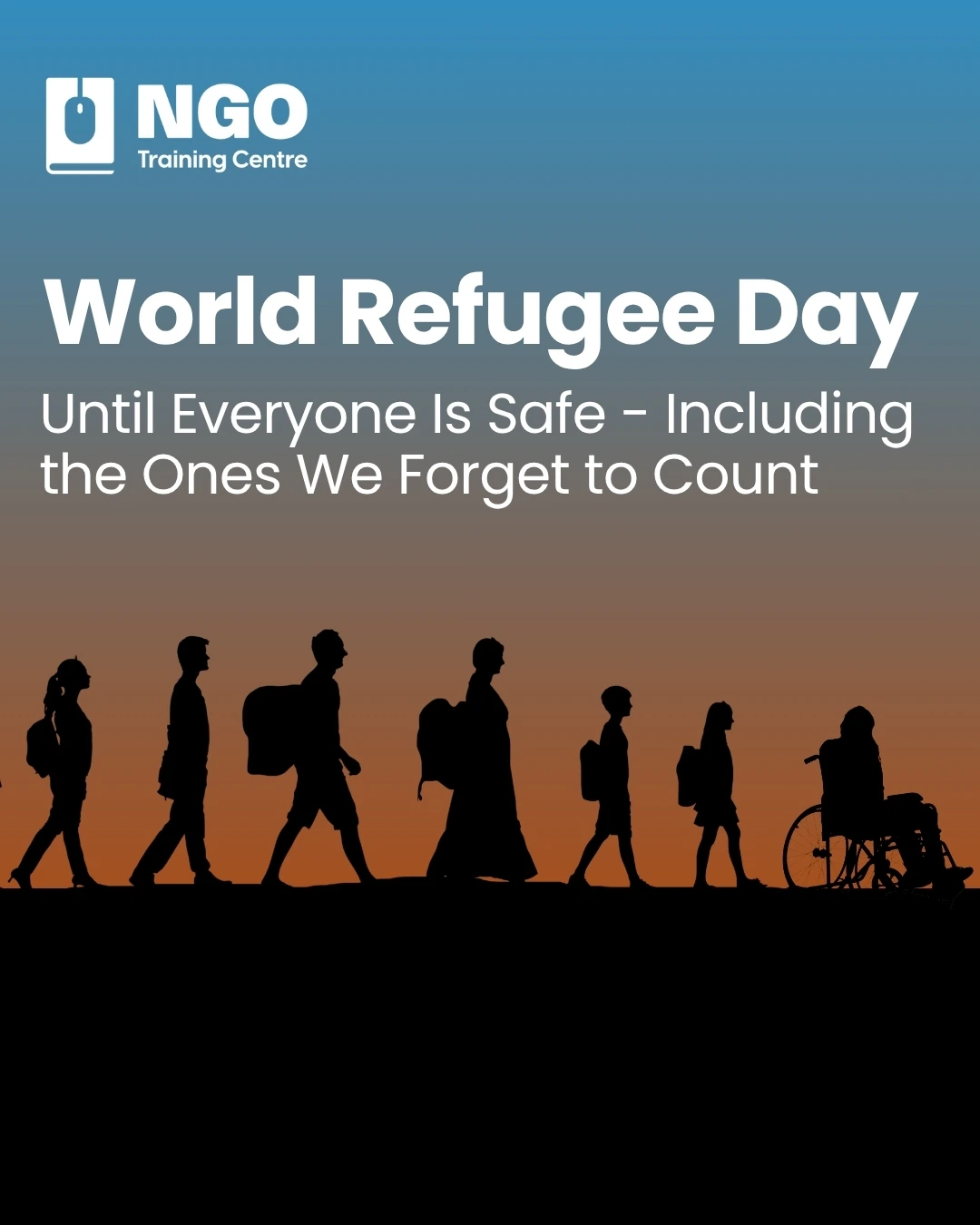
Until Everyone Is Safe – Including the Ones We Forget to Count
World Refugee Day falls on 20 June 2026, and 2026 marks seventy-five years since the world adopted the 1951 Convention relating to the Status of Refugees. Born from the ruins of war, that promise was never meant for one region, one generation or one people. It was meant for humanity as a whole. People forced to flee should not be returned to danger, and they should be able to live in dignity while they are displaced.
That safeguard is needed now more than it has been in a long while. More than 117 million people are forcibly displaced across the world, families uprooted by war in the Sudan, by violence in the Democratic Republic of the Congo, by the long crises in Ukraine, Afghanistan, the Syrian Arab Republic, Myanmar and beyond.
When people fleeing danger are refused protection, the harm does not stay still. Families are pushed onto more perilous routes. Children lose years of learning they never get back. Women and girls face greater risk. Host communities are left holding need without the support to meet it.
Protecting refugees is an act of compassion, yes. It is also a condition for stability and peace, which is less sentimental and more just as true.
This year’s theme is: Until Everyone Is Safe.
When I was leading advocacy work into the Disability Royal Commission, the government set us a target. Thirteen per cent. That was the share of our engagement across the Disability community to tell their stories and share their experiences in our community. We committed to reaching out among culturally and linguistically diverse communities, I guess because the government decided that if you do not name a number, the number quietly becomes zero.
It was still not enough. Reaching it was hard. It was hard for reasons that should embarrass a country as wealthy as this one. The Commission’s own findings spelled it out. People from CALD backgrounds face severe barriers navigating the NDIS, and it called for simpler access pathways and services that actually meet people where their language and culture sit. It urged that disability and rights information be available in many languages, not one. It urged organisations to employ people with disabilities from CALD backgrounds and to seat them on boards and advisory groups where decisions are made, not just in the consultation that is merely tokenistic.
It pointed to the place where the harm concentrates. The risk that lands on women, on children, on people who arrive carrying more than one reason to be turned away. Refugee, person with disability, woman, child, all at once, in one human being who is simply trying to seek help and support.
This is the part of the work we can do something about. At the NGO Training Centre, we provide a Cultural Awareness course for disability staff. It challenges your thinking about cultural awareness and translates that thinking into how you can best support people in the community who have experienced refugee status.
Our aged care courses are coming soon: Cultural Awareness and CALD Support, built so that workers understand the CALD community and refugees well enough to keep them safe from violence, abuse, neglect and exploitation and not as another tick box on a compliance form.
Whilst we are just one access point in the network of resources, there is a vast array of support available for Refugees and the CALD community here in Australia. Know what’s out there because until everyone is safe, the work is not done. Everyone, including the ones we keep forgetting to count.
Resources
National Ethnic Disability Alliance (NEDA) – is run by and for people from culturally and linguistically diverse backgrounds with disability, with advocacy and rights information written for migrants and refugees. Phone 0402 610 399, email comms@neda.org.au, neda.org.au
AMPARO Advocacy – offers independent advocacy and plain-language NDIS fact sheets and videos in community languages, including Arabic, Swahili, Kurdish Kurmanji, Burmese and Auslan. Phone (07) 3354 4900, email info@amparo.org.au, amparo.org.au
TIS National – provides free interpreting in more than 160 languages. Phone 131 450 and ask to be put through to the NDIS on 1800 800 101, or to any provider with their number ready.
NDIS access line – is where an access request begins. Phone 1800 800 101, with TIS on the line if an interpreter is needed.
Disability Gateway** is the national information and referral service for people with disability, their families and carers, with translated material. Phone 1800 643 787, disabilitygateway.gov.au
NDIS Quality and Safeguards Commission – takes complaints and concerns about NDIS services anywhere in the country. Phone 1800 035 544.
NOTE: People on permanent humanitarian visas can reach the NDIS. People on bridging visas, Temporary Protection Visas or Safe Haven Enterprise Visas usually cannot, so check the visa first before you point anyone at these numbers and raise a hope the system will not meet.
–
Author: Amanda Robinson BA, MMHealthPrac,
As Head of Learning and Development and a seasoned NDIS expert, Amanda drives capability and sustainability in the disability and health sectors. With over 15 years of experience, post-graduate qualifications in Mental Health Leadership and Management, and currently pursuing an MBA, she brings deep expertise and personal insight as someone with lived experience of disability. A devoted carer, Amanda champions Human Rights, working to dismantle stigma and barriers for individuals with disability and mental health challenges. She is passionate about building robust stakeholder relationships, leveraging her advocacy, communication, strategic thinking, and analysis skills.