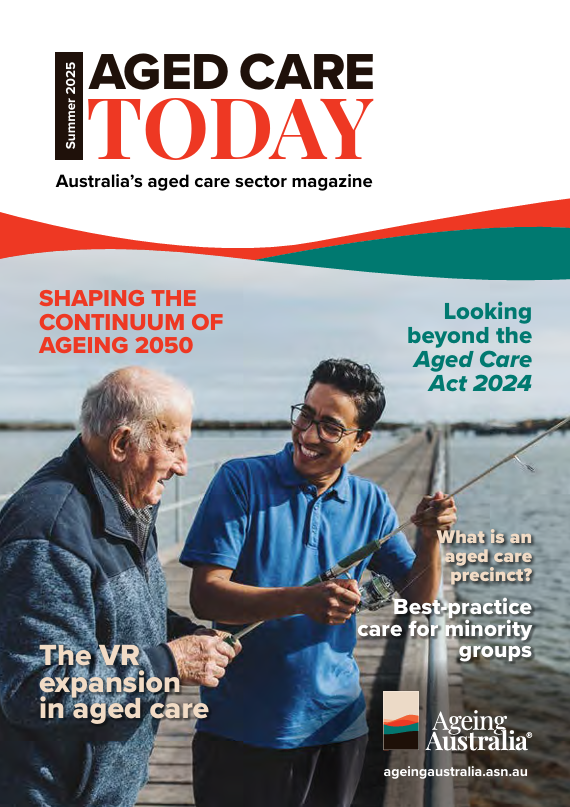
Check out the insightful new edition of Aged Care Today magazine by Ageing Australia – including a brilliant article by our very own amazing Amanda Robinson on page 92!
NDIS Disability and Aged Care online training courses for disability support and aged care workers and organisations.
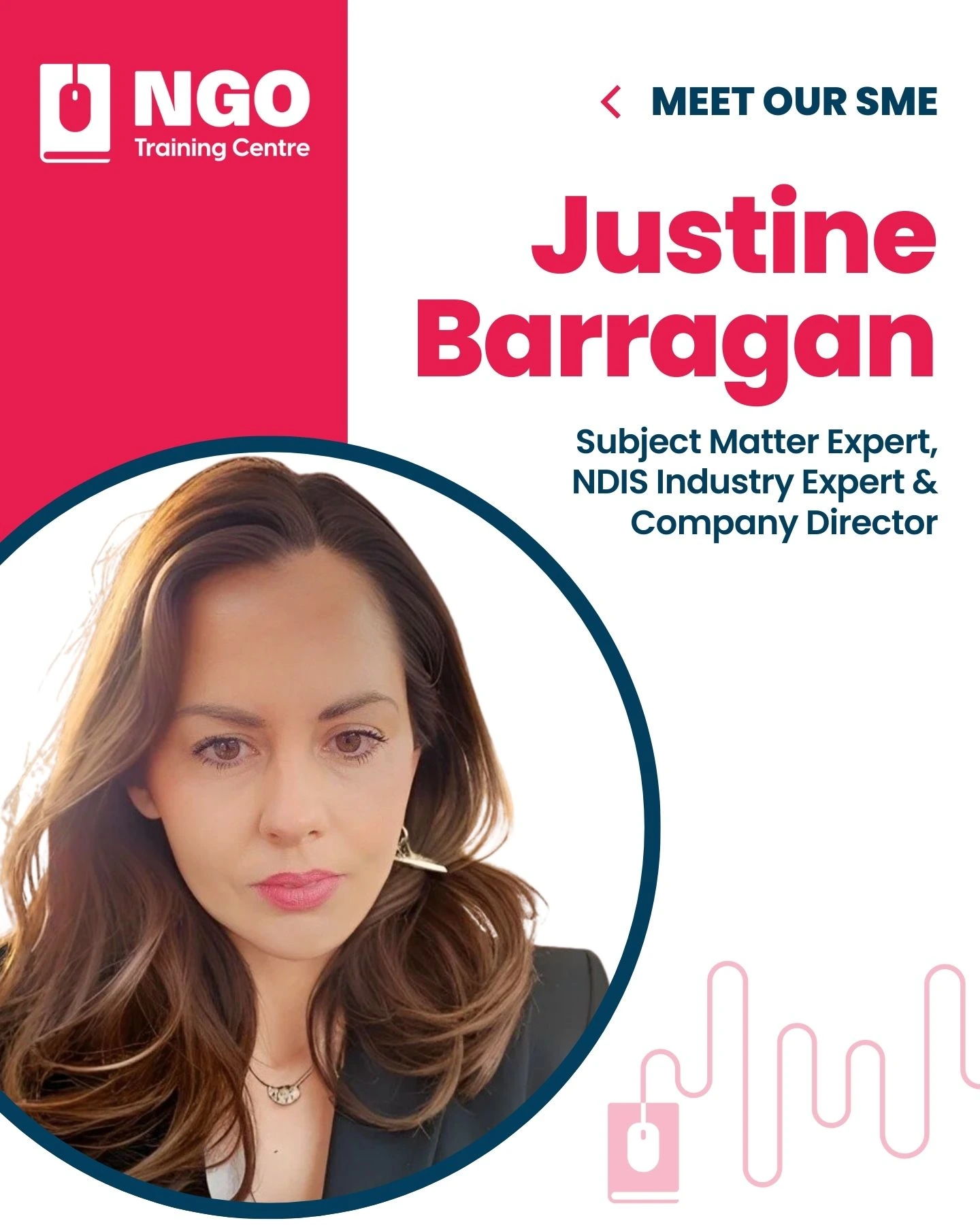
Justine is an NDIS Expert committed to fostering inclusivity and empowerment. She is a dedicated professional with an Advanced Diploma in Community Sector Management. With a rich background in supporting individuals with diverse abilities and backgrounds, Justine is impassioned about dismantling barriers, championing self-determination, and staying abreast of the industry’s dynamic complexity.
Justine’s mission is to create a world where every individual, regardless of their circumstances, can thrive and reach their full potential. Justine worked alongside Amanda Robinson (Head of Learning and Development) to create our Support Coordination suite of courses, drawing on her expertise as the director of Your Path Your Way Support Coordination, located in Bendigo, VIC.
Our sincere thanks go to Justine for helping develop a truly innovative and purpose-focused suite of Support Coordination courses!
Learn more about all our brilliant Subject Matter Experts on our About Us page.
Every year on December 3, the world comes together to observe the International Day of People with Disability (IDPwD). This day is a powerful reminder that true social progress is only possible when every individual, regardless of ability, has the opportunity to participate fully and equally in society.
As someone living in the vibrant community of Greater Bendigo, VIC, I feel so proud and grateful to see how everyone is coming together this year. We’re not just celebrating a single day, but an entire WEEK filled with exciting activities and meaningful events that raise awareness. You can check them out HERE.
It’s not just Bendigo having a wow of a time this year. You can explore events and activities in your area or online by visiting the IDPwD Events Calendar.
Go along and join in the fun!
This year, the United Nations has chosen an extremely important theme for IDPwD 2025:
Fostering disability-inclusive societies for advancing social progress
This theme calls on all of us. It calls on governments, providers, employers, and communities to move beyond awareness and take deliberate, sustained action to remove barriers and build systems that work for everyone.
At the NGO Training Centre, we see this theme not just as a global aspiration, but as the core of our daily mission.
Since we first launched in 2017, we have been working at the intersection of empowerment, education, and professional excellence to make inclusion a reality.
This International Day of People with Disability, we renew our commitment to building a society where inclusion isn’t just a bolt-on, it’s the foundation.
Because an inclusive society isn’t just fair… It’s stronger, smarter, and richer for all of us.
To learn more about the 2025 theme and access Easy Read resources, you can visit the official About IDPwD webpage.
–
Author: Amanda Robinson BA, MMHealthPrac,
As Head of Learning and Development and a seasoned NDIS expert, Amanda drives capability and sustainability in the disability and health sectors. With over 15 years of experience, post-graduate qualifications in Mental Health Leadership and Management, and currently pursuing an MBA, she brings deep expertise and personal insight as someone with lived experience of disability. A devoted carer, Amanda champions Human Rights, working to dismantle stigma and barriers for individuals with disability and mental health challenges. She is passionate about building robust stakeholder relationships, leveraging her advocacy, communication, strategic thinking, and analysis skills.
Our team had an amazing time at the Gold Coast Business Excellence Awards over the weekend. We were incredibly proud to be finalists in the Education, Training & Employment category for 2025; our third year in a row!
We may not have taken home the trophy this time, but we’re celebrating the recognition and feeling inspired by all the outstanding organisations around us. HUGE congratulations to all the winners and finalists – you’re AWESOME! 👏💛
We were also grateful to spend time with so many wonderful people during the event, including Leon Rebello MP, Federal Member for McPherson, and Steven Paull, President of ‘WhatsUp In Disability‘, Disability Advocate, and Founder of BigDog Support Services!







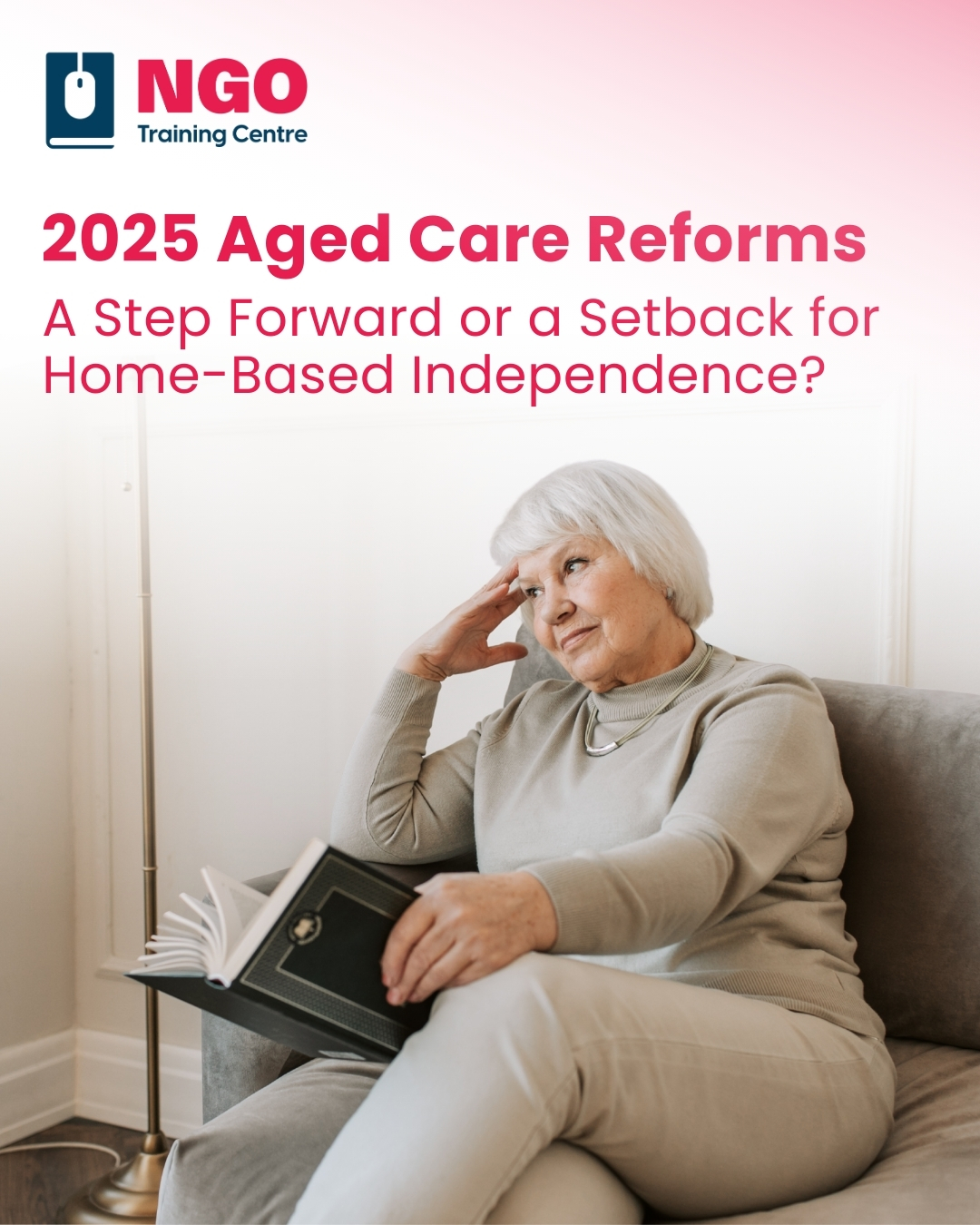
Responding to the Royal Commission’s severe findings on neglect and abuse, the reforms promised increased transparency, improved quality standards, and greater support for ageing populations. Central to these changes is the shift from Home Care Packages (HCP) to the “Support at Home” program, which provides financial help to assist seniors in staying in their own homes rather than moving into residential facilities. However, while the intention is admirable, emerging evidence indicates these financial packages are unintentionally causing more harm than good for those trying to age independently, increasing financial pressure and restricting essential services.
Under the old HCP system, older Australians received tiered funding, ranging from basic to comprehensive levels, to cover services such as personal care, domestic help, and allied health. The 2025 reforms maintain a “no worse off” principle for existing recipients, ensuring their contribution arrangements aren’t hiked. For new entrants, however, the Support at Home program introduces means-testing and price caps on non-clinical services, with clinical care, such as nursing, now free. On paper, this sounds equitable: subsidies tailored to income, promoting choice and dignity. Yet in practice, the packages fall short, forcing seniors into heartbreaking trade-offs.
The most glaring issue is the surge in costs for everyday supports. Basic assistance, such as showers, meal preparation, or wound care, has seen price increases of 20-30% under the new pricing model, outpacing inflation and eroding the value of allocated funds. Advocates report that a Level 2 package, once sufficient for weekly cleaning and transport, now barely covers half those needs, leaving recipients to choose between a hot meal or a safe bath.
This isn’t abstract; it’s real hardship. One Sydney senior, quoted in recent reports, lamented, “Do I eat tonight or get help to the toilet tomorrow? It’s no way to live.” For low-income households, these gaps translate to isolation, untreated health issues, and increased hospital admissions, ironically driving up system-wide costs.
Compounding the problem is administrative bureaucracy. The reforms’ emphasis on personalised plans requires extensive assessments and provider approvals, leading to months-long delays in package activation. Workforce shortages, already acute, mean fewer providers can deliver services at the capped rates, further shrinking options.
Meanwhile, the means test discourages asset sales for care funding; families rushing to liquidate homes now face “shocking hidden costs” like restored means testing post-reform, potentially clawing back subsidies. Far from empowering independence, these financial hurdles are funnelling vulnerable elders toward residential care—the very outcome the reforms sought to avoid.
While the Aged Care Act introduces vital protections, such as mandatory staffing ratios and safeguards against abuse, its financial mechanisms require urgent recalibration. Without addressing these pitfalls, the Support at Home program risks becoming a barrier rather than a bridge to dignified aging.
Policymakers must listen to frontline voices: adjust pricing, streamline access, and bolster funding to truly honour the promise of home-based care. For the million-plus Australians over 65, the stakes are nothing less than their freedom to age on their own terms.
–
Author: Cathy Kerr BANurs, GDAET, Cert IV Training and Assessment.
Cathy brings over three decades of expertise to the field of nursing education, with a distinguished career as a registered nurse, educator, and now aged care consultant. Her extensive experience spans clinical practice, training, and consultancy, where she has dedicated herself to improving care standards and supporting both ageing individuals and healthcare professionals. With a deep understanding of the sector’s challenges and opportunities, Cathy combines her nursing background with a passion for education to drive positive outcomes in aged care.
While your competitors plan to “get serious about training in January,” their staff will return to compliance gaps, expired certifications, and a backlog, rendering them “too busy.” Meanwhile, providers who launch strategic training plans now are capitalising on a 72% surge in festive-period training completions—turning holiday downtime into their most productive training period of the year. By January 20th, they’ll have trained teams, closed compliance gaps, and built momentum that carries them through 2026. The window to join them closes December 20th.
Course completions during the Christmas-New Year period have exploded:
This isn’t a trend—it’s a fundamental shift in how leading providers approach workforce development.
Want to get started now? Click Here
Want to learn why you should start now? Please read this important 2-minute article⬇️
Support workers are already working. Your overnight and weekend staff aren’t idle—they’re looking for meaningful ways to use their downtime. With mobile-accessible training, they can complete modules between check-ins and during quiet hours.
New hires can start learning before they start working. January recruits can complete induction modules between accepting their offer and day one, arriving already familiar with your policies and the NDIS framework.
Compliance doesn’t take holidays. Worker screening checks and mandatory training windows don’t pause for Christmas. The providers hitting 10,000+ completions have figured out that December is actually the best time to close gaps—when the usual “too busy” excuses disappear.
Here’s what actually happens:
January becomes February (backlog to clear). February becomes March (full operational capacity, training bumped). March becomes April (Q1 review shows missed targets, compliance gaps creating real risk, NDIS Commission queries arriving).
Providers who launched in December? Already trained, compliant, and hitting the ground running.
This isn’t about squeezing more from your team—it’s about:
The question isn’t whether you can afford to launch before Christmas. It’s whether you can afford not to.
Generic training doesn’t work because every NDIS business is different. Our LMS lets you brand it with your logo, embed internal policies, and create custom modules, all at no extra cost. It’s mobile-friendly and is available 24/7. We’ve even added gamification (badges, leaderboards) to keep teams engaged.
Whether you’re onboarding new staff, upskilling managers, or running organisation-wide refreshers, our account managers support you every step of the way. The training adapts to your workflow, reducing admin burden while ensuring everything ties directly to compliance outcomes.
Launching a training program requires preparation, customisation, communication, and buy-in. Start today, and you can be ready before December 20th. Wait until January, and you’ve missed the opportunity entirely.
The 10,000 projected completions this festive period represent thousands of support workers becoming more skilled, compliance gaps being closed, and downtime being transformed into professional growth.
Will your organisation be part of that story?
Ready to turn festive downtime into a competitive advantage? We’re ready to help you! Contact us today to launch before December 20th—because the best time to start training your team isn’t in January. It’s right now.
–
Author: Matthew Crawford, PGCert(Bus)
Matt has over a decade of experience in B2B sales and business development and with a passion for human services, is deeply committed to driving meaningful solutions within the disability sector. His commitment to improving service quality and his deep understanding of client needs make him a trusted partner in advancing the capabilities of organisations that support people with disability across Australia.
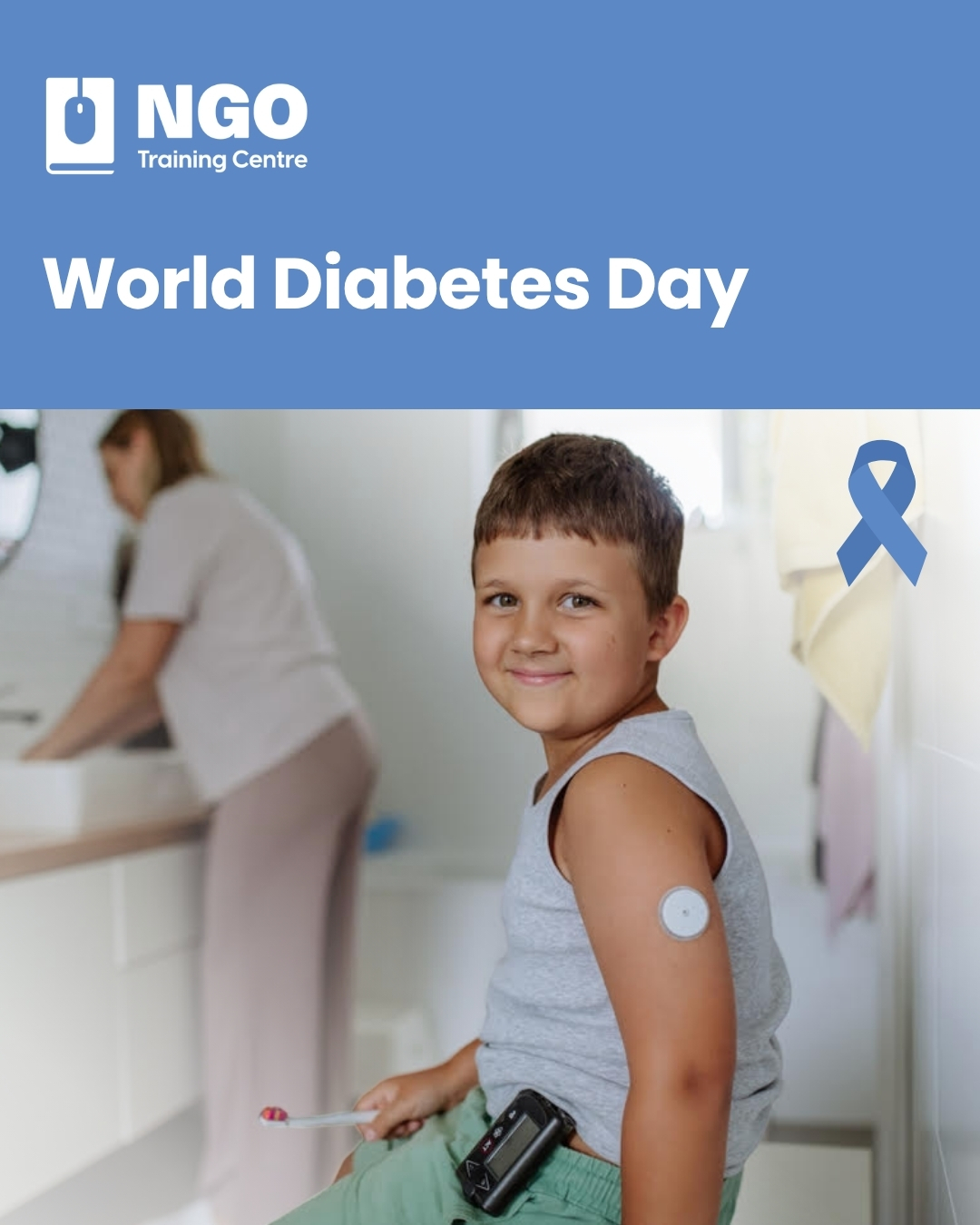
World Diabetes Day serves as a reminder of the importance of raising awareness, improving care, and supporting individuals living with diabetes. It’s a day that brings together healthcare professionals, organisations, and communities around the world to discuss prevention, management, and the importance of education.
We have shared some inspiring real-life stories of people living with Diabetes to help you understand what Diabetes can look like. It doesn’t discriminate and can affect anyone at any time:
World Diabetes Day was created by the International Diabetes Federation (IDF) and the World Health Organization (WHO) to shine a light on the growing diabetes epidemic. It’s about understanding the risk factors, encouraging early diagnosis, and making sure people have access to the care they need.
At the NGO Training Centre, we know that education is key.
Our Diabetes courses give Disability Support Professionals and Aged Care Workers the confidence to:
Our flexible online courses enable staff to learn at their own pace, ensuring quality, compliance, and confidence in their care.
This World Diabetes Day, let’s keep the conversation going. Together, we can raise awareness, empower our workforce, and support healthier futures for ageing individuals everywhere.
–
Author: Amanda Robinson BA, MMHealthPrac,
As Head of Learning and Development and a seasoned NDIS expert, Amanda drives capability and sustainability in the disability and health sectors. With over 15 years of experience, post-graduate qualifications in Mental Health Leadership and Management, and currently pursuing an MBA, she brings deep expertise and personal insight as someone with lived experience of disability. A devoted carer, Amanda champions Human Rights, working to dismantle stigma and barriers for individuals with disability and mental health challenges. She is passionate about building robust stakeholder relationships, leveraging her advocacy, communication, strategic thinking, and analysis skills.
The NDIA Board, led by Chair Kurt Fearnley AO, carefully chose Mr Head for a 3‑year term after an extensive national recruitment process. With decades of experience in public administration and social policy, we are hoping that Mr Head is well-equipped for this important role. He previously served as the inaugural National Disability Insurance Scheme (NDIS) Quality and Safeguards commissioner from 2018 to 2021, which should see him in good standing for this role.
As the new CEO, Mr Head will oversee the day-to-day operations of the agency, including managing the NDIS. He will also collaborate closely with the NDIA Board to ensure the scheme continues to support and empower people with disability and their families.
Mr Head’s appointment comes after the current CEO, Rebecca Falkingham PSM, has completed her term, which she has held since October 2022. He will officially start on 24 November 2025.
Mr Head shared his enthusiasm, saying:
“I am very excited to be given the opportunity to play this significant role in the NDIA as key reforms to the Scheme are being shaped and rolled out.”
We’re eager to see how Mr Head builds on the great work already underway to make the NDIS safer, fairer, and more accessible for those who need it the most.
–
Author: Amanda Robinson BA, MMHealthPrac,
As Head of Learning and Development and a seasoned NDIS expert, Amanda drives capability and sustainability in the disability and health sectors. With over 15 years of experience, post-graduate qualifications in Mental Health Leadership and Management, and currently pursuing an MBA, she brings deep expertise and personal insight as someone with lived experience of disability. A devoted carer, Amanda champions Human Rights, working to dismantle stigma and barriers for individuals with disability and mental health challenges. She is passionate about building robust stakeholder relationships, leveraging her advocacy, communication, strategic thinking, and analysis skills.
Lilly is a Speech Pathologist and Disability Program Manager with over 20 years of experience in direct and management roles within the disability sector. She has specialist skills in implementing best practice, person-centred approaches to supporting communication skills in children and young people, including Augmentative and Alternative Communication (AAC) systems.
Lilly is a dedicated professional committed to creating useful information, resources, and training materials to ensure that everyone working in the sector has the right tools and knowledge to offer the best possible support to individuals.
Courses:
Learn more about all our brilliant Subject Matter Experts on our About Us page.
From 1 November 2025, registered aged care providers are required to notify the Aged Care Quality and Safety Commission about their associated providers; both at the time of registration and renewal, and whenever there are changes to associated provider arrangements.
This new measure ensures that the Commission has a clear understanding of all organisations contributing to the delivery of aged care services, helping to maintain high standards of safety, quality, and continuity of care.
Under the new Act, providers must have robust systems and processes in place to ensure their associated providers:
These requirements give the Commission greater visibility into third-party relationships that can influence the quality of care and support ageing individuals receive.
To help providers understand their obligations, the Commission has released a Regulatory Bulletin outlining:
The bulletin provides practical guidance to ensure providers, and their partners, are prepared to meet the new requirements under the Aged Care Act 2024.
For more details, visit the Aged Care Quality and Safety Commission website and review the latest Regulatory Bulletin on associated providers.
If you have questions or need further information, contact the Commission at:
📧 info@agedcarequality.gov.au
📞 1800 951 822 (Monday to Friday, 9am–5pm)
The NGO Training Centre is committed to supporting aged care providers with up-to-date industry insights and education programs that strengthen workforce capability and service quality.
We have individual Aged Care courses, plus Business Training Packages, developed by sector experts to meet all new Strengthened Aged Care Quality Standards and ensure you and your workforce are empowered to deliver the best quality care.
–
Author: Amanda Robinson BA, MMHealthPrac,
As Head of Learning and Development and a seasoned NDIS expert, Amanda drives capability and sustainability in the disability and health sectors. With over 15 years of experience, post-graduate qualifications in Mental Health Leadership and Management, and currently pursuing an MBA, she brings deep expertise and personal insight as someone with lived experience of disability. A devoted carer, Amanda champions Human Rights, working to dismantle stigma and barriers for individuals with disability and mental health challenges. She is passionate about building robust stakeholder relationships, leveraging her advocacy, communication, strategic thinking, and analysis skills.

 0
0