
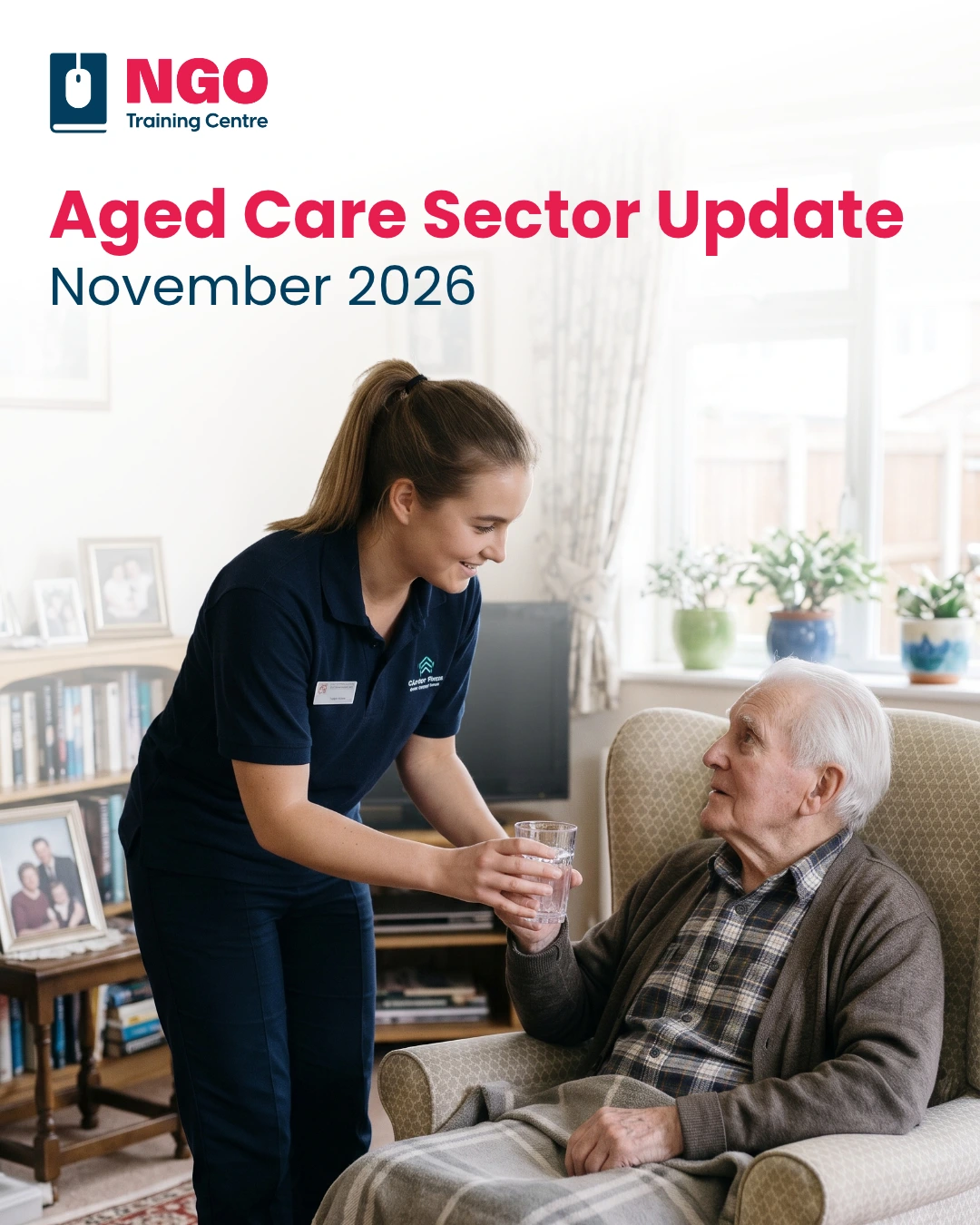
The Aged Care Quality and Safety Commission has started a targeted review of selected Support at Home providers.
The review will check whether providers are giving older people the information they need to make choices about their own care. Aged Care Quality and Safety Commissioner Liz Hefren-Webb said providers must be transparent and accountable in their dealings with older people. The findings of the review will inform the Commission’s future education, monitoring and regulatory activities.
Regulator activity
Round 3 of the Support at Home Thin Markets grant is open until 2 pm AEDT on 26 November 2026. Providers that deliver rural and remote services in Modified Monash areas 3 to 7, or that deliver specialised services in any region, may be eligible to apply.
If you are applying, make sure you have your application in by this date.
The Royal Commission into Aged Care Quality and Safety (Aged Care Royal Commission) made 148 recommendations to reform Australia’s aged care system.
The Inspector-General of Aged Care (Inspector-General) must conduct 2 progress reports and 2 reviews of the Commonwealth’s implementation of each of the 148 recommendations. The Inspector-General of Aged Care is now reviewing how the Royal Commission recommendations have been implemented. As an aged care provider, they want to hear from you. Submissions are open until 29 January 2027.
Residential Care
The deadline to move existing residents onto new service agreements has now passed. Residents with a resident agreement from before 1 November 2025 needed that agreement varied, or a new service agreement entered, before 1 November 2026. Permanent residents with no agreement needed one by the same date.
Fees are also under the spotlight. The ABC is investigating aged care meal charges, and providers need to explain higher everyday living fees that the reforms allow. Services Australia is reviewing residential aged care fees. Residents and providers may receive a letter if a fee has changed. You can find the latest schedule of fees and charges for residential Aged Care here.
From 1 January 2027, new capital subsidy payments start for eligible residential homes that are new or significantly expanded. The Department of Health, Disability and Ageing has yet to confirm eligibility and will advise soon. They will calculate and pay the supplements through the monthly claim process, so you don’t have to submit a separate claim.
Eligible residential aged care homes will receive the following:
- New Home Payment, which is $30 for each new home supported and respite resident for 25 years
- Significant Expansion Payment, which is $15 for each significant expansion supported and respite resident for 15 years.
You can access the FAQs here.
Support at Home
The Support at Home program manual is a guide designed to help registered providers understand and comply with the Support at Home program rules, procedures, and obligations. It is a great resource and should help answer some of your burning questions.
From 8 March 2027, the End-of-Life Pathway will be extended to provide continued support for participants who remain living at home after the initial 12 weeks. There are no changes to eligibility criteria or arrangements for accessing the pathway.
Participants will automatically continue the pathway for a further 12 weeks without reassessment and receive additional funding of approximately $25,000. The department is running information sessions for providers ahead of the change. You can also join the Community of Practice page to stay up to date about any changes.
Another item to note is that, since 9 November, providers can amend multiple Support at Home invoice items in one CSV upload through the Aged Care Provider Portal.
Lastly, price caps for Support at Home are still on hold. The government deferred them in May 2026, and an 8 October report said no new start date had been set.
–
Author: Amanda Robinson (She/Her) BA, MMHealthPrac.
Dja Dja Wurrung and Taungurung Country
Amanda, Head of Learning and Development and an experienced specialist in NDIS and Aged Care, promotes capability and sustainability within the disability and health sectors. With over 15 years of experience, a Master’s in Mental Health Leadership and Management, and an MBA underway, she offers extensive expertise and personal insight as someone with lived experience of disability. A military veteran and dedicated carer of a veteran, Amanda advocates for Human Rights, striving to reduce stigma and eliminate barriers for those with disability and mental health challenges. She is enthusiastic about fostering strong stakeholder relationships through her advocacy, communication, strategic thinking, and analytical abilities.