
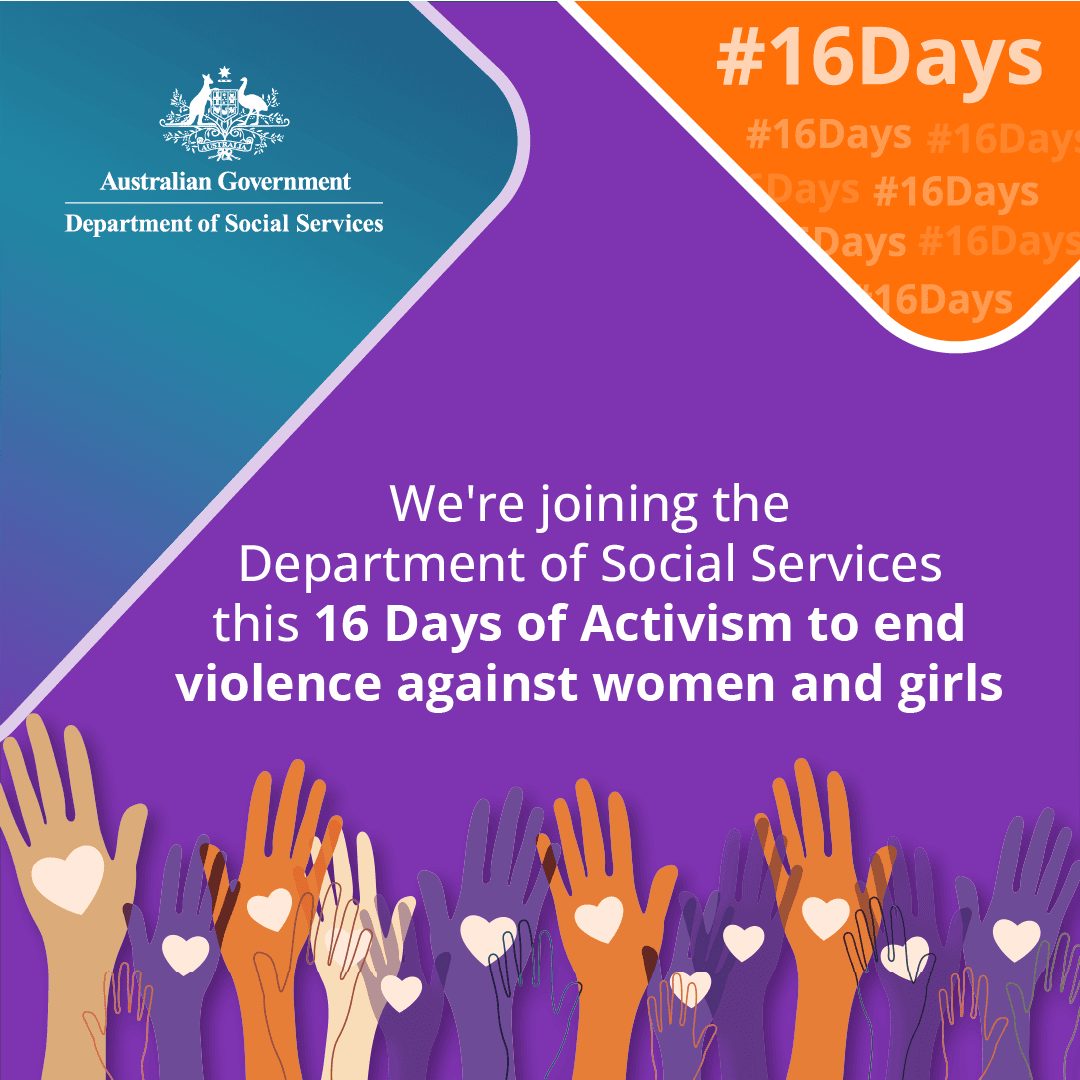
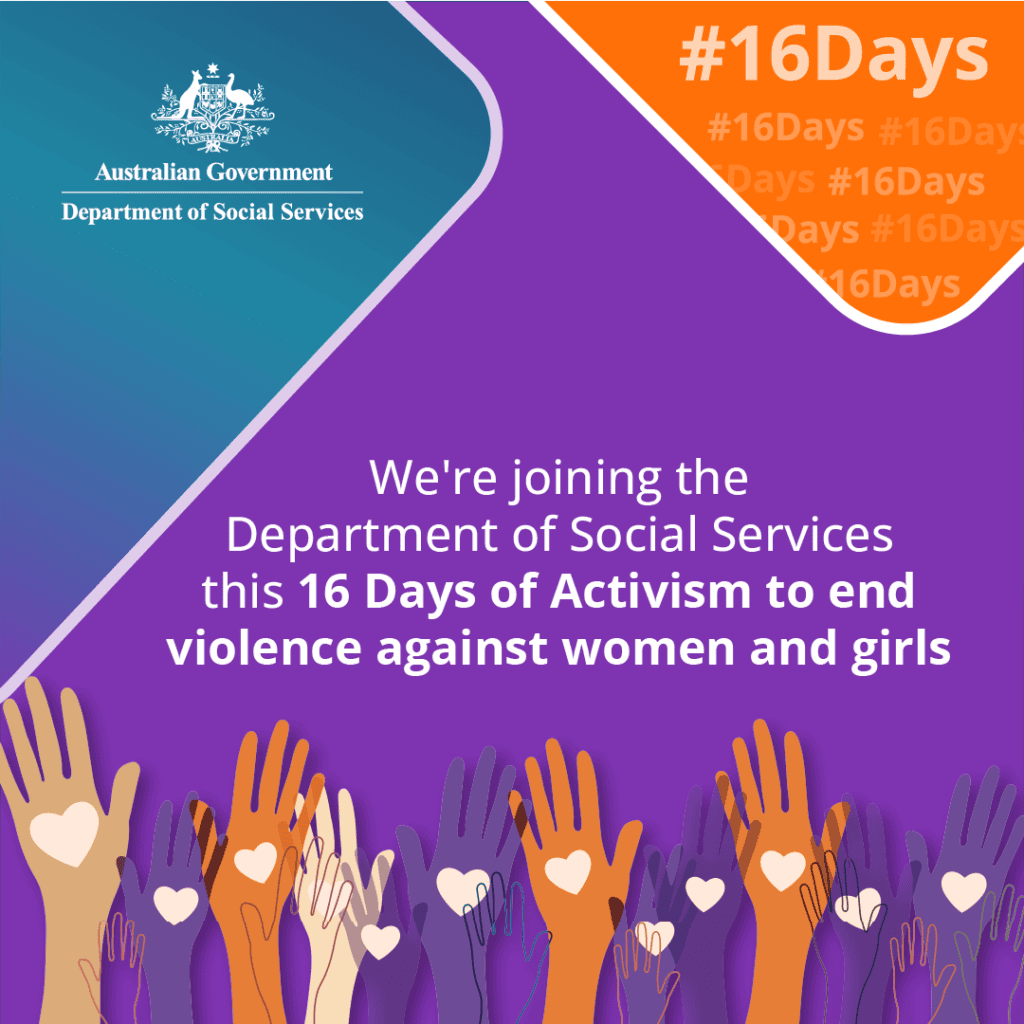
Every year, the 16 Days of Activism against Gender-Based Violence gives us all a chance to speak up. This year, we’re proudly joining the United Nations campaign to protect women and girls from gender-based violence, and we’d love you to join us.
What the National Plan means for you
The National Plan to End Violence against Women and Children 2022–2032 (National Plan) is Australia’s roadmap for ending violence against women and children in one generation.
It builds on what we learned from the previous National Plan, which ran from 2010 to 2022.
Everyone deserves to live safely and without fear of violence. Getting there will take all of us: community, industry and government. That includes the disability and aged care sectors, where your workers are often the trusted people someone turns to first.
The National Plan focuses on 4 key areas, and providers have a role to play in every one:
- Prevention: stopping violence before it starts
- Early intervention: stepping in early when someone is at risk
- Response: supporting people when violence happens, and
- Recovery and healing: helping people heal and rebuild their lives.
The National Plan also committed to a dedicated plan for First Nations family safety. That plan is Our Ways – Strong Ways – Our Voices: National Aboriginal and Torres Strait Islander Plan to End Family, Domestic and Sexual Violence 2026-2036. It sits alongside the National Plan and guides a whole-of-society approach to reducing the high and disproportionate rates of violence experienced by First Nations peoples.
We stand with the United Nations: Speak out. Believe survivors. Demand justice.
When women and girls face violence, justice should never be out of reach. Yet too many survivors are met with silence, disbelief and victim-blaming. For women with disability and older women who rely on others for care, speaking up can be even harder.
Every unanswered call for help, every dismissed report and every unpunished act of violence makes the web of impunity stronger.
If you or someone you know is experiencing, or at risk of experiencing, domestic, family or sexual violence:
- call 1800RESPECT on 1800 737 732, text 0458 737 732 or visit 1800respect.org.au for online chat and video call services. 1800RESPECT is a free and confidential service, available 24 hours a day, 7 days a week
- connect with 13YARN Aboriginal & Torres Strait Islander Crisis Supporters on 13 92 76, available 24/7 from any mobile or pay phone, or visit 13yarn.org.au
- in an emergency, call 000.
If you are concerned about your behaviour or use of violence, you can contact the Men’s Referral Service on 1300 766 491 or for 24/7 judgement-free support visit ntv.org.au
Find local support services in your state or territory: dss.gov.au/help-and-support-ending-violence.
Read more about what the Australian Government is doing to end gender-based violence: dss.gov.au/our-work/ending-violence-and-abuse
We can help you and your staff recognise early warning signs
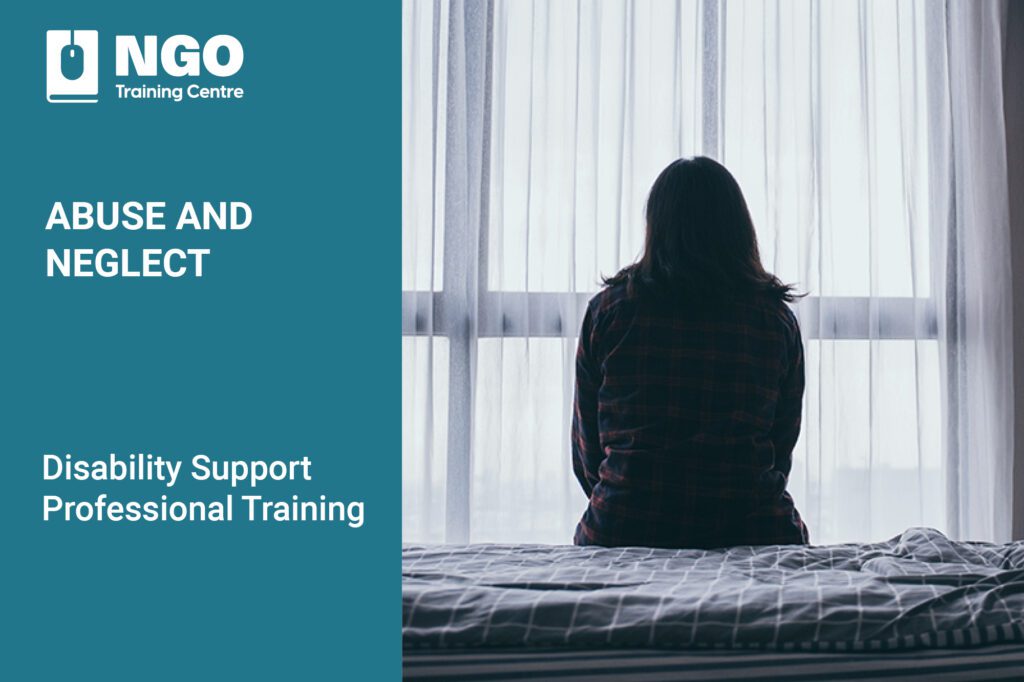
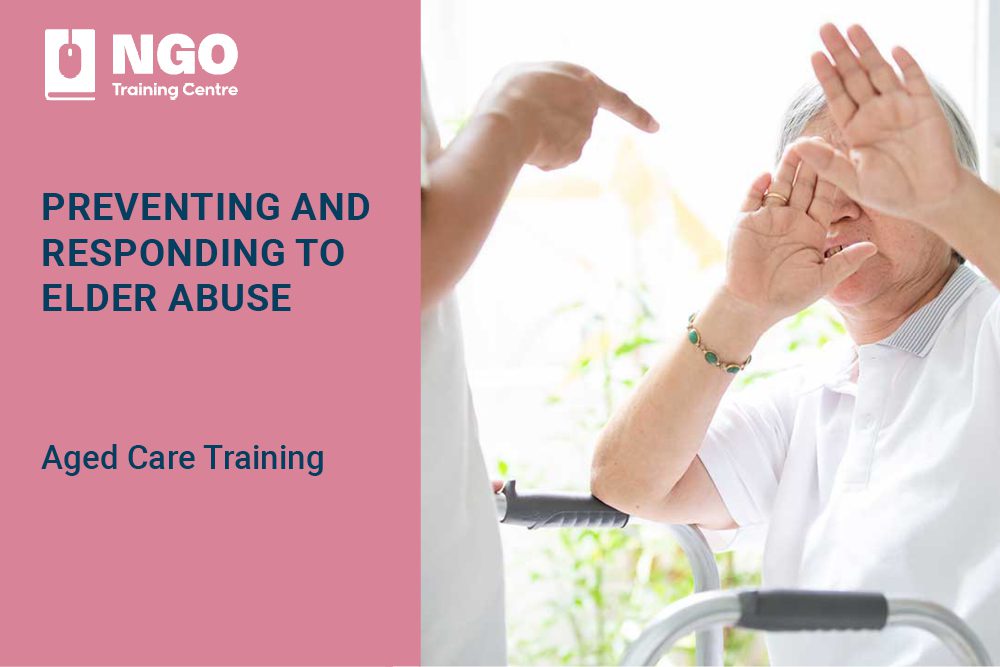
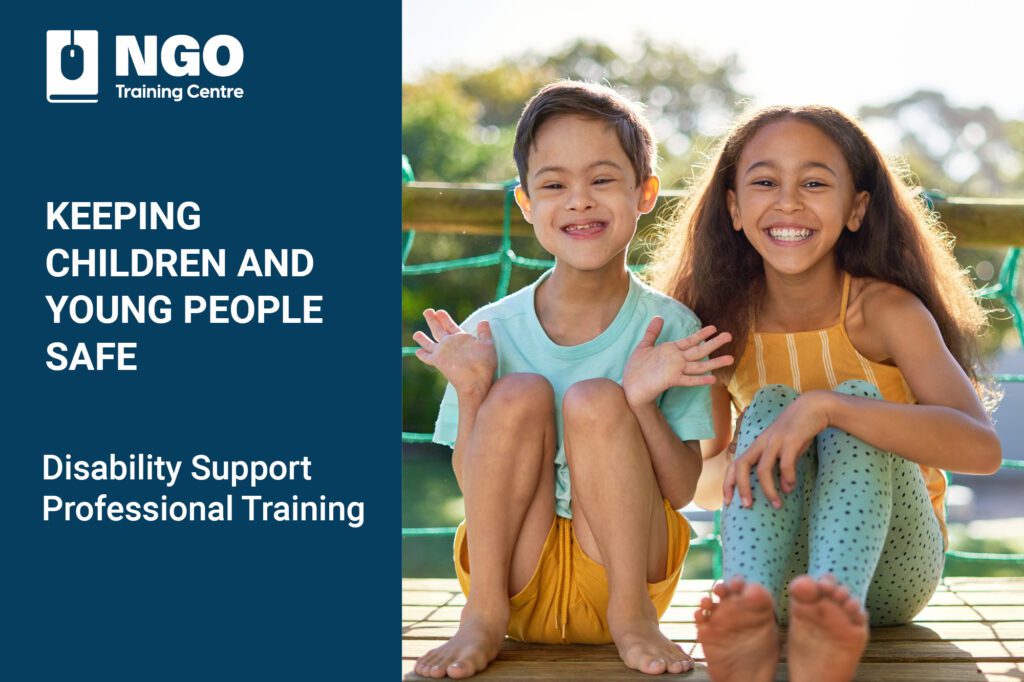
The NGO Training Centre offers invaluable training to start conversations with your staff and help them recognise the early signs of abuse among the people they support: ‘Abuse and Neglect’, ‘Preventing and Responding to Elder Abuse’, and ‘Keeping Children and Young People Safe’.
Enough. Justice can’t wait.
So, from 25 November to 10 December, people around the world will come together to challenge impunity and demand an end to violence against women and girls.
Join them, and bring your team along.
Because every survivor deserves safety. Every perpetrator must be held accountable, and every organisation, including yours, has an important role to play.
–
Author: Amanda Robinson (She/Her) BA, MMHealthPrac.
Dja Dja Wurrung and Taungurung Country
Amanda, Head of Learning and Development and an experienced specialist in NDIS and Aged Care, promotes capability and sustainability within the disability and health sectors. With over 15 years of experience, a Master’s in Mental Health Leadership and Management, and an MBA underway, she offers extensive expertise and personal insight as someone with lived experience of disability. A military veteran and dedicated carer of a veteran, Amanda advocates for Human Rights, striving to reduce stigma and eliminate barriers for those with disability and mental health challenges. She is enthusiastic about fostering strong stakeholder relationships through her advocacy, communication, strategic thinking, and analytical abilities.