Just because AI can write a training course doesn’t mean it should.
AI is everywhere now.
It can write an email, make a fun picture of you and your partner in ‘80s get-up, give you a great recipe for how to make gravy (don’t forget a dollop of tomato sauce for sweetness and that extra tang), and confidently explain something it has completely misunderstood.
That last note is the problem. A huge problem.
For disability support and aged care providers, training isn’t just about having staff read sector jargon on a screen. It is about preparing real people to make informed decisions that can affect the safety, dignity, rights and wellbeing of other people; which we all agree is a crucial role in society, and one that we can’t get wrong.
So, while AI might be fantastic at some basic life admin tasks, “AI wrote it” is simply not even close to a quality assurance process in our sectors.
And that matters in Australia, where – as everyone is well aware – providers operate in highly regulated environments, and workers need training that reflects current legislation, standards, evidence and actual practice.
The question isn’t whether AI can create training. It obviously can. The question is whether you should trust it to create training without genuine subject matter expertise and human quality assurance.
And according to experienced NDIS and aged care auditor Marguerite Hoiby, that is precisely where providers need to be careful about relying on AI-generated training.
“Generic or AI-generated training can create a false sense of assurance, so be very careful with AI. It often misses legislative nuance, it lacks sector-specific risk controls, and it really can’t stand up to audit scrutiny.” – Marguerite Hoiby, NDIS & Aged Care Auditor
So the answer is clear: trusting AI-generated training content is not a wise decision.
AI doesn’t know what it doesn’t know
One of the biggest problems with AI is that it can be incredibly confident while being completely wrong.
That’s not necessarily obvious to the person reading the training, either. A beautifully written explanation with a professional-looking quiz at the end can create the impression that an expert has checked it.
But sometimes the “expert” was a misinformed or uninformed chatbot. Or nobody at all.
AI can draw on huge amounts of information, but it doesn’t replace the judgement and nuance of someone who understands the Australian care environment, the regulatory requirements that come with it, and what actually happens on the frontline.
That’s an important distinction.
AI can assist experts. But it should not, ever, replace them.
Compliance isn’t a copy-and-paste exercise
Australian disability and aged care providers operate in environments where training must connect to real standards and responsibilities.
The NDIS Quality and Safeguards Commission takes a cautious approach to AI, stating that it maintains appropriate human oversight and that people review AI outputs. It says its approach is designed to ensure AI use remains safe, ethical, transparent and fit for purpose. Read more about it here.
When it comes to training resources within the same sector, the same principle makes a lot of sense.
In aged care, the strengthened Aged Care Quality Standards require providers to have a training system that ensures workers have the skills and competencies required for their roles. Training must respond to feedback, incidents, identified risks, and performance reviews, and workers must receive competency-based training on core matters. More on that here.
That’s a long way from:
“Hey ChatGPT / Claude / Grok / Gemini, write me a course on dementia care.”
Another highly experienced auditor and training assessor, Stephanie Watts, notes this about AI’s limitations:
“AI content risks being outdated and completely disconnected from regulatory expectations. Staff don’t keep up with evidence-based practices…risking a possible non-compliance.” – Stephanie Watts, Aged Care Auditor and Assessor
People aren’t generic
Perhaps the biggest issue is that disability and aged care are fundamentally human industries.
The strengthened Aged Care Quality Standards emphasise person-centred care that accounts for an individual’s needs, goals, preferences, identity, culture, and life experiences.
Good training needs to help workers understand how those principles translate into what they actually do.
It needs scenarios.
It needs context.
It needs practical examples.
It needs to challenge assumptions.
And it needs people with genuine subject-matter expertise asking the uncomfortable question:
“Would this actually help a worker make a better decision when it matters?”
AI can help create those materials.
But someone who understands the work needs to be checking them.
The problem isn’t AI. It’s using AI instead of expertise.
Let’s be clear, though: AI isn’t the villain here.
Used properly, it is an incredibly useful tool.
It can help trainers brainstorm ideas, simplify complex information, develop draft scenarios, create question banks and speed up administration.
The problem comes when organisations and/or training resource creators decide that because AI can produce 10,000 words about disability support, they don’t need the person who actually understands disability support.
That’s when efficiency starts becoming a false economy.
As Marguerite puts it:
“The warning signs (of AI training content) are pretty obvious: no subject matter experts, no Standards mapping, and no evidence of version control or competency. This then leaves providers exposed and non-compliant. So be very careful.”
And that’s really the point.
AI-generated training might look professional. It might sound professional. It might even be completely correct (by some miracle).
But unless someone with the right expertise has checked it, how do you know?
In disability and aged care, “probably right” isn’t a particularly reassuring training standard. In fact, that’s simply not acceptable.
When the people being trained are responsible for the safety, dignity, rights and wellbeing of vulnerable people, human expertise shouldn’t be an optional extra.
AI can be in the room.
Just make sure there are genuine human experts in there too.
How NGO Training Centre courses are different: training made by people, not prompts
At the NGO Training Centre, we believe technology should only ever support great training, not replace the expertise behind it.
That’s why our courses aren’t simply generated by AI and published for workers to complete.
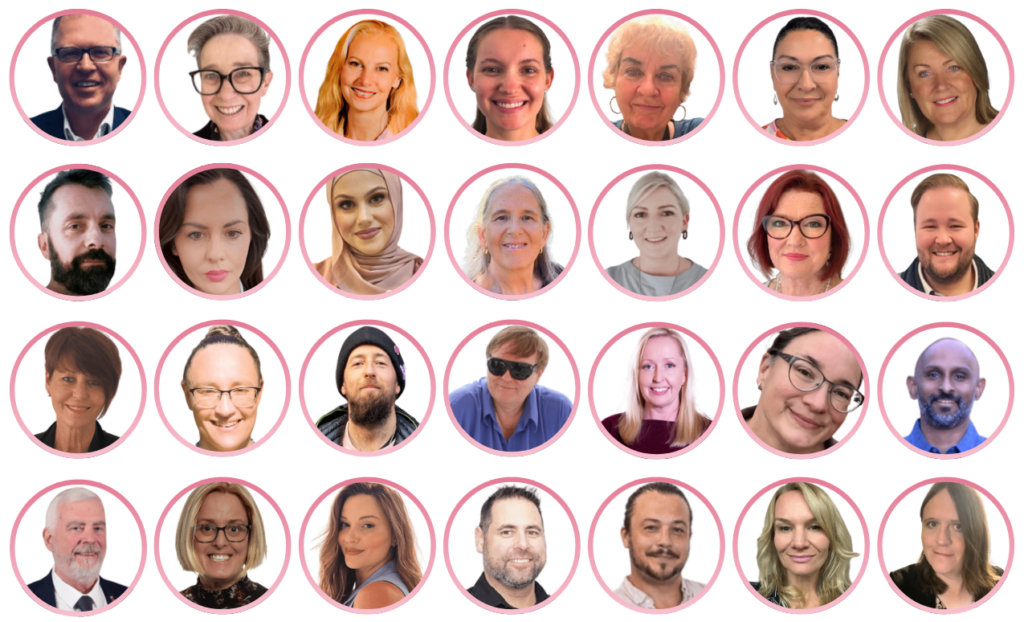
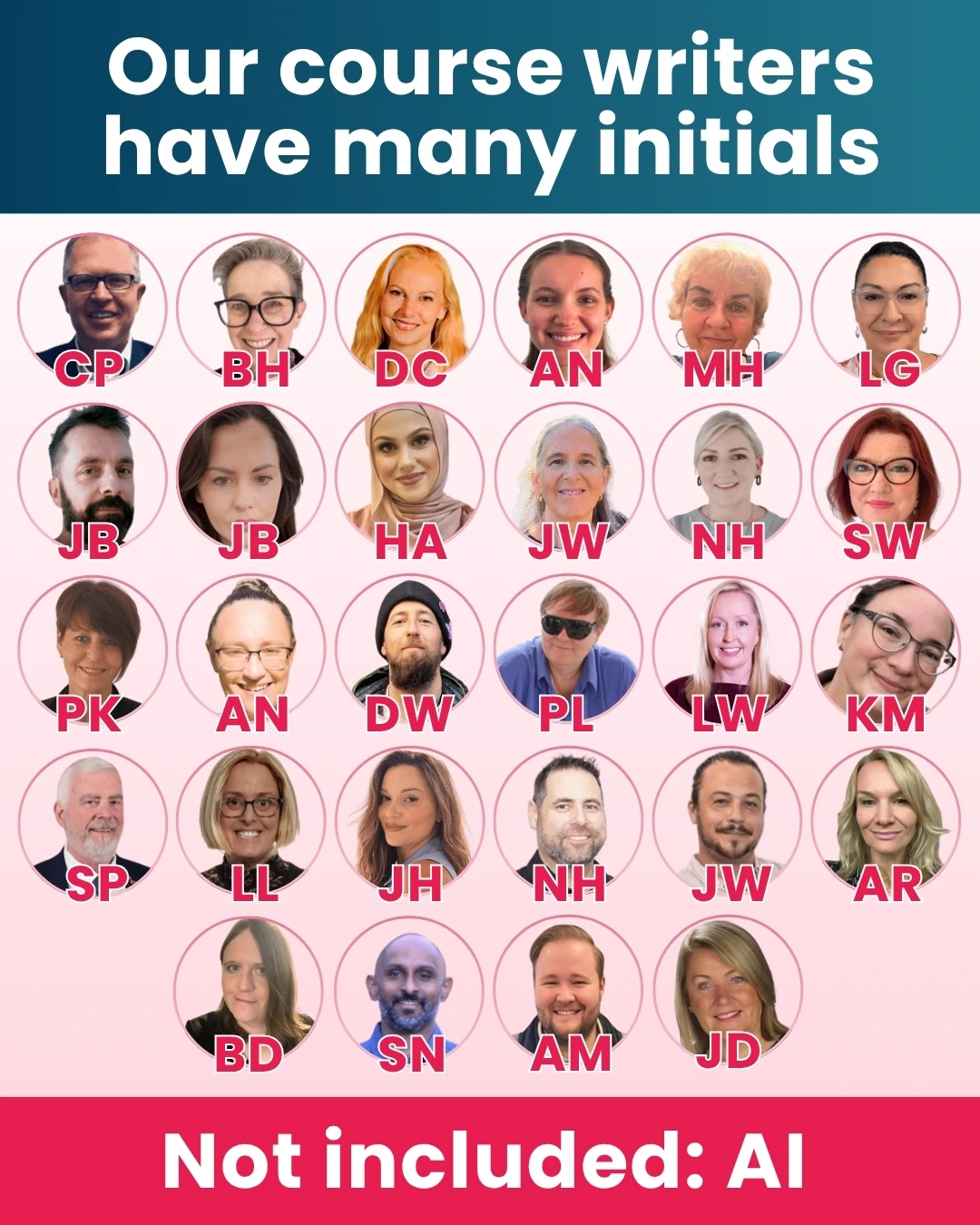
Our training is developed and reviewed by a team of more than 25 experienced subject matter experts, auditors, trainers and industry professionals, with content designed specifically for the Australian disability support and aged care sectors.
Our team of real people creates engaging online training that includes real-world scenarios, practical activities, and expert knowledge workers can actually use in their day-to-day roles.
When training supports real people, it should be created by real people who understand what that means.
So, at the NGO Training Centre, human expertise always comes first.
As Stephanie notes:
“The courses written by subject matter experts make a big difference when these experts can provide practical examples that learners can follow and understand in the real world…NGO has a specific recipe that makes their training effective.”
Our expert team of course writers: