This week marks five decades of NAIDOC. Fifty years of Elders, organisers and communities carrying this forward.
We’re using the week to name a gap the sector hasn’t closed: First Nations people with disability sit at the intersection of two systems that too often fail them separately, and fail them more together.
What the Disability Royal Commission found
The Disability Royal Commission’s Final Report was clear on this. Racism and ableism don’t operate in isolation. They found:
Higher rates of institutionalisation and justice system contact
Communication and cultural barriers in mainstream disability services
Kinship, community and connection to Country are often left out of support planning, and
Elders are carrying ageism on top of both.
Why cultural safety is foundational, not optional
Cultural safety isn’t an add-on to disability support. It’s foundational: how a worker understands identity, family structure and decision making from the very first interaction.
Training built for this
At the NGO Training Centre, we recognise the gap in the training that Disability and Aged Care Workers were receiving. Training was often overlooked or not even considered unless mandated by funding bodies, which in itself is a sad story. Our courses ensure that we provide the voice of First Nations peoples. We offer the living experiences of our First Nations People. Two courses we offer are built for this:
Cultural Awareness (Disability): The foundational knowledge and self-reflective practice for genuinely culturally safe disability support. This is a great course that invites workers to look at their own beliefs and practices, and recognise unconscious bias.
Supporting First Nations Elders (Aged Care), recognising the authority and role of Elders in the community, and supporting them without overriding that role. Monica, who lives in an Elder’s facility in Shepparton, VIC, speaks about her experiences receiving care and how workers can deliver culturally safe care to her in a personal and respectful way.
Author: Amanda Robinson (She/Her) BA, MMHealthPrac. Dja Dja Wurrung and Taungurung Country
Amanda, Head of Learning and Development and an experienced specialist in NDIS and Aged Care, promotes capability and sustainability within the disability and health sectors. With over 15 years of experience, a Master’s in Mental Health Leadership and Management, and an MBA underway, she offers extensive expertise and personal insight as someone with lived experience of disability. A military veteran and dedicated carer of a veteran, Amanda advocates for Human Rights, striving to reduce stigma and eliminate barriers for those with disability and mental health challenges. She is enthusiastic about fostering strong stakeholder relationships through her advocacy, communication, strategic thinking, and analytical abilities.
If I told you that you could improve business operations, boost compliance, increase audit readiness, and improve staff morale by cutting costs, would that sound too good to be true?
There’s an old saying that suggests that ‘if something is too good to be true, it probably is’. Not in this case! Instead, I am going to prompt you to read on with another well-known saying.
The phrase ‘work smarter, not harder’ has stood the test of time for many reasons! It’s not about cutting corners. It’s about channelling effort where it genuinely counts, and eliminating waste where it doesn’t. When it comes to compliance training in the disability and aged care sectors, that philosophy has never been more relevant.
Introducing NGO Xpress. A suite of short, adaptive compliance courses built specifically for experienced support workers and care staff who already know their stuff.
The Problem With “One Size Fits All” Compliance Training
Let’s be honest: putting a seasoned support worker through a 45-minute compliance module they could recite in their sleep isn’t training. It’s busywork. It costs time, kills engagement, and quietly signals to your best people that you don’t recognise what they already bring to the table.
The disability and aged care sectors are demanding enough without adding unnecessary friction to your team’s day. Yet across Australia, organisations are still rolling out the same full-length courses to every staff member, regardless of experience, knowledge, or tenure. The result? Staff fatigue, disengagement, and a significant and entirely avoidable drain on your budget.
It’s worth asking: if compliance training has become so tedious that some staff are reportedly having others complete it on their behalf just to get it done, what does that say about the training itself? With adaptive learning that respects what your people already know, that temptation disappears. Because training that takes 5–10 minutes and recognises existing expertise, is training that the staff will actually do themselves.
What NGO Xpress Actually Does
NGO Xpress courses use adaptive learning technology to work with your staff’s existing knowledge, not against it. Each course begins with a short assessment quiz. If a learner demonstrates competency upfront, the system automatically fast-tracks them past familiar content and focuses only on where they do not demonstrate competency.
The result: most experienced workers complete their compliance training in just 5–10 minutes, compared to the standard 45 minutes per course. All while meeting the same learning objectives, receiving a full certificate, and remaining audit-ready under the NDIS Practice Standards and Strengthened Aged Care Quality Standards.
If a learner doesn’t demonstrate sufficient knowledge? They’re directed only to the parts of the course they need to learn (adapting in real time based on their knowledge), ensuring no compliance gaps are left open. The safety net is built in.
The Numbers Don’t Lie: This Is a Massive Return on Investment
Here’s where the “smarter, not harder” argument becomes impossible to ignore.
Take a single staff member completing 10 compliance courses:
Traditional Course
NGO Xpress Course
Time per course
45 minutes
10 minutes
Total time
7.5 hours
1.7 hours
Cost at $35/hr
$262.50
$59.50
Saving
–
$203 per staff member
Now multiply that by only half of your workforce. An organisation with 50 staff saves over $5,000 in training time across a single compliance cycle. For an organisation with 100 staff, that figure doubles. The savings scale with you.
And this isn’t money lost to reduced outcomes. It’s money recovered from repetition on the theoretical aspects of competency. Your staff are still assessed against every learning objective. Your audit trail is intact. Your certificates are indistinguishable from those earned through the full course. You simply get there in a fraction of the time.
Without NGO Xpress, Organisations Are Actively Leaving Money on the Table
I’m not gonna lie: in most circumstances, organisations without access to NGO Xpress courses are worse off. Financially and operationally, than those who have them.
Every hour a support worker spends in training they don’t need is an hour they’re not with a participant. Every dollar spent on unnecessary training repetition is a dollar that isn’t going back into your service, your staff, or your growth. And in a sector where margins are tight and workforce retention is a constant challenge, that ongoing inefficiency compounds.
The good news is that NGO Xpress courses are already included in all NGO Training Centre Disability Support, Aged Care, and Combined Sector training packages at no additional cost. If you’re already an NGO Training Centre customer, you have access to this right now. If you’re not yet a customer, this is one more compelling reason to make the switch.
Over 80 Xpress Courses Across Disability and Aged Care
The NGO Xpress suite spans both sectors and covers the compliance topics that matter most to your workforce. Currently available courses include Manual Handling, Infection Control, Hand Hygiene, Behaviour Support (Parts 1–3), Assisting with Medication, PPE for Disability Support Professionals, Complaints and Reportable Incidents, and more. With an extensive coming-soon pipeline that includes Trauma-Informed Care, Suicide Prevention, Seizure Management, Wound Care, Workplace Safety, Professional Boundaries, and more.
Every course in the suite is developed and governed by a team of genuine subject-matter experts: registered nurses, clinical psychologists, NDIS auditors, behaviour analysts, physiotherapists, and sector specialists. Each has qualifications, often at the Master’s level, and extensive real-world experience in their field. This isn’t generic or AI-generated eLearning content. It’s sector-specific, clinically grounded, and built to withstand auditor scrutiny.
Don’t Wait Another Year
Karen Lamb once wrote:
“A year from now, you may wish you had started today.”
It’s the quiet truth behind every delayed decision. Every month, an organisation runs compliance training the old way, the cost accumulates: in dollars, in hours, in staff morale. The organisations that have already made the shift are banking those savings now, cycle after cycle.
NGO Xpress isn’t a future investment to consider. It’s a current advantage to activate.
If you’re already with NGO Training Centre, log in and explore your Xpress courses today. If you’re not yet a customer, get in touch with our team to discover how our training packages, now supercharged with NGO Xpress, can transform the way your organisation meets compliance, manages costs, and supports the people who matter most.
Work smarter. Your staff deserve it. Your budget demands it. And the participants benefit most when the people supporting them are engaged, capable, and not burned out from sitting through training they didn’t need.
NGO Training Centre is Australia’s trusted provider of online compliance training for NDIS disability support and aged care organisations. Supported. Trusted. Expertise.
–
Author: Matthew Crawford, PGCert(Bus)
Matt has over a decade of experience in B2B sales and business development and with a passion for human services, is deeply committed to driving meaningful solutions within the disability and aged care sectors. His commitment to improving service quality and his deep understanding of client needs make him a trusted partner in advancing the capabilities of organisations that support ageing individuals and people with disability across Australia.
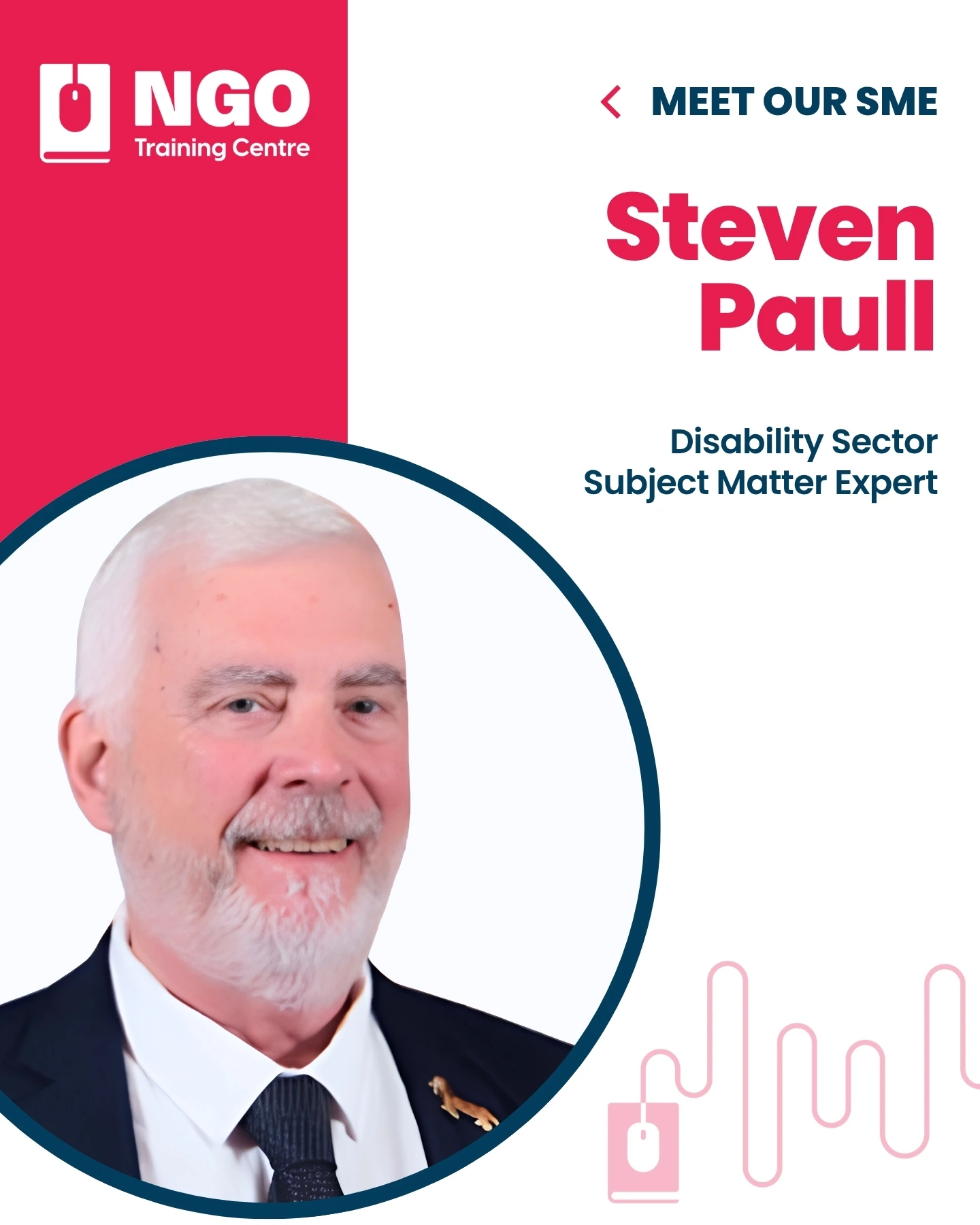
At the NGO Training Centre, we are privileged to have such an experienced individual provide subject matter expertise to our courses, specifically in the disability sector. Steven Paull spent many years as the director of Big Dog Support Services and over 20 years leading the ‘WhatsUp in Disability‘ publication and network.
Steven is a dedicated advocate for individuals with disability and has worked tirelessly to promote inclusivity and accessibility across various domains. With personal experience navigating disability challenges, Steven brings a unique perspective to his roles as an activist and consultant. He has been instrumental in driving positive change by collaborating with organisations, policymakers, and communities to raise awareness about disability rights, accessibility, and the importance of fostering an inclusive society.
Through his efforts, Steven strives to empower individuals with disabilities to overcome obstacles, pursue their aspirations, and lead fulfilling lives.
Through his sharing of experience, knowledge, and skills, Steven’s courses are both insightful and bound to leave you ready not only to lead a team but also to provide support to individuals in the community.
This year, the World Health Organization (WHO) invites us all to reflect on a powerful truth: “Action Saves Lives”.
Every year on May 5, the global SAVE LIVES: Clean Your Hands campaign highlights one of the simplest, most effective ways to protect individuals with proper hand hygiene. In 2026, marking its 18th year, the campaign continues to remind healthcare workers, aged care and disability support professionals that consistent hand hygiene is critical to infection prevention and control.
Healthcare-associated infections remain a significant challenge worldwide. They affect millions of people every year, prolong hospital stays, increase healthcare costs, and sadly, can cost lives. Yet research shows that a large proportion of these infections are preventable through timely, correct hand hygiene.
Why Your Actions Matter
Cleaning your hands at the right moments (the WHO 5 Moments for Hand Hygiene) breaks the chain of infection
It protects you, individuals in aged care facilities and SDA, individuals being supported at home, patients in hospitals, and your colleagues
It reduces the spread of bacteria, viruses, and antimicrobial-resistant organisms, and
It builds a stronger culture of safety and quality in every care environment.
Whether you’re a disability support or aged care professional or manager, your daily actions count.
Remember:
🧴 Alcohol-based hand rub or soap and water
👏 Correct technique for at least 20–30 seconds
⏰ At the right times, such as before and after contact with an individual, before support tasks, after body fluid exposure, and after touching surroundings.
These small but deliberate actions save lives.
On World Hand Hygiene Day 2026, we encourage every provider to ensure that their staff are well-trained, supported, and committed to continuous improvement!
Because Action Saves Lives, and safer care truly starts with clean hands.
Let’s turn awareness into everyday action. We can help! Check out the NGO Training Centre courses on:
Infection Prevention Control and Outbreaks Parts 1 & 2 in Aged Care (Coming soon)
Author: Cathy Kerr BANurs, GDAET, Cert IV Training and Assessment.
Cathy brings over three decades of expertise to the field of nursing education, with a distinguished career as a registered nurse, educator, and now aged care consultant. Her extensive experience spans clinical practice, training, and consultancy, where she has dedicated herself to improving care standards and supporting both ageing individuals and healthcare professionals. With a deep understanding of the sector’s challenges and opportunities, Cathy combines her nursing background with a passion for education to drive positive outcomes in aged care.
As you are aware, the aged care sector is undergoing major reform and rapid change, driven by government regulation, workforce pressures, and rising demand for services.
As Australia’s population continues to age, aged care providers are being pushed to rethink how care is delivered, documented, and monitored, while maintaining a strong focus on dignity, safety, and person-centred care.
One of the most significant developments in recent years is the ongoing digital transformation of aged care services. Across residential and home care settings, providers are increasingly required to use electronic care records, digital assessment tools, and centralised reporting systems. These systems are designed to improve accuracy, reduce documentation errors, and ensure that care information is accessible to all relevant staff in real time.
A key driver of this shift is the introduction of stronger regulatory expectations under Australia’s aged care reforms. These reforms emphasise transparency, accountability, and improved care outcomes. Digital systems are seen as a way to support these goals by making it easier to track care plans, monitor changes in an individual’s condition, and ensure that care decisions are evidence-based and consistent across shifts and teams.
Alongside this, there is growing discussion in the sector about using data analytics and emerging artificial intelligence (AI) tools in aged care. Some providers are beginning to trial systems that can identify early warning signs of deterioration, predict fall risk, or flag changes in behaviour. These tools have the potential to improve early intervention and prevent serious incidents. However, they also raise important questions about privacy, data security, and the role of human decision-making in care.
Many professionals in the sector emphasise that while technology can support care delivery, it cannot replace the human elements essential to aged care, such as empathy, communication, and relationship-building. There is ongoing concern that over-reliance on digital systems could reduce meaningful interaction between staff and residents if implementation is not carefully managed.
At the same time, the aged care workforce continues to face significant pressure. Staffing shortages, rising workload demands, and high levels of burnout remain persistent challenges across Australia. Many facilities report difficulties recruiting and retaining qualified staff, particularly in rural and remote areas. This has led to greater reliance on training programs, international recruitment, and new workforce models to improve retention and reduce strain on existing staff.
In response, some organisations are investing in technology not only to improve care delivery but also to reduce staff administrative burdens. Digital rostering systems, mobile documentation tools, and streamlined reporting platforms are helping staff spend less time on paperwork and more time delivering direct care. While these systems are not a complete solution to workforce shortages, they are increasingly viewed as part of a broader strategy to improve efficiency and job satisfaction.
Another important trend in aged care is the ongoing shift towards person-centred care. This approach focuses on the individual’s preferences, history, values, and goals, rather than on their medical conditions alone. Digital care planning tools are being designed to capture this information more effectively, enabling more tailored, responsive care. However, experts stress that person-centred care still relies heavily on strong relationships between workers and residents, not just on data collection.
Overall, the future of aged care in Australia is likely to be shaped by a balance of innovation and human connection. Technology will continue to play an increasingly important role in improving safety, efficiency, and communication, but the core of aged care will remain grounded in compassion, dignity, and respect. The sector’s challenge will be to ensure that digital transformation enhances rather than replaces the human experience of care.
–
Author: Cathy Kerr BANurs, GDAET, Cert IV Training and Assessment.
Cathy brings over three decades of expertise to the field of nursing education, with a distinguished career as a registered nurse, educator, and now aged care consultant. Her extensive experience spans clinical practice, training, and consultancy, where she has dedicated herself to improving care standards and supporting both ageing individuals and healthcare professionals. With a deep understanding of the sector’s challenges and opportunities, Cathy combines her nursing background with a passion for education to drive positive outcomes in aged care.
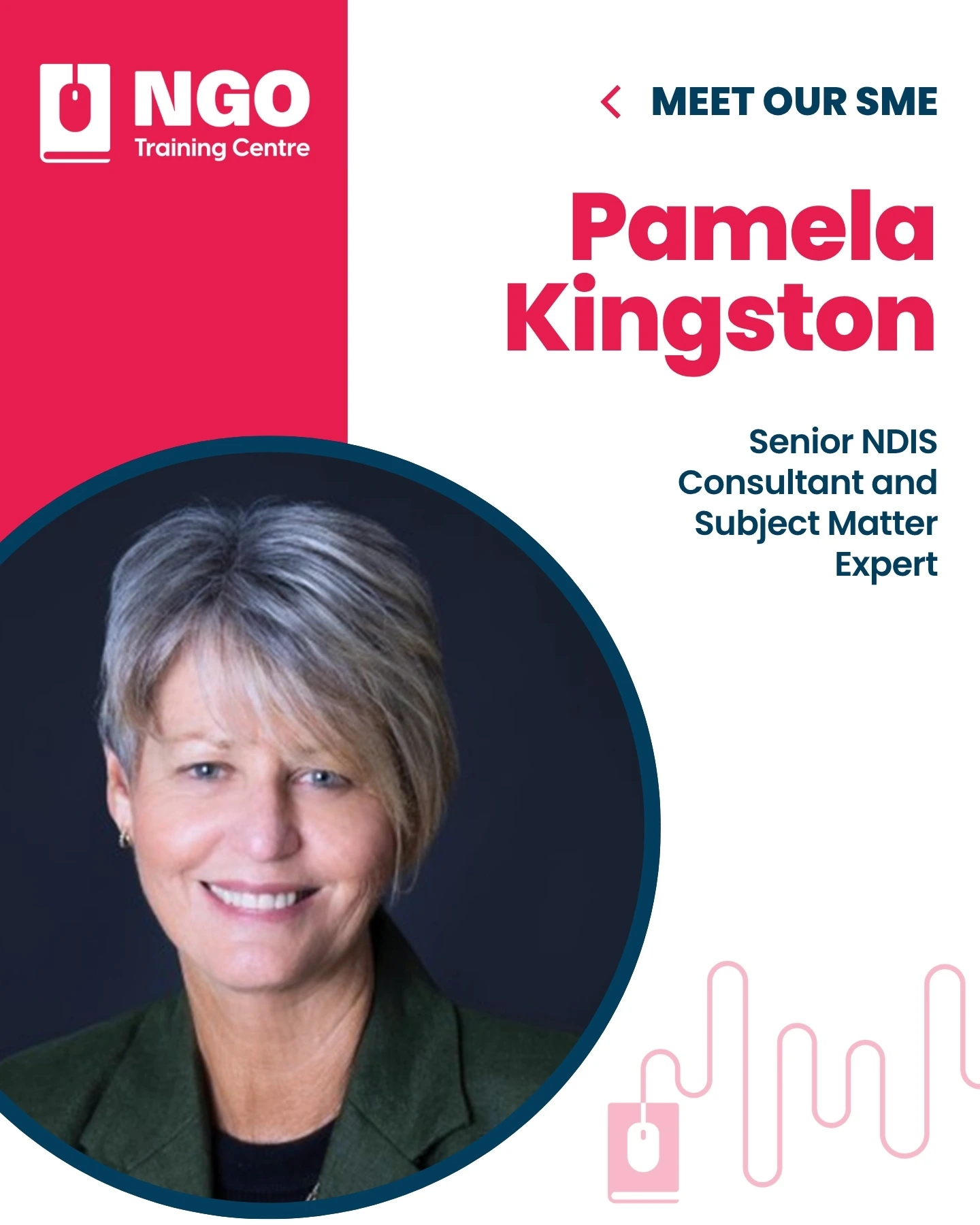
With over 15 years’ experience in the disability sector and 20 years in community partnership program management within education, Pamela brings a depth of knowledge grounded in real-world practice, compliance, and leadership.
Pamela is known for her strong focus on accountability, purpose-driven work, and empowering teams to deliver high-quality, person-centred outcomes. She thrives in complex, system-focused environments, applying strategic thinking and practical solutions to improve service delivery and organisational performance.
Her expertise includes:
Strategic and operational leadership with a strong focus on collaboration and workforce empowerment
Driving operational excellence and compliance through effective system design, implementation, and review
Designing and delivering targeted training programs to address both foundational and emerging workforce skill gaps
Influencing outcomes through effective stakeholder engagement, communication, and tailored messaging, and
Developing policies and operational processes aligned with regulatory and quality frameworks.
Pamela currently works as a Senior NDIS Consultant at Provider+, supporting organisations to strengthen compliance, governance, and service quality across the sector.
She holds a Bachelor of Social Science (Social Welfare) and a Graduate Certificate in Australian Migration Law and Practice.
We are both thrilled and proud to have Pamela on our Governance Team at the NGO Training Centre.
Learn more about all our brilliant Subject Matter Experts on our About Us page.
Marguerite Hoibyis a highly experienced Registered Nurse, auditor, and consultant with extensive expertise across the health, disability, and human services sectors. She brings decades of practical and governance experience in quality, compliance, and clinical practice.
Marguerite has played a key role in developing several Aged Care and Disability courses for the NGO Training Centre, drawing on her deep knowledge of regulatory frameworks, service standards, and workforce capability requirements.
She is an experienced auditor, assessor, and technical reviewer across multiple national frameworks, including the National Safety and Quality Health Service (NSQHS) Standards, the NDIS Practice Standards (across all modules as a Lead Auditor and Technical Reviewer), Disability Employment Services, Human Services, and Quality Management Systems ISO 9001.
Marguerite’s clinical background spans general, paediatric, and operating theatre nursing, complemented by specialised expertise in spinal injuries and rehabilitation. She also holds postgraduate qualifications in business and educational administration, enabling her to bridge clinical practice with organisational governance, workforce development, and quality improvement.
Her incredible work continues to support providers across aged care, disability, and health services in strengthening quality systems, meeting regulatory standards, and delivering safe, person-centred care.
We are privileged to have Marguerite on board as our Subject Matter Expert, and we are sure you will find her course content invaluable to your organisation for both quality and compliance.
Learn more about all our brilliant Subject Matter Experts on our About Us page.
On International Women’s Day 2026, we celebrate progress.
We must also confront an uncomfortable truth: not all women experience equality in the same way.
For women with disability and women in aged care, gender inequality is compounded by ableism, ageism and systemic barriers that continue to limit autonomy, safety and voice.
In Australia, the late Stella Young powerfully challenged society’s views on disability. She rejected narratives that reduced people to objects of inspiration and instead demanded recognition of rights, leadership and agency.
Her advocacy remains deeply relevant today, particularly for women with disability whose voices are too often spoken about rather than listened to.
Women with disability are disproportionately impacted by violence, underemployment and exclusion from decision-making. Older women, particularly those in residential aged care, can experience invisibility at a time when dignity, consent and autonomy matter most.
Gender does not disappear with age. Nor does the right to self-determination.
At the NGO Training Centre, we believe that quality workforce education is one of the most practical levers for change.
If staff understand consent in the context of cognitive decline, they better protect autonomy.
If leaders understand gendered violence risk factors, they respond earlier and more effectively.
If organisations embed person-centred care and trauma-informed practice, women are safer.
Training alone does not solve inequality. But capability shapes culture. And culture shapes outcomes.
International Women’s Day must be more than a symbolic gesture or another tokenistic post. It must challenge the disability and aged care sectors to examine whether our systems truly uphold the rights of women, or whether convenience, compliance and outdated assumptions still influence practice.
The standard we set in disability and aged care environments reflects what we believe about women’s worth.
On 8 March 2026, our position is clear:
Women with disability and ageing women deserve visibility, leadership, safety and respect.
Not merely an aspiration, but the standard practice. And that is work we remain committed to every day.
How are you supporting your organisation to rise above discrimination and balance the scales?
–
Author: Amanda Robinson BA, MMHealthPrac,
As Head of Learning and Development and a seasoned NDIS expert, Amanda drives capability and sustainability in the disability and health sectors. With over 15 years of experience, post-graduate qualifications in Mental Health Leadership and Management, and currently pursuing an MBA, she brings deep expertise and personal insight as someone with lived experience of disability. A devoted carer, Amanda champions Human Rights, working to dismantle stigma and barriers for individuals with disability and mental health challenges. She is passionate about building robust stakeholder relationships, leveraging her advocacy, communication, strategic thinking, and analysis skills.
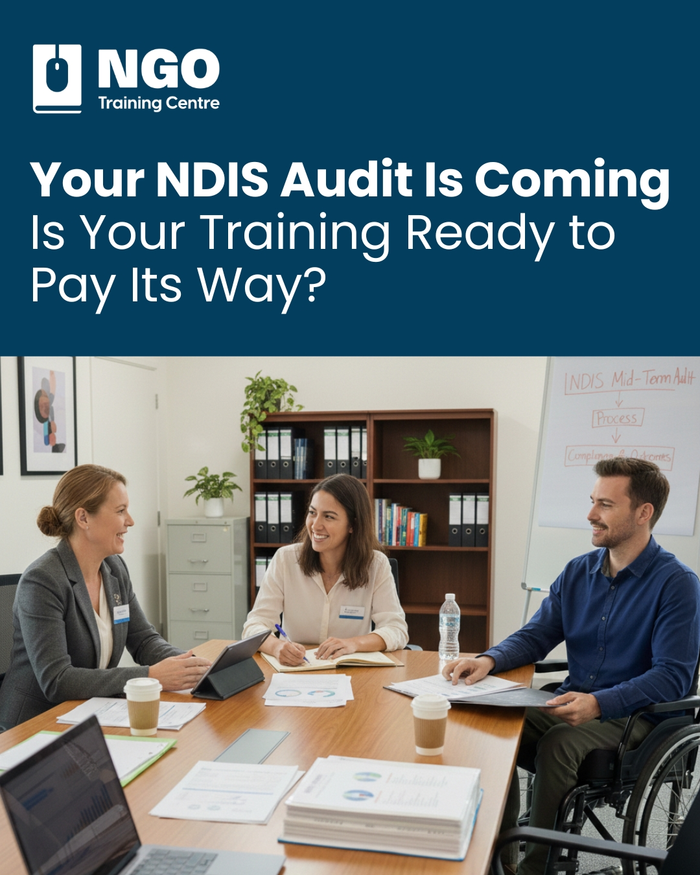
NDIS registration audits are no longer a one-off expense you can budget around once and forget. In 2026, they are a recurring, significant, and often underestimated operational cost. How well-prepared your organisation is at audit time can mean the difference between a smooth sign-off and a costly follow-up.
Here’s what the numbers look like for most providers right now.
For higher-risk providers seeking certification, initial audit costs often start at $3,000 and can exceed $10,000, particularly where multiple sites, complex supports, or travel are involved. Then there’s the mid-term surveillance audit around the eighteen-month mark, typically costing between $1,500 and $5,000. Add in the renewal audit at the end of the registration period (budgeted at roughly the same cost as your initial audit), and it’s not uncommon for a provider to spend $15,000 to $25,000 or more across a single registration cycle. This is before accounting for any conditional or out-of-cycle audits triggered by scope expansion or identified non-conformities.
Experienced providers now treat audits as a recurring line item, not a surprise. The smartest ones go a step further: they treat training as the investment that makes every audit dollar count.
What Auditors Are Actually Looking For
NDIS auditors are assessing whether your workers have the knowledge and skills to deliver safe, high-quality, person-centred supports in line with the NDIS Practice Standards. They want to see evidence, not just intention. That means documented, completed training that is current, compliant, and traceable.
When your team can’t clearly demonstrate the evidence, non-conformities are identified. Non-conformities mean follow-up audits. Follow-up audits mean more cost.
When your team walks into an audit backed by comprehensive, standards-aligned training and clean LMS reporting, the process is faster, smoother, and less likely to generate costly remediation.
The ROI Case for Quality Online Training
Consider a mid-sized provider with 30 support workers. At NGO Training Centre, a full-suite training package can cost as little as $88 per user per year. That investment gives every worker access to over 100 NDIS-compliant courses covering everything from NDIS foundations and induction training through to complex care, medication management, and specialised skills.
Now compare that to the cost of a single follow-up audit triggered by gaps in staff training documentation: a minimum of $1,500 to $5,000. Or the reputational and operational impact of a conditional audit following an incident linked to inadequate worker knowledge.
The training pays for itself many times over. Not just in audit outcomes, but in the quality of care your workers deliver every day.
One of our clients, Care Provisions Australia, put it plainly in their review:
“The NGO training modules have significantly contributed to enhancing our integrity, credibility, and quality… I can confidently state that it has proven to be one of the best business decisions we have made.”
Another client, Sindy from Enabled Care, noted that the
“breadth and quality of the training not only met but exceeded the expectations of our NDIS auditor.“
What Makes NGO Training Centre Different
Our platform is purpose-built for NDIS and Aged Care providers who need training that performs in the real world, not just on paper.
Every course is created by sector experts, compliant with current NDIS Practice Standards, and updated regularly to reflect changes in the regulatory landscape. Our world-class Learning Management System gives administrators instant access to completion reports, competency assessments, and user progress, which is exactly the kind of clean documentation trail your auditor wants to see.
And because your workers are often on the move, our mobile app means learning happens wherever they are. On shift, between visits, or at home, all with progress saved automatically, so nothing is lost.
Over 50,000 learners and 1,000 organisations across Australia trust NGO Training Centre to keep their teams skilled, compliant, and audit-ready.
Don’t Let the Audit Find Your Gaps Before You Do
Audit costs are going up. Regulatory expectations are rising. The providers who will navigate this environment confidently are the ones who have invested in a training solution that doesn’t just tick a box but builds genuine capability across their workforce.
If you’re spending thousands on audits and hoping for the best, it’s worth asking: Is your training investment giving you the best possible return on that spend?
Matt has over a decade of experience in B2B sales and business development and with a passion for human services, is deeply committed to driving meaningful solutions within the disability sector. His commitment to improving service quality and his deep understanding of client needs make him a trusted partner in advancing the capabilities of organisations that support people with disability across Australia.